Feedback
Have a general question or comment? This is the place. I’d love to hear from you (the Feedback box is at the bottom of the page).
Leave your feedback
Next public appearance
May
31
2012
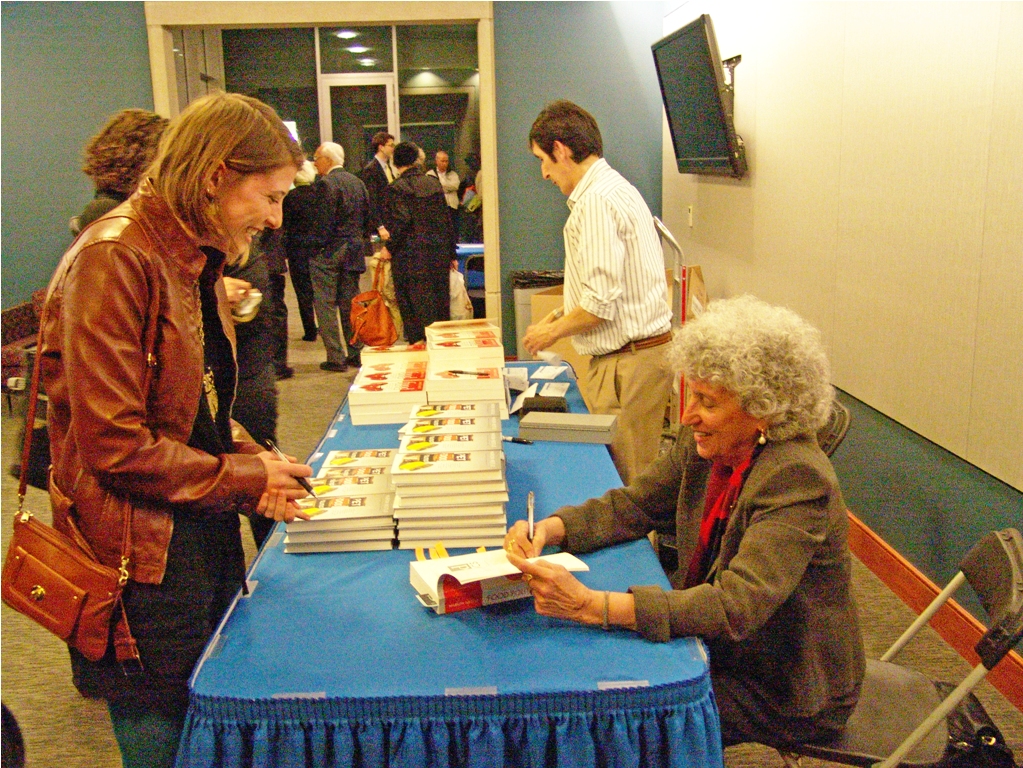
NYU: Fales Library panel
The topic: “How would Julia Child vote on the 2012 farm bill? 4:00 p.m., Fales Special Collections at Bobst Library. Open to public. Details are here.
Search
Topics
5-a-Day
AAFP(American Academy of Family Physicians)
AAP(American Academy of Pediatrics)
Acrylamide
ACSH(American Council on Science and Health)
Activity
ADA(American Dietetic Association)
Addiction
Additives
Advocacy
Agave
Aging
Agriculture
AHA(American Heart Association)
Alcohol
Alice-Waters
Allergies
American-Diabetes-Association
Animals
Antibiotics
Antioxidants
Arsenic
Artificial-sweeteners
ASN(American Society of Nutrition)
Asthma
Açaí
Beef
Bill-Marler
Biofuel
Blogs
Books
Bottled-water
BPA
BPA(Bisphenol-A)
Bread
Breakfast
Breast-feeding
Brian-Wansink
Bribery
Burger-King
Caffeine
CAFOs(Concentrated Animal Feeding Operations)
calcium
Calorie-labeling
Calories
Campbell
Canada
Cancer
Candy
Cantaloupe
Carcinogens
Cargill
CCF(Center for Consumer Freedom)
CDC(Centers for Disease Control)
Cereals
Charlie-Rose
Checkoff
Cheerios
Cheese
Chicken
Chickens
China
Chinese-infant-formula
Chocolate
Cholesterol
Climate change
Cloned-animals
Coca-Cola
Coffee
Colbert
Comments-Monitoring-Policy
Comments-Policy-Monitoring
ConAgra
Conflicts-of-interest
Consolidation
Consumer Reports
Cookie-dough
Cooking
Cooking-measurements
COOL(Country of Origin Labeling)
Corn
CSPI(Center for Science in the Public Interest)
CSR(Corporate Social Responsibility)
Dairy
Del Monte
Denmark
Diabetes
Diet-and-dieting
Diet-and-energy-drinks
Diet-drugs
Dietary-Guidelines
Diets
Disney
E.coli
Eat-less-and-move-more
EatingLiberally
EFSA
EFSA(European Food Safety Authority)
Eggs
EPA
Eric-Schlosser
Ethanol
Ethics
Events
Excerpt
FAO
FAQ
Farm-bill
Farm-policy
Farm-workers
farmers markets
Farms
Fast food
Fats-and-oils
FDA
feed efficiency
Fiber
films
First Amendment
Fish
Flaxseed
FMI(Food Marketing Institute)
Food
Food-access
Food-and-Water-Watch
Food-art
Food-assistance
Food-availability
Food-choice
Food-colors
Food-composition
Food-crisis
Food-culture
Food-deserts
Food-guide
Food-Inc
Food-industry
Food-industry-regulation
Food-magazines
Food-marketing
Food-miles
Food-movement
Food-policy
Food-quality
Food-safety
Food-security
Food-stamps
Food-studies
Food-supply
Food-systems
Food-trade
Food-waste
FOP(Front-of-Package)Labels
Fortification
Framingham-Heart-Study
Fruits-and-vegetables
FTC (Federal Trade Commission)
Functional-foods
Futures-markets
GAO
GAO(Government Accountability Office)
Gardens
Gary-Taubes
General-Mills
Gluten
GM(Genetically Modified)
GMA(Grocery Manufacturers Association)
Grassfed
Green-food
HACCP(Hazard Analysis and Critical Control Point)
Hannaford
Health-aura
Health-claims
Health-statistics
Heart-disease
HFCS (High Fructose Corn Syrup)
HHS(Department of Health and Human Services)
Hormones
Hugo drinks
Hydroponics
hyperactivity
IASO
India
Infant-formula
International
Interviews
IOM (Institute of Medicine)
iraq
Irradiation
IWG(Interagency Working Group)
Jamie-Oliver
Japan
Job-Ads
Joy-of-Cooking
Juice-drinks
juices
Junk food
Kellogg
Kelly-Brownell
KFC
Kids' diets
King-Corn
Korea
Kraft
krill
Label-scoring-systems
Labels
Lawsuits
Legislation
Let's Move!
Letters-From-Food-Companies
Listeria
Lobbies
Local-food
Lévi-Strauss
Mad-cow-disease
Malnutrition
Manure
maps
Margarines
Marketing to kids
Mark Hegsted
Mars
McDonald's
meal frequency
Meat
Meat safety
Meat substitutes
media
Melamine
Mercury
Michael-Pollan
Michael-Taylor
military
Milk
Monsanto
Movies
MSG
MyPlate
Nanotechnology
Natural
neighborhoods
Nestlé
New-York-City
New-Zealand
Niman
Nutrient-availability
Nutrition-education
Nutrition-standards
Nutritionism
Obama
Obesity
Obesity-in-kids
Obesity-policy
Occupy
Omega-3-fats
Organic-fish
Organic-standards
Organics
orthorexia
Oysters
Pakistan
Partnerships
Passover
Patents
Paula Deen
Peanut-butter
Peanuts
PepsiCo
Personal-responsibility
Pesticides
Peter Jennings
Pet food
Phil Lempert
Photos
Pink-slime
Pistachios
pizza
Pork
Portion sizes
Potatoes
pregnancy
Pric
Price-fixing
Price-of-food
Probiotics
Processing
Protein
Public-health
Pyramid
Quotes from What to Eat
Radioactivity
Raw-foods
Raw-milk
rBGH
recipes
Red-Bull
Research
Restaurants
Revolving-door
Right-to-food
Rosa DeLauro
RWJ Foundation
S.510
Salmonella
Salt
San-Francisco-Chronicle
scho
School-food
Seeds
shrek
Single-food-agency
Slow Food
Smart Choices
Snack foods
Socioeconomic-factors
Soft drinks
soy
Spinach
Splenda
Sprouts
Starvation
Stevia
sticky
Sugar
Supermarkets
Supplements
Supreme court
Surveys
sushi
Sweeteners
Swine flu
Taste
Taxes
Techno-foods
Television
Thomas Friedan
Tim Lang
Tobacco
Tomatoes
Toxins
Trans-fat
Tufts
Twitter
Tyson-foods
United Nations
Urban-farming
USDA
Vegetables
Vegetarian-and-vegan
Vending-machines
Videos
Vitamin-water
Vitamins
Wall-Street
Walmart
Washington-Square-News
Water
WHO(World Health Organization)
Whole Foods
Whole grains
Why-Calories-Count
WIC
World hunger
Yearly Kos
Yogurt


@Heather: Science in the City went fine, I think, and you can watch it online starting next week. My lecture schedule is posted under appearances. Thanks for asking.
How did “Science in the City” go the other night? I live in Connecticut and really wanted to make the trip to the city but got held up at work, will you be doing any other events like that soon?
@Jenn: it’s terrific that you discovered CSAs. They have been around a long time but are growing in popularity. The USDA first cataloged them in 1993. Its CSA website has handy guides to finding CSAs anywhere in the country, aong with other useful publications.
See: http://www.nal.usda.gov/afsic/pubs/csa/csa.shtml.
And spread the word!
Hi Marion, last week I was doing some research on organic farms in my area and came across Community Supported Agriculture. We found a USDA certified organic farm that we can buy summer and winter shares of vegetables from and I’m so excited. This seems like a really fantastic option for people who are looking for locally grown and/or organic food at a reasonable price. I had never heard of CSA’s before and I want to tell everyone I know about them. What are your thoughts on these? I live in Vermont where I think they are more prominent than other areas, but I hope this concept takes off. I haven’t been able to stop talking about them since I found out.
Hi Marion!
I have an event tonight I really think you and your eaders will be interested in. I work at Participant Media, and along with Warner Bros. and the Government Accountability Project, and we are hosting online a live discussion from The Paley Center for Media with legendary whistleblowers Daniel Ellsberg, Frank Serpico, Coleen Rowley, and others to raise awareness about pending whistleblower protection legislation and educate viewers on what it actually means to blow the whistle.
Kit Foshee, who blew the whistle on the infusion of ammonia in ground beef, will be on the panel taking some questions from online viewers and I think this would be a great opportunity for Ethicurian readers to learn more about making change in our industrial food system!
You can watch the event at livestream.com/TheInformant or Facebook.com/TakePart tonight at 7pm EST/4pm PST. Online viewers can submit questions to the infamous panelists or ask our whistleblowing expert from the Government Accountability project who will also be online.
Please share this!
@Patrick: I discuss the farmed vs. wild fish arguments in my book, What to Eat. The discussion still holds. Unless you know what farmed fish are fed, or unless they have been tested, you have no way of knowing their levels of contaminants. You also have no way of knowing their omega-3 levels. Fortunately, omega-3s are widely distributed in dietary fats, even those from plants. Until fish farmers figure out healthier and more environmentally sound ways to raise their “crops,” I try to avoid eating farmed fish of unknown origin.
Hi Marion,
As a follower of food safety matters and an ardent lover of seafood, I was intrigued by a recent CNN report (which in turn was based on a 2006 study published in the journal of the AMA, I believe… that claimed the benefits of eating either farmed or wild salmon wildly outweigh the risks. My understanding (in part from your books) has been that wild salmon is considerably better than farmed when it comes to mercury, etc, and that neither are particularly good choices for women of childbearing age, young children, and other at-risk populations. Does new research really show that farmed salmon is safer than we thought, or is there more to this story? Plenty of conflicting salmon messages in the media these days, between CNN telling us farmed salmon is fine, and Target pulling it from their shelves!
The CNN article: http://www.cnn.com/2010/HEALTH/01/13/salmon.farmed.fresh/index.html
Thanks,
Patrick
thefooddemocracy.blogspot.com
Marion:
I have long suspected that bagging vegetables provides a breeding ground for bacteria ever since opening a package of peeled carrots and feeling the moisture. The next bag I opened was slimy and I decided, then & there, it wasn’t worth it. The peace-of-mind from buying unpeeled carrots, and the cost savings, more than outweighs the convenience. Sickness is rarely convenient.
I’ve been searching for reports evaluating the health risks to food cooked in microwave ovens. Some claim it kills all nutrients; the FDA simply says microwaving is safe. Despite the relative ease, neither the government nor Consumes Union has conducted this important test. Do you know of any information addressing this?
Joy
Thanks for the response. I actually own the book and use it as my bible! I don’t believe the book mentions much about using oil at a high temperature to the point that it hits the “smoke point”. I’ve heard people refer to that as rancid also. Is that totally different? And if so, is it dangerous nonetheless? Is this something we should be vigilant about when cooking at home?
Hi Marion, I’d love to interview you, would you be available to do a tele conference? Please e-mail if you are available.
Thanks in advance
JS
@Mordy: I discuss fat chemistry in What to Eat, but rancidity refers to spoilage. Oils spoil when they are exposed to air, light, and heat, and the more unsaturated they are the faster they spoil. You can tell spoilage by smell and color. To prevent spoilage, buy oils in amounts that you will use quickly, store them in dark bottles, and if they are very highly unsaturated (like flax oil), store them in the refrigerator. If they smell OK and taste OK, they are probably just fine.
Marion,
I am totally confused by the “rancid” oil/fat that is mentioned in many of the postings here on the blog. Can you explain what that really means, how common it is in home-cooked food, and how dangerous it is?
Thanks!
RE: INVITATION TO PRESENT AT HEALTH JOURNALISM CONFERENCE, (Chicago, I,L April 24, 2010)
TOPIC: “Assessing The Health Claims of Functional Foods”
Dear Marion,
I am a conscious consumer advocate the Executive Producer of Conscious Living TV, a news show about the latest and greatest in sustainable, green, living, now in its 5th broadcast season. I am also a media fellow with the Association of Health Care Journalists, which is producing the Annual Health Journalism Conference here in Chicago April 22-25, 2010 at the Hyatt McCormick place. This event draws over 1,000 of the world’s most talented print and broadcast journalists covering the hottest issues in health.
I am moderating a panel on “Assessing the Health Claims of Functional Foods” on Saturday, April 24th at 2:15pm during the conference. Given your tremendous background and expertise in this arena, we would love for you to participate as a guest presenter on this panel. Fellow panelists include Marion Marchione, lead health writer for the Associated Press. We also plan to include the panel on a future episode of Conscious Living TV, including a possible interview of you after our panel.
We would love to have you on the panel! We are currently finalizing presenters for the conference, so please let me know if you are available and interested in participating by no later than this Friday, February 12th. Once I receive your confirmation, I will forward you additional details. In the meantime, should you have any questions, please do not hesitate to contact me via phone at (312) 618-1853, or via e-mail at Bianca@ConsciousLivingTV.com.
I look forward to meeting you in person soon!
All the best,
Bianca Alexander, Esq.
Correspondent and Consumer Advocate
Conscious Planet Media
http://www.ConsciousPlanetMedia.com
http://www.ConsciousLivingTV.com
http://www.SoulofGreen.com
Moderator, Association of Health Care Journalists
[...] recently received this request from Daniel posted to Feedback: Would you mind writing a blog post on the new surgeon general’s obesity report? …Is there a [...]
Marion,
For Elliot’s and my sake, and I’m sure for many other readers of your blog, I’d love to hear your take on the “lipid hypothesis” for cardiovascular disease. Lately I’ve been reading a decents amount on the subject, mainly works that lean in the direction of the Weston A Price Foundation (I try to read things and keep in mind who wrote it and what their subjectivity is). From what that camp is saying, it seems as if (naturally-occurring) saturated fats are almost better for you than the unsaturated fats we get fed these days, which mainly consist of rancid oils which more than anything contribute to heart disease, whereas many saturated fats are actually quite beneficial. What is your take on this? Obviously, I’m not looking to justify eating french fries for breakfast, lunch, and dinner, but I’m just interested in seeing what you know about this subject.
In regards to what Elliot brought up about carbohydrates, I recently read a book entitled “The Sugar Trap and How to Avoid it” which claimed that there was a direct correlation between sugar intake and heart disease, but the same was not true for fats or cholesterol. What amazes me the most is the fact that the book was written in the early ’70s, based on research that was available then, and since has seemingly been forgotten.
Johannes
A recent article in the American Journal of Clinical Nutrition concluded that:
“A meta-analysis of prospective epidemiologic studies showed that there is no significant evidence for concluding that dietary saturated fat is associated with an increased risk of coronary heart disease or cardiovascular disease. More data are needed to elucidate whether CVD risks are likely to be influenced by the specific nutrients used to replace saturated fat.” American Journal of Clinical Nutrition, January 13, 2010. doi:10.3945/ajcn.2009.27725.
What foods contribute to heart disease is a very confusing topic. In his book, Good Calories Bad Calories, Gary Taubes clearly attributes most of our chronic disease problems — including heart disease — to carbohydrates (see page 454).
In contrast, Colin Campbell in his book The China Study (pages 113-133) forcefully argues that animal proteins contribute to CVD. Yet, Dr. David Katz in his book Nutrition in Clinical Practice (pages 130, 133) asserts that to prevent heart disease, “saturated and trans fat should be restricted to below 7% (or even 5%) of total calories . . . .”
Who’s right?
We badly need your unbiased wisdom on this topic.
Dear Marion,
Thank you for your important contribution to the Food Dialog.
A key omission to the Surgeon General’s report is the specific call for us to make greater use of the kitchen, preparing meals from whole, fresh, non-packaged foods, and teaching children this from a young age. We’re becoming a nation of people who cannot feed ourselves without a middle-man preparing too much of our food for us (fast, frozen & take-out). Cooking for mealtimes equals less snacking and less junk.
I’m perplexed by your assertion that parents aren’t to blame and that government should start “focusing on the need to create a food environment that makes it easier for [us] to make better food choices”. I agree that Big Food has taken over food manufacturing to our detriment, and food subsidies are killing us, but lacking physical fitness programs and teaching cooking in public schools, doesn’t it fall to parents to raise children to be accountable for their health and well-being?
As a culture, we are losing our food ways skills. People in underdeveloped nations cook every day, yet Americans seem puzzled by the perceived ‘complexity’ of cooking and the question of what to eat. Cooking is so simple it can be done by a third grader. Involving the whole family in daily food preparation earns investment in feeding themselves responsibly, leading to a lifetime of sustainable eating habits.
Sincerely,
Joy Florentz
@Smokey: of course you can add. I consider the site open source to be used by anyone who is interested. So thanks for your interest!
Dr. Nestle,
I have just discovered your site (referred to you from “gigabiting.com”)…Wow! This is wonderful. I really like your approach to educating on our food system.
I am a small Texas grass fed cattle producer and a fledgling blogger. I am very passionate about the promotion of family (or small) “ag” producers and an advocate of the buy local concept. It is very important that we not only preserve this country’s rich heritage of agriculture, but also, imperative that we find a way “to back away from the edge of the abyss” that is our current health safety policies. AND I haven’t mentioned the (sustainable) economic impact of creating distribution and marketing outlets for the average food producer. Can you imagine just how much impact a small percentage of the recently announced $230B for promoting export of “ag” products (USDA) could be if it was directed toward local systems? (Sorry, I tend to pontificate too much)
Any how, Thanks for the great site. I’m excited to start digging in to your archives
AND I have to now find room in my book budget for some of yours!
If it is okay with you, I would like to add your site to my “Dragging the Web” section of my blog. This is my area for websites that I find exciting, informative, and thought provoking.
Cheers!
Smokey
@Jay–you can subscribe in two ways, through the RSS button (I’m told it works) or through twitter: @ marionnestle. Thanks for your interest!
I tried to subscribe but your page doesn’t contain any way to do that. Or at least I get a message that the page doesn’t contain the right content. I’m just beginning to read some of your work, along with Michael Pollan, and am so moved by what I’m learning. Thank you. I grew up in the 50′s-60′s on a dairy farm, very small, milking about 40 Jerseys, drank whole unpasteurized milk for nearly 25 years! Ate grass fed beef. I totally get how far we’ve drifted away from real food.
Jay
Tomato stays “fresh”–6 weeks…
http://www.dailymail.co.uk/sciencetech/article-1247900/The-end-squashy-tomato-Genetic-breakthrough-let-fruit-month-longer.html
I have often wondered why calcium, of all possible nutrients, became virtually the only one that never got any pushback in the media. We are exhorted by every doc, online, on TV and in print, that we’d better get more calcium, and that there is a calcium crisis(!) that needs to be addressed.
Yet, I think the jury is still out on whether we are causing more harm than good by pushing this mineral.
There is some evidence that the constant turnover in bone is what will eventually lead to osteoporosis and that pumping calcium (through supplements and high dairy consumption) can actually INCREASE that turnover. As you have pointed out in your books and blog, there are many countries with lower calcium consumption (and high smoking) and that have less osteoporosis than we do. These are countries (such as Japan) that consume much more plant-based food and little dairy.
How did we get here and what can be done about it?
Hi Prof Nestle,
Would you mind writing a blog post on the new surgeon general’s obesity report? I (and I’m sure other readers) would be very interested in your thoughts. Is there a food politic element to why this has gone under the radar? Recently saw a video about how a surgeon general had been censored and his reports had been edited; statements concerning obesity and recommendations to reduce intake were deleted. I find it ironic that Michael Pollan’s Food Rules generated substantially more press than a report by the United States Surgeon General.
Look forward to your comments but also understand if you are busy and do not have time.
Thank you,
Daniel
Hi Marion,
In the discussion of sodium reduction in the diet our obsession with “nutritionism” hides the obvious. I postulate that a 25% reduction could be achieved by two simple measures: 1. Decreasing portion sizes -this would have the double benefit of decreasing caloric intake which could result in a decrease in obesity and concurrent high blood pressure(e.g. Wansink estimates that food intake would decrease by 22% if we switched to 10 inch plate) 2. Replacing processed foods with whole foods – minimally adulterated by human hands.
Perhaps I am too simplistic.
Do enjoy your blog and refer to it often to get a pulse on what the public is seeing and hearing about food.
Did you see Tara Parker-Pope’s report on Vit D in NY Times today? Is the study she referenced the same one you mentioned in your SF Chronicle column? I shoveled snow today with no hat on to try to get more light. Is light adequate, or need it be full sun?
Professor Nestle,
I caught you on NY1 this morning and simply wanted to extend to you a big THANK YOU for what looks like it could be a somewhat thankless job at times. I may have some different opinions on what has been deemed healthy (fat vs grain mainly), but I believe you have our health at heart and not someone’s wallet. I can only aspire to make as much of an impact as yourself.
At 32 years of age I am right in the sweet spot for deregulation of kids TV (1984) as well as many of the “cola wars” I distinctly remember going on when I was in high school (constantly changing vending machines). I even remember the candy store built into the school (appropriately named “The Hut”, because frequenting it turned you into Jaba) could only open when the lunch line closed. And it would close with kids STILL on line.
I don’t mean to be long winded. Just to say thanks.
Pete
Thank you
I was hoping you might have time in your schedule to answer me sometime in the next couple months. Instead It was hours. I really appreciate your information and reassurance.
It explains why I found reliable sounding sources talking about the importance in 3rd world diets but not so much for US diets.
If I can ever return the favor on a technical or computer issue feel free to send me an email. You’ve just saved me countless hours of over stressing.
Rose
@Rose: Phytic acid is a chemical naturally present in grains. It’s a big problem for ruminant animals because it binds phosphorus. It’s has caused problems in humans eating highly insufficient diets because it binds zinc. It is not a problem at all for people who eat a variety of foods with adequate calories, and it also seems to do some good things for human physiology. The Wikipedia entry covers the territory pretty well (http://en.wikipedia.org/wiki/Phytic_acid). If you eat a variety of foods and aren’t starving or seriously ill, I wouldn’t give this another thought.
Marion,
Thank you for your clear and scientific writing about food an nutrition. I always enjoy reading your blog.
I was hoping you could clear up an issue I’m starting to here more and more about, anti-nutrients, aka, Phytic acid. Between the raw and traditional food movements I’m hearing more and more arguments that if I’m not soaking or sprouting my food the phytic acid in them is making them as nutritious as junk food. Is their any actually science behind these claims? I want to feed my family as healthy as I can but we’re not particularly fond of sour tasting food. (Not to mention the requirements for planning ahead that don’t always work with a 1 & 4y old.)
Thank you,
Rose