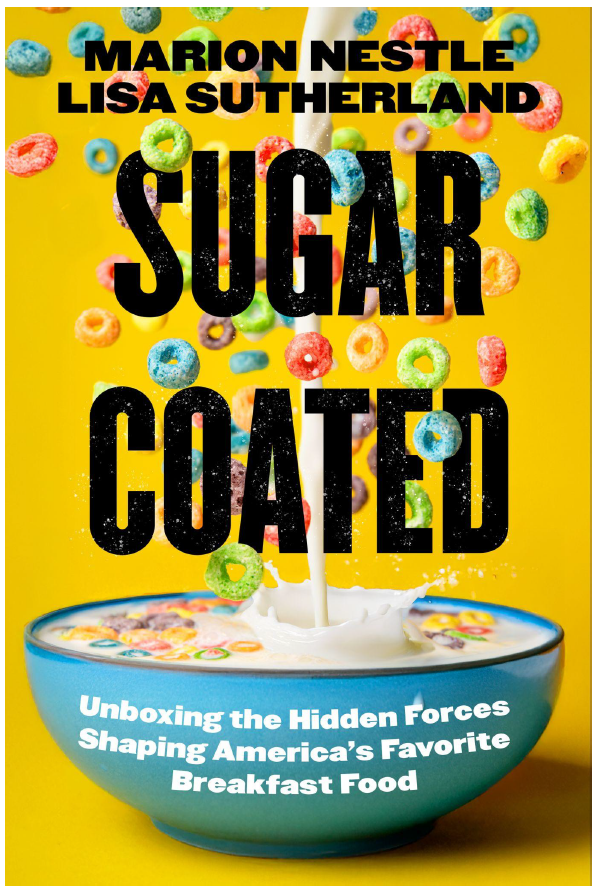
I will be discussing Sugar Coated at 1:00 p.m. ET. The link to the conversation is here.
I am staying out of New York City’s campaigns for Mayor, but one of the candidates, Brooklyn Borough President Eric Adams, is exceptionally interested in food issues. He, in partnership with NYU’s Stern Center for Sustainable Business, the Cornell University College of Agriculture and Life Sciences, and many other food-and-farm groups has produced a report titled The New Agrarian Economy, which outlines why urban agriculture is good for the economy and what needs to be done to support it better.
In the press release, Adams says:
The COVID-19 pandemic has exposed the fragility of our city’s economy and the deep inequities embedded in our food system. Urban agriculture has the potential to revolutionize our urban landscape and play a significant role in an equitable recovery process, helping us to become a greener, healthier, more prosperous city after the pandemic. Our new report lays out a roadmap for achieving that, proposing steps that build on my previous advocacy efforts in Brooklyn. As the past several years have shown, there is tremendous economic potential in this promising sector — we just need the political will to invest the necessary resources to encourage its growth. I thank all of the advocates and industry leaders who offered their input into this report, and look forward to continuing our advocacy to turn our concrete jungle into a green oasis.
This is a serious report, worth serious consideration. The recommendations in this report are grounded in reality. I think it’s great that a Borough President/candidate for Mayor cares about food issues in such a constructive way.
“Turn concrete jungles into a green oasis.” Yes!
Here is the press conference for the report’s release:
I will be discussing Sugar Coated at 1:00 p.m. ET. The link to the conversation is here.