A report to the Family Farm Action Alliance, “THE FOOD SYSTEM: CONCENTRATION AND ITS IMPACT,” shows just how monopolistic this industry has become.
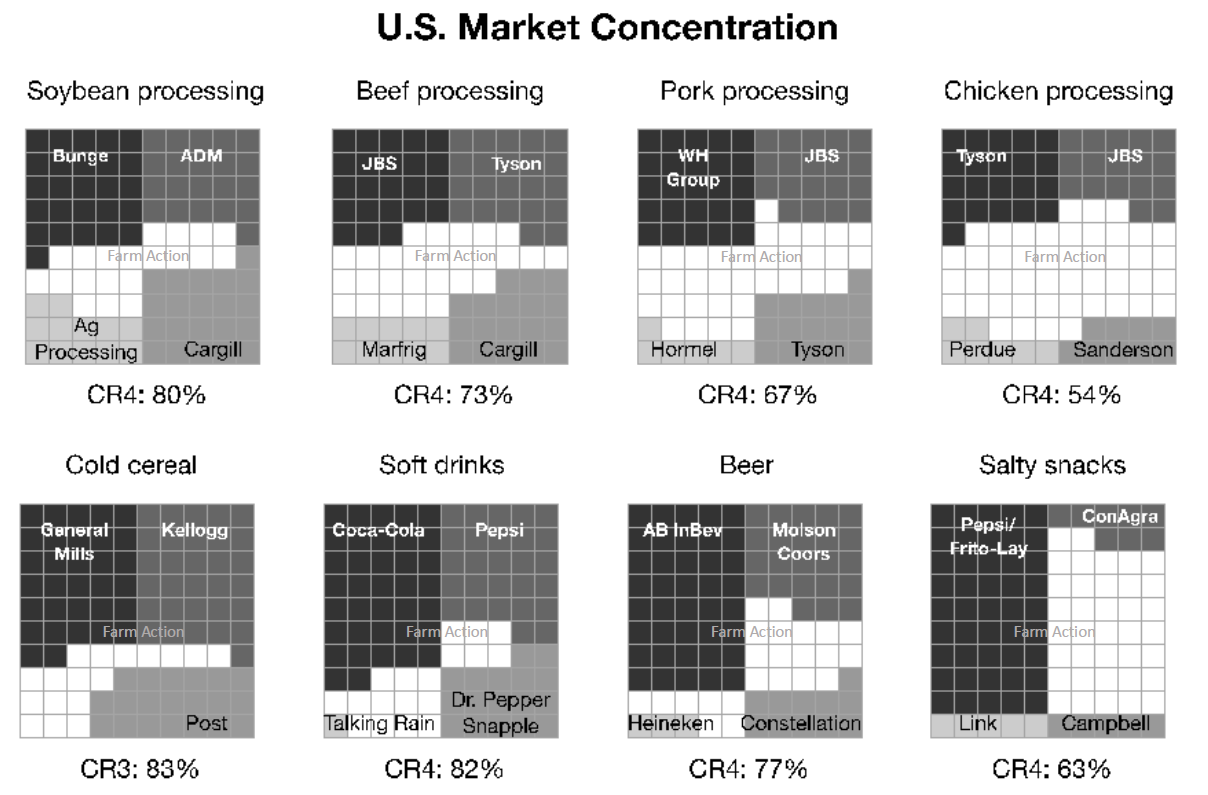
The CR4 metric is the percentage of the particular industry owned by the top 4 companies. The top 4 beef processing companies control 73% of all beef processing. The top 4 soft drink companies control 82%. The top 3 cereal companies control 80%. Anything over about 50% is considered to be highly concentrated.
What’s wrong with a high CR4 index?
Agrifood consolidation reduces farmer autonomy and redistributes costs and benefits across the food chain, squeezing farmer incomes. In 2018, farmers whose primary occupation was farming but with sales of less than $350,000 had a median net income of -$1,524. An agriculture system without people has depopulated rural communities causing a collapse in social relationships. Communities of color bear a disproportionate burden of exposure to excessive pesticide use or large animal confinement operations.
What is to be done?
At the heart of this analysis is a focus on power – both economic and political. Ultimately American political democracy rests on economic democracy and vice versa (Wu 2018). Thus, our laser focus in scholarship, praxis and policy must be on democratizing the agrifood system through a multitude of strategies at local, state, regional and national scales.