I saw this on AgWeb:
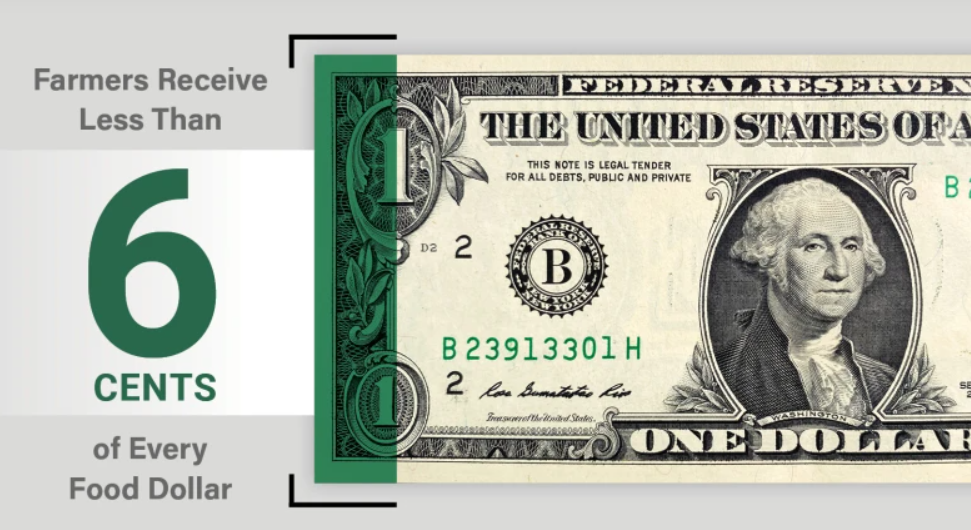 I knew this came from USDA’s Food Dollar series, which reports measurements of where the food dollar goes in the chain of production.
The USDA also illustrates the dollar in reports. The most recent, with figures from 2023, is here.
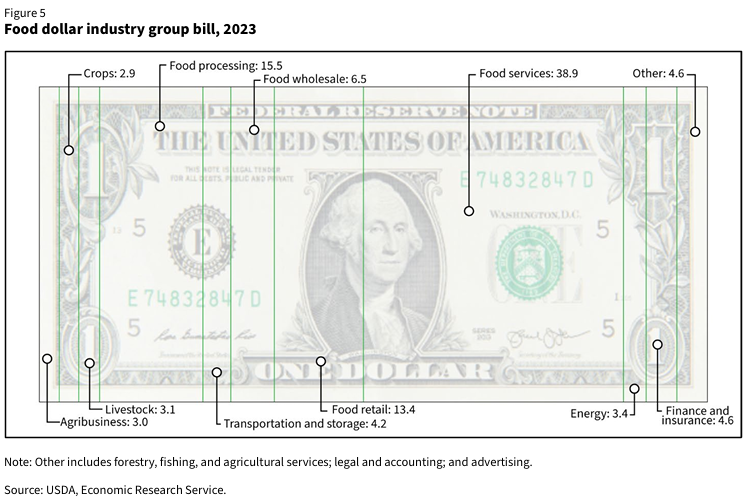
These USDA illustrations used to be easier to read, so I like the way AgWeb shows the current data.
But you get the idea: farmers don’t get much. The real money in food is in processing, retail, and service.
Note the incentive in processing.
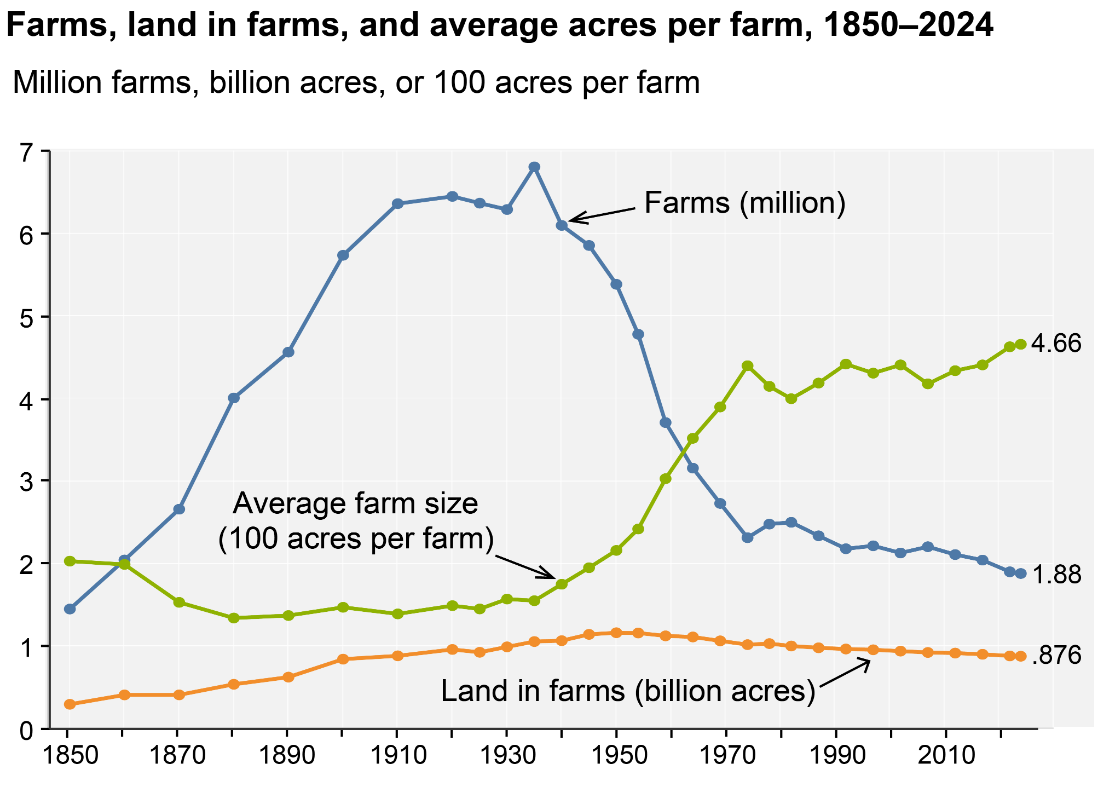
No wonder the number of farms continues to decline.
What the Farm Bill (an apparently hopeless cause at the moment) really needs to do is to start from scratch and do two things: promote smaller scale organic and regenerative farming that will protect soil, mitigate climate change, and repopulate the Midwest, and make sure those farmers make an adequate living.