by Marion Nestle

Currently browsing posts about: Price-of-food

Jul 2 2026

USDA: Food in the U.S. is a $2.5 trillion business!


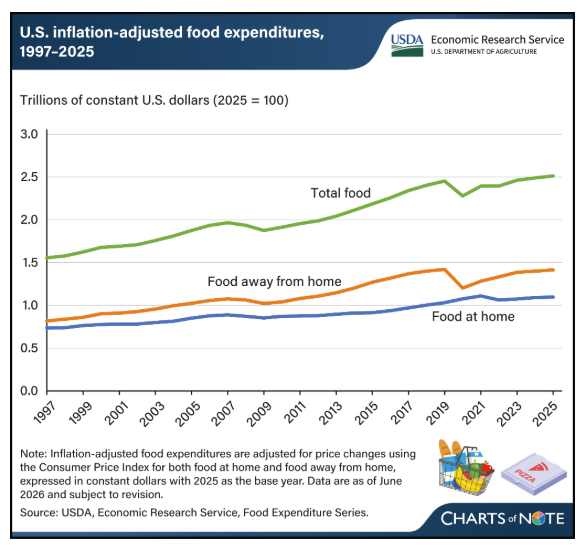
The USDA published occasional “charts of note.”  I thought this one was especially useful.

The chart gives an estimate of total spending on food in the U.S.—an astonishing $2.51 trillion in 2025.

  • $1.4 trillion goes for food away from home.
  • $1.1 trillion goes for food at home.

The data are from USDA’s Food Expenditure Series, June 2026.

Despite everything that is cutting into food sales—concerns about ultra-processed foods, GLP-1 drugs, inflation—spending on food has risen steadily since 1997, except during the COVID-19 pandemic.

So has the proportion spent on food prepared outside the home.   Home cooking holds steady, but isn’t keeping up.

“Eat real food” means it has to be cooked, and it’s likely to be a lot healthier if cooked at home.

I learned to cook in 8th grade home economics.  We could use some of that now.

May 7 2026

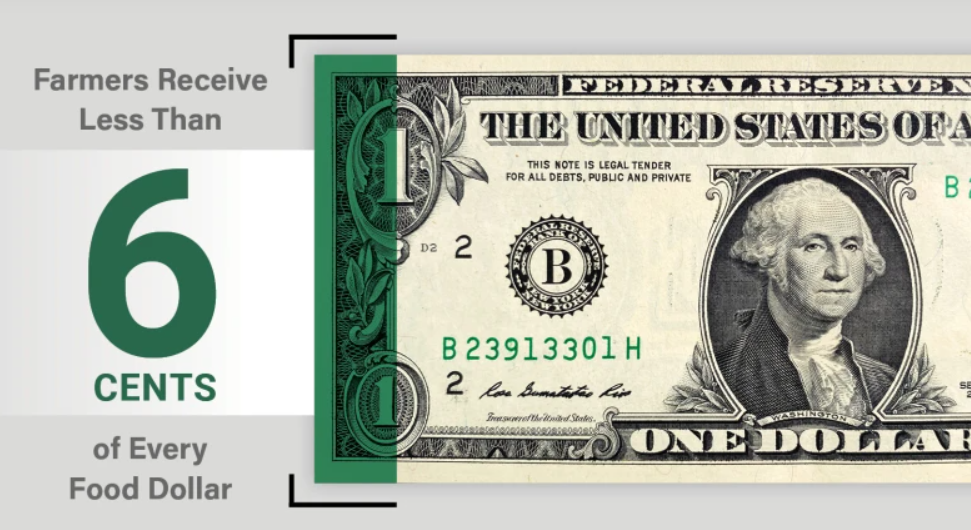
Farmers get short-changed in our current food system

I saw this on AgWeb:

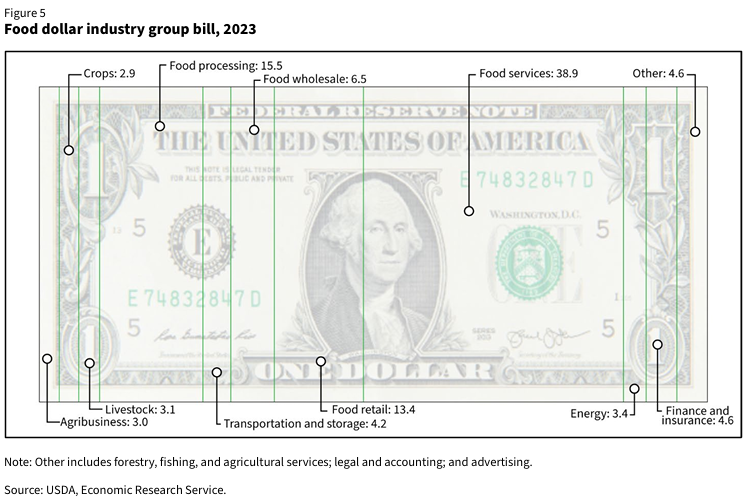
I knew this came from USDA’s Food Dollar series, which reports measurements of where the food dollar goes in the chain of production.

The USDA also illustrates the dollar in reports.  The most recent, with figures from 2023, is here.

These USDA illustrations used to be easier to read, so I like the way AgWeb shows the current data.

But you get the idea: farmers don’t get much.  The real money in food is in processing, retail, and service.

Note the incentive in processing.

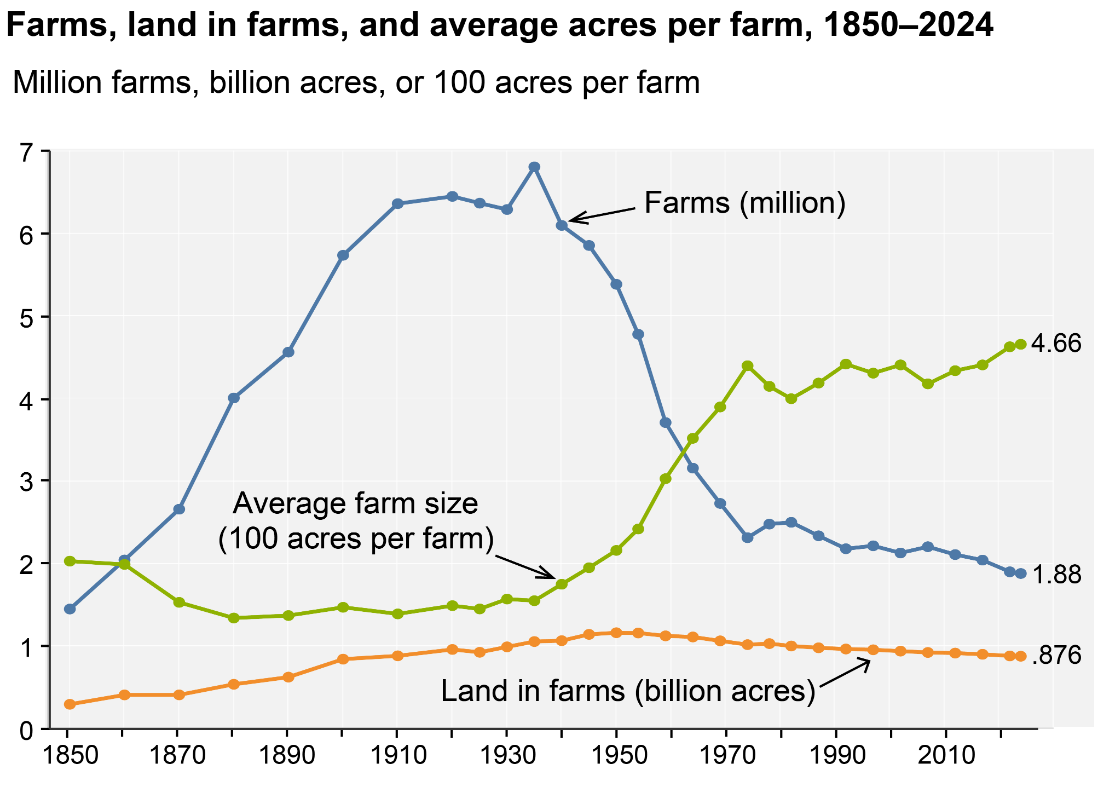
No wonder the number of farms continues to decline.

What the Farm Bill (an apparently hopeless cause at the moment) really needs to do is to start from scratch and do two things: promote smaller scale organic and regenerative farming that will protect soil, mitigate climate change, and repopulate the Midwest, and make sure those farmers make an adequate living.

Mar 27 2026

Weekend reading: The hidden cost of cheap food

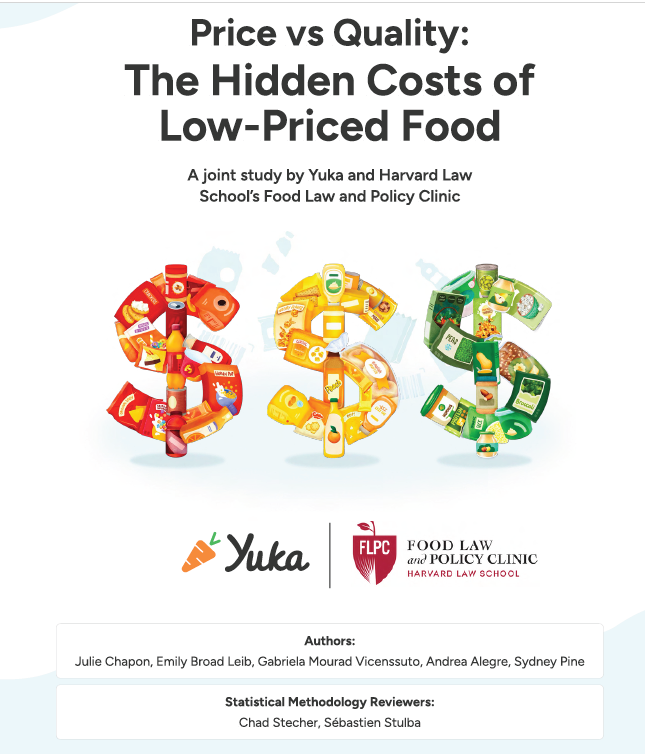
Take a look at this new report:

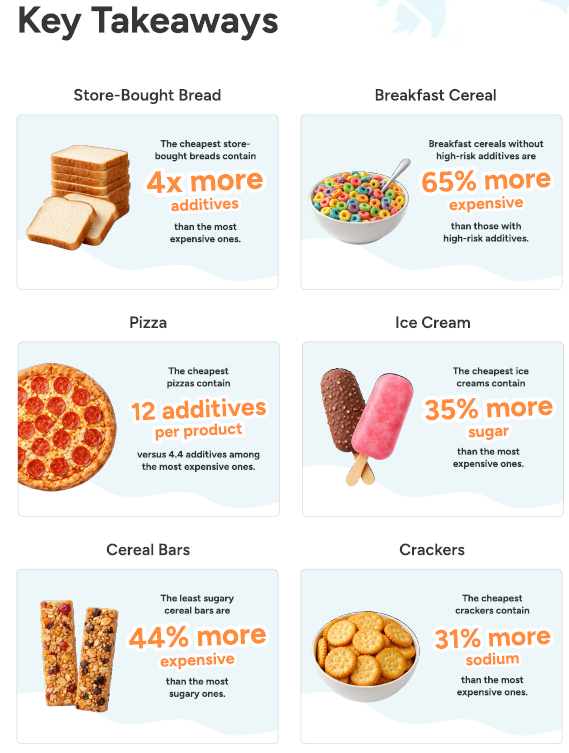
I love the report’s quick summary:

Mostly, this report looks at additives.  The authors looked at 800 products.

Their basic finding: the cheaper the price, the greater the number of additives.

The report calls for a collection of policy interventions to improve standards for additives in foods.

I hope RFK Jr reads this report.

Note: Yuka has a vested interest in getting you to use its app to check the additives in the foods you buy.

Feb 17 2026

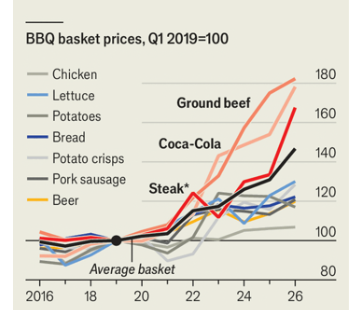
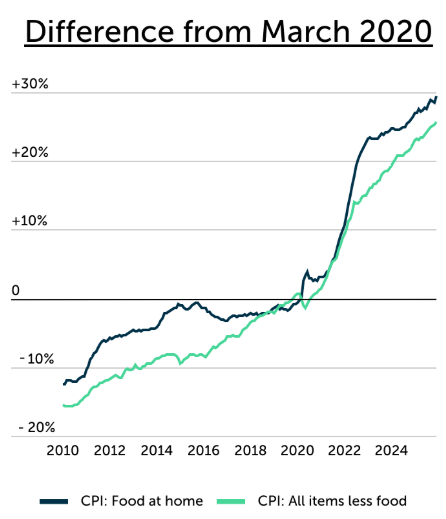
What’s happening with prices at the grocery store?

If you think food prices are increasing, you are right.

I’ve been sent an analysis from Trace One.

Trace One says “grocery prices rose 0.7% in December, the largest one-month increase since October 2022—underscoring how food costs remain a major pain point for households even as broader inflation cools.”

Some of its findings:

  • Grocery inflation has outpaced broader inflation since the pandemic began.
  • Beef products have seen the sharpest price increases.
  • Average household grocery spending is nearing $700 per month nationally.

Comment

I’m kind of shocked by what food is costing these days.  In writing What to Eat Now, I could see that prices doubled since I wrote What to Eat in 2006.  BPut now they’ve gone up even more.  This is fine if income is going up too.

But what if it’s not?

And what if SNAP benefits are cut?

These are tough times.

Nov 27 2025

Happy Thanksgiving: What is it costing you?

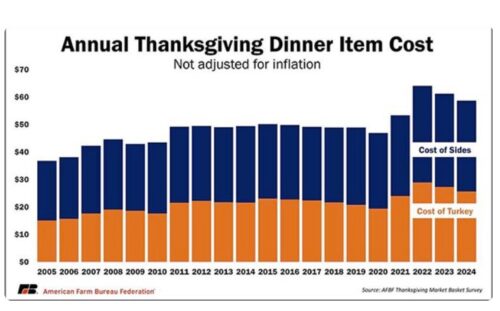
Here’s the trend.

At issue is what’s happening now.

The White House says: Americans Are Paying Less This Thanksgiving.

President Donald J. Trump promised to crush inflation and lower prices — and he’s delivering this Thanksgiving, with the classic holiday feast about 3% cheaper than last year, according to a brand new reportAmericans are seeing across-the-board price declines for the holiday staples, with dinner rolls down 22%, frozen vegetables down 15%, and items like turkeys, stuffing, gravy mix, fresh cranberries, and pumpkin pies all costing less.

It’s proof that under President Trump’s leadership, America is winning the war on high prices — even as Democrats grind the country to a halt with their deranged, reckless government shutdown.

Alas, not everyone sees it this way.


Feb 26 2025

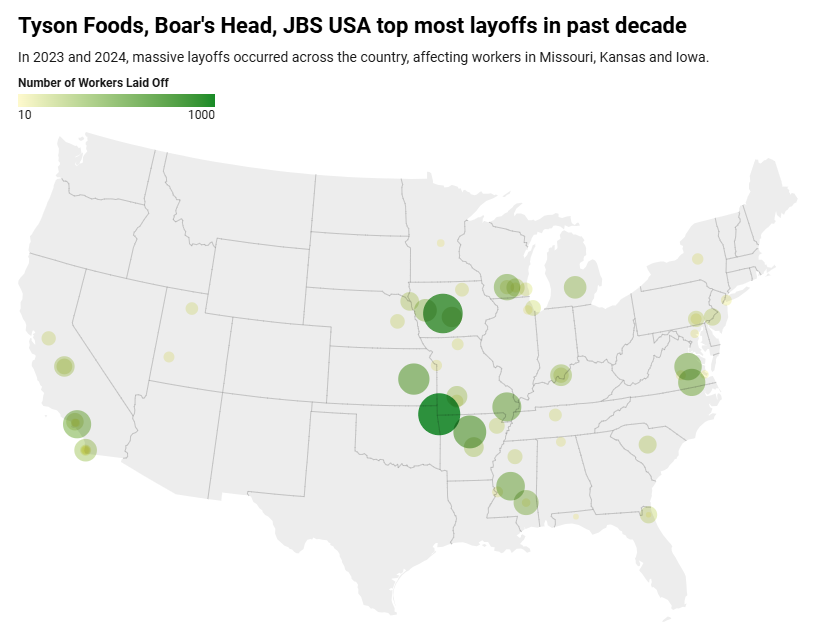
What’s up with all the food production plant closures?

At a glance across the country: Meatpacking plants closed at an unprecedented rate this year, accelerated by a number of factors such as rising livestock costs, workforce shortages, food safety violations and foodborne illnesses, and ongoing industry consolidation.

Here are some examples: of these and others:

The last couple of years have seen lots of these.  It will be interesting to see what happens this year, especially with immigration “reform” looming on the horizon.  Pretty certain: food prices will rise. A lot.

Nov 28 2024

Happy turkey day to all!

Well, only a little.

First, what this dinner is going to cost you: less than last year but more than before the pandemic.

And how about some agricultural statistics for turkeys?

And some key facts:

  • The rise and fall of turkey production in the U.S.: Since 1960, per capita turkey production rose sharply and peaked in 1996 at 26.8 pounds per person. However, in 2022, annual production had dropped to just 20 pounds per person—a decline of approximately 25%.
  • Rising prices and shifting consumer demand: Health concerns and changing dietary preferences play a significant role, with more Americans choosing plant-based diets and reducing meat consumption. Rising turkey prices, which increased from $0.80 per pound in 2018 to $1.40 per pound in 2023, also impact consumption.
  • Larger birds soften the decline: The average size of turkeys raised in the U.S. has nearly doubled since the 1960s—averaging 32 pounds per bird compared to around 18 pounds in the 1960s. This trend has helped maintain relatively high production levels even as the total number of turkeys raised has declined (a peak of approximately 303 million birds annually in 1996, but an estimated 218 million birds in 2023).

Aren’t you happy to know all this?

Enjoy your dinner!

Aug 28 2024

Kamala Harris v. rising food prices

At last, a presidential candidate interested in food.

The Harris-Walz agenda aims to lower costs for Americans, food costs among them.

Vice President Harris and Governor Walz will work to enact a plan in their first 100 days to go after bad actors to bring down Americans’ grocery costs and keep inflation in check. They will work with Congress to:

  • Advance the first-ever federal ban on price gouging on food and groceries;
  • Set clear rules of the road to make clear that big corporations can’t unfairly exploit consumers to run up excessive profits on food and groceries.
  • Secure new authority for the FTC and state attorneys general to investigate and impose strict new penalties on companies that break the rules.

Furthermore,

Vice President Harris will also direct her Administration to crack down on unfair mergers and acquisitions that give big food corporations the power to jack up food and grocery prices and undermine the competition that allows all businesses to thrive while keeping prices low for consumers.

And her plan will support smaller businesses, like grocery stores, meat processors, farmers, and ranchers, so those industries can become more competitive….More competition means lower prices for you and your families.

Unfair mergers?  Mars had just proposed to buy Kellanova, and I discussed the Kroger-Albertson’s proposed merger yesterday.

At a campaign event in North Carolina, Vice President Kamala Harris again discussed food prices.

A loaf of bread costs 50 percent more today than it did before the pandemic.  Ground beef is up almost 50 percent.  Many of the big food companies are seeing their highest profits in two decades.  And while many grocery chains pass along these savings, others still aren’t.

…My plan will include new penalties for opportunistic companies that exploit crises and break the rules, and we will support smaller food businesses that are trying to play by the rules and get ahead.

…We will help the food industry become more competitive, because I believe competition is the lifeblood of our economy.  More competition means lower prices for you and your families.

Good, but these are campaign promises that necessarily depend on Congressional support.

As Politico explains,

…it’s unlikely Democrats will have the votes to pass price-gouging legislation in Congress. Her proposal essentially mirrors a bill from Democratic Sens. Elizabeth Warren (D-Mass.), Bob Casey (D-Pa.) and Tammy Baldwin (D-Wis.) that has stalled amid GOP opposition.

And Harris’ pitch, which includes giving the FTC more resources to investigate major acquisition deals in the food sector, would need GOP buy-in so Democrats can swing extra FTC resources via spending fights in Congress.

The food industry, of course, protests.

The Food Industry Association blames higher prices on inflation.

The National Grocers Association says its profit margins are already too thin.

I have no idea how any of this will play out, but it’s terrific to see food issues on the agenda.