
This is 6:00–8:00 p.m. at NYU’s Bobst Library. Registration and further information are here.


I’m always interested in the latest updates on progress toward the Sustainable Development Goals.
17 Goals to Transform Our World: The Sustainable Development Goals are a call for action by all countries – poor, rich and middle-income – to promote prosperity while protecting the planet. They recognize that ending poverty must go hand-in-hand with strategies that build economic growth and address a range of social needs including education, health, social protection, and job opportunities, while tackling climate change and environmental protection.
Thid new progress report is just out: Sachs, J.D., Lafortune, G., Fuller, G. (2024). Sustainable Development Report 2024: The SDGs and the UN Summit of the Future. Dublin University Press. 500 pages (!).
Its first key finding:
On average, globally, only 16% of the SDG targets are on track to be achieved by 2030, with the remaining 84% demonstrating limited or a reversal of progress.
- Off track: SDG 2 (Zero Hunger), SDG11 (Sustainable Cities and Communities), SDG14 (Life Below Water), SDG15 (Life on Land) and SDG16 (Peace, Justice, and Strong Institutions).
- Reversal of progress: obesity rate (under SDG 2), press freedom (under SDG 16), the red list index (under SDG 15), sustainable nitrogen management (under SDG 2), life expectancy at birth (under SDG 3).
Its key finding specifically related to food:
SDG targets related to food and land systems are particularly off-track: Globally, 600 million people will still suffer from hunger by 2030, obesity is increasing globally, and greenhouse gas emissions from Agriculture, Forestry, and Other Land Use (AFOLU) represent almost a quarter of annual global GHG emissions.
What needs to be done:
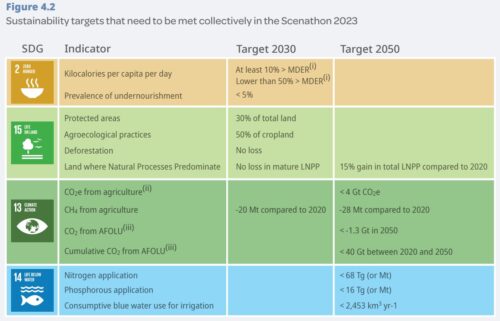
The recommendations:
Significant progress is possible but requires several dramatic changes:
1) avoid overconsumption beyond recommended levels and limit animal-based protein consumption with dietary shifts compatible with cultural preferences;
2) invest to foster productivity, particularly for products and areas with strong demand growth; and
3) implement inclusive, robust, and transparent monitoring systems to halt deforestation.
And how, exactly, are we to do this? This, the report does not, and cannot, specify.
Report resources




