The Global Food Institute at George Washington University has a new report out: Changing the Default: A Policy Roadmap for Reducing Added Sugars in U.S. Children’s Diets, by Fielding-Singh, P., D. Cherlin, and M. Maitin-Shepard. June 2026.
What the report is about:
American children today consume far too much added sugar, and it is harming their health. The 2025-2030 Dietary Guidelines for Americans set the most ambitious target yet for reducing this intake. This brief offers a policy roadmap for what it would take to make meaningful progress toward it.
It calls for reshaping the food environment to help kids eat less sugar. Its recommendations focus on educating families, but also setting higher school nutrition standards and reshaping sugar supply and demand.
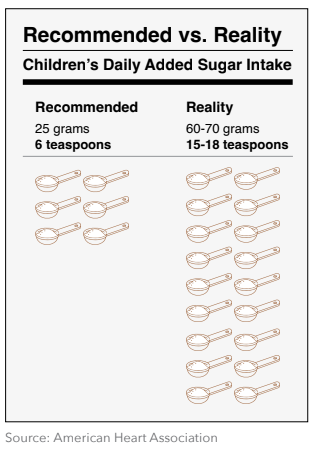
Here’s why this matters:
The advice:
- Reduce sugars in the food supply.
- Tax sugary drinks.
- Restrict marketing of sugary foods and drinks to kids.
Comment
It’s a clear, succinct report with lots of good suggestions.
If only they could be implemented.
Get to work!