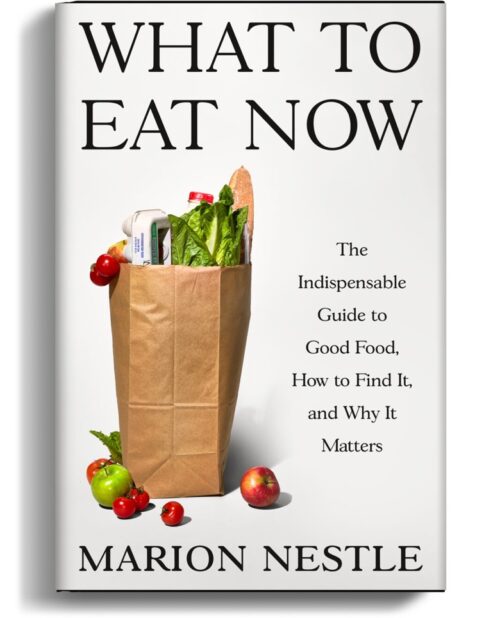

This is from 6:30-9:30 p.m. at The Greene Space, WNYC NPR Studios, 44 Charlton Street. For information and reservations, click here.

A reporter asks:
I was wondering if you could share your thoughts with me about the new study finding phthalates in boxed Mac & Cheese. Should consumers be afraid of just Mac & Cheese, considering phthalates are ubiquitous and found in almost every food we consume? What are your recommendations?
Here’s what I said:
The moral of this story is to eat a healthy diet and you don’t have to worry about things like phthalates. What is a healthy diet? It’s one in which most of the calories come from relatively unprocessed fruits, vegetables, and grains, and heavily processed foods—like boxed Mac & Cheese—are kept to a minimum. The phthalate-in-Mac-and-Cheese problem is a processing issue. Phthalates leach in during processing. You love Mac and Cheese? Great. Make your own.
What’s going on here?
For starters, I love Mac & Cheese, although not so much for the kind in boxes.
In case you don’t know much about this dish, check out the Hartman group’s useful historical Infographic.
As for phthalates:
So why am I not more upset about them? They are easy to avoid. Just don’t eat foods in boxes.
David Katz has an excellent piece that puts phthalates in a wider dietary context:
This whole topic represents risk distortion, and it’s something we tend to do all the time. We all know, or certainly should, that a dietary pattern of wholesome, whole foods, mostly plants, is monumentally good for us. Such a diet not only minimizes bad chemicals in the food we eat, it – more importantly- minimizes bad food in the food we eat!
This is from 6:30-9:30 p.m. at The Greene Space, WNYC NPR Studios, 44 Charlton Street. For information and reservations, click here.