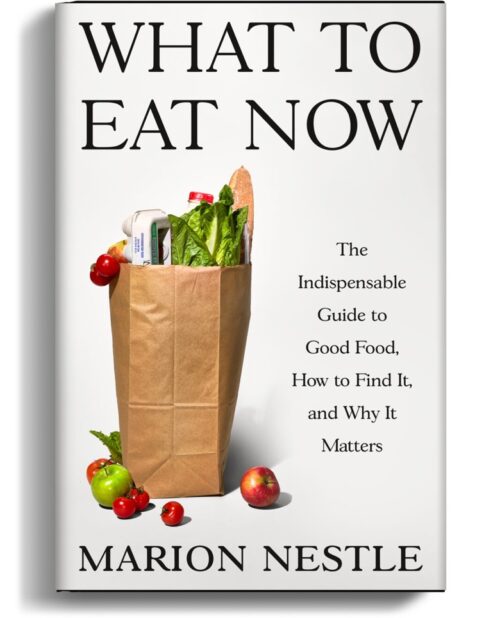

This is from 6:30-9:30 p.m. at The Greene Space, WNYC NPR Studios, 44 Charlton Street. For information and reservations, click here.

A reader, Gema Flores Monreal, who holds a doctorate in Food Science and Nutrition, pointed me to this study. She noted that it examines the effects on blood pressure of eating 5 to 6 servings of dairy per day, twice what is typically recommended.
it is easy to understand why a dairy company would want research like this. People are consuming less dairy food, and the industry wants to reverse the decline.
The study: Effect of high compared with low dairy intake on blood pressure in overweight middle-aged adults: results of a randomized crossover intervention study. Rietsema S, and 11 other authors. Am J Clin Nutr 2019;110:340–348.
Conclusions: “This intervention study shows that an HDD [high dairy diet] results in a reduction of both systolic and diastolic BP [blood pressure] in overweight middleaged men and women. If the results of our study are reproduced by other studies, advice for high dairy intake may be added to treatment and prevention of high BP.”
Funding: “Supported by the Public–Private Partnership Topconsortium voor Kennis en Innovatie (TKI) Agri & Food (TKI-AF-12104).” FrieslandCampina, a Dutch multinational dairy cooperative, is part of the partnership. Two of the authors are employed by FrieslandCampina.
Comment: As I discuss in Unsavory Truth, research like this has a high probability of producing biased results. I’m reserving judgment about dairy foods and blood pressure until results like these are confirmed by independent research.
This is from 6:30-9:30 p.m. at The Greene Space, WNYC NPR Studios, 44 Charlton Street. For information and reservations, click here.