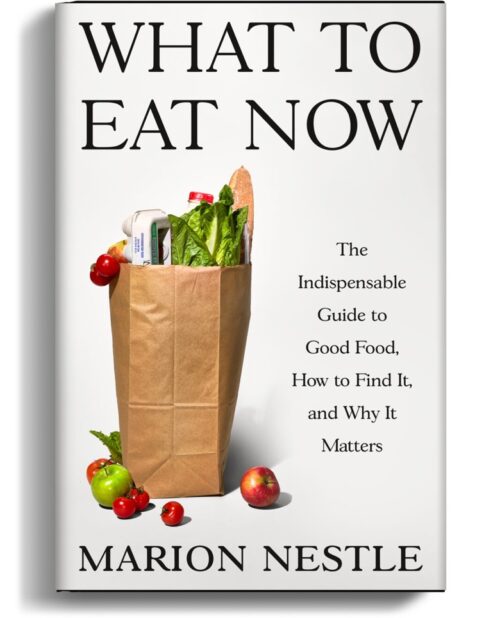

This will be at the bookstore, 6:00 to 8:00 p.m., a conversation with Lane Selman, founder of Portland’s Culinary Breeding Network, followed by audience Q&A and a book signing. Information and RSVP here.

Last year, the Egg Nutrition Center offered free continuing education credits for dietitians.
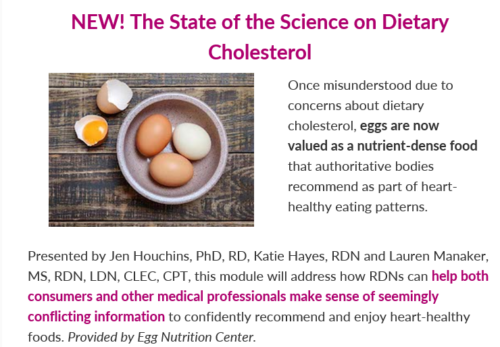
This year, I received an e-mailed press release: EMBARGOED FOR RELEASE: 8:00 a.m. ET, Thursday, March 28, 2024
Fortified Eggs Did Not Raise Cholesterol in Modest-Sized Cardiology Study
Further study needed to investigate secondary findings.
…A study presented at the American College of Cardiology’s Annual Scientific Session and led by researchers at Duke, offers new evidence on fortified eggs, which are eggs enriched with various vitamins or nutrients. In a modest-sized randomized trial, researchers found that fortified eggs did not have a negative impact on bad cholesterol (LDL cholesterol) or good cholesterol (HDL cholesterol) over the course of the four-month study.
The study was sponsored by Eggland’s Best, a company that makes and sells fortified eggs. It also provided the eggs used in the research.
The egg industry funds research in collaboraion with the USDA.
Example: Mott MM, Zhou X, Bradlee ML, Singer MR, Yiannakou I, Moore LL. Egg Intake Is Associated with Lower Risks of Impaired Fasting Glucose and High Blood Pressure in Framingham Offspring Study Adults. Nutrients. 2023 Jan 18;15(3):507. doi: 10.3390/nu15030507.
Conclusion: This study found that regular egg consumption as part of a healthy diet had long-term beneficial effects on blood pressure and glucose metabolism and lowered the long-term risks of high blood pressure and diabetes.
Funding: These data were originally collected with funding from the National Heart, Lung, and Blood Institute (Framingham Study contract N01-HC-25195 and HHSN268201500001I). These analyses were also supported by a small grant from the American Egg Board’s Egg Nutrition Center of the U.S.Department of Agriculture.
Comment: Regardless of recommedations about dietary cholesterol, the advice has always been that one egg a day is OK. That’s 365 a year. According to the USDA’s per capata availability data, the average is only 275 (in 2021). The egg industry wants you to eat more eggs and is working hard to get you to do that.
This will be at the bookstore, 6:00 to 8:00 p.m., a conversation with Lane Selman, founder of Portland’s Culinary Breeding Network, followed by audience Q&A and a book signing. Information and RSVP here.