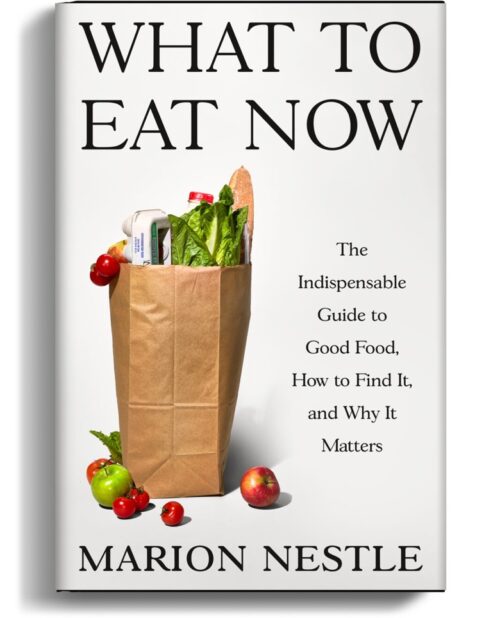

This will be at the bookstore, 6:00 to 8:00 p.m., a conversation with Lane Selman, founder of Portland’s Culinary Breeding Network, followed by audience Q&A and a book signing. Information and RSVP here.

A reader, Maria Birman, alerted me to this new report in Lancet Diabetes & Endocrinology from the 56-member Commission on the Definition and Diagnosis of Clinical Obesity. The commission recommended shifting the definition and diagnostic criteria for obesity away from the BMI and instead defining obesity in two categories based on health status.
Maria writes:
I’m astonished by the full two-page “declaration of interests” (no conflict there, of course not!). Naturally Eli Lilly and Novo Nordisk are very much interested in obesity being considered a disease, and a treatable one at that. And doctors and scientists paid by these companies authored this paper which is posed to be very influential.
I took a look at the conflict-of-interest statement. It is indeed astonishing as it goes on and on for nearly two pages in four columns.
Maria saved me from having to go through the analysis. Here are her counts.
Comment
No question, the BMI is an imperfect measure of the health risks of obesity, although it works pretty well as a first step. Defining obesity as a disease may well help get treatment for people who need it.
I wish we had a health care system that could help people with obesity find out whether they have the clinical or pre-clinical form. In the absence of a functional health care system, we have drugs—effective and without deleterious side effects for some people, but for the great majority, highly expensive and hard to get.
This commission appears as an arm of the pharmaceutical industry. Its findings require careful scrutiny.
This will be at the bookstore, 6:00 to 8:00 p.m., a conversation with Lane Selman, founder of Portland’s Culinary Breeding Network, followed by audience Q&A and a book signing. Information and RSVP here.