

This is from 6:30-9:30 p.m. at The Greene Space, WNYC NPR Studios, 44 Charlton Street. For information and reservations, click here.

After two years of work, the Government Accountability Office has just published: WIC Infant Formula:Single-Supplier Competitive Contracts Reduce Program Costs and Modestly Increase Retail Prices.
Here’s its quick summary:
Over half the country’s infant formula is bought through the Special Supplemental Nutrition Program for Women, Infants, and Children (WIC). States must contract with the formula manufacturer that offers the lowest price after a rebate to be their sole supplier for WIC.
Two formula manufacturers hold most of the contracts. In 2022, the U.S. had a formula shortage because one of them halted production after a recall.
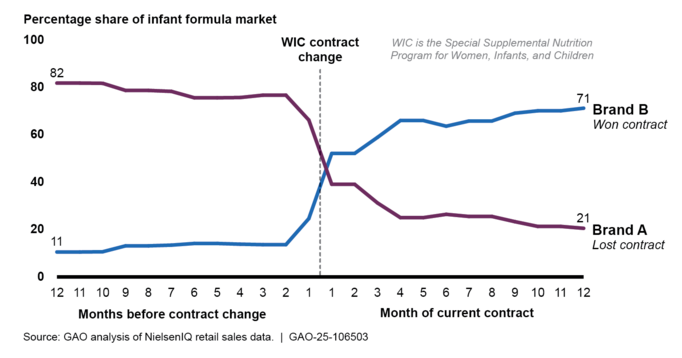
While sole supplier contracts make states vulnerable to supply disruptions, the rebates saved states about $1.6 billion in FY 2023. These savings offset other WIC food costs, allowing the program to serve more eligible participants.
This is such a weird system—monopoly infant formula in action!—that’s it hard to fathom. But take a look at this:
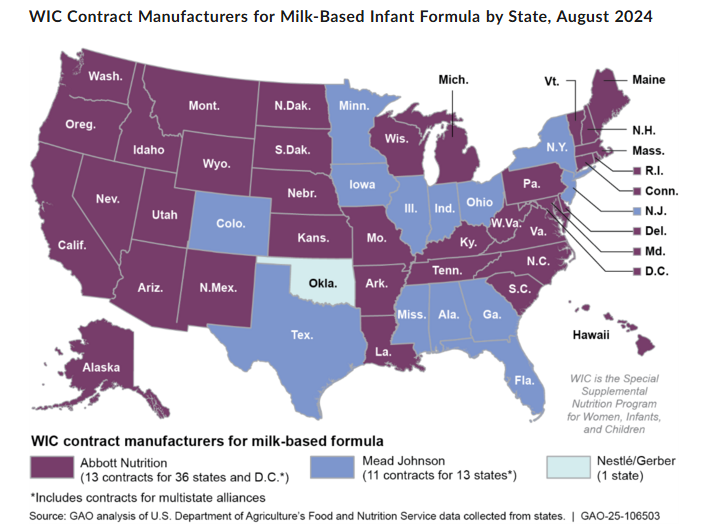
Let me just say that all infant formulas have to meet the FDA’s strict nutritional requirements. This means that they are all the same nutritionally.
But the prices differ by four-fold, as far as I can tell.
So this is all about marketing share. Take a look at the effects of WIC on this market.
This is from 6:30-9:30 p.m. at The Greene Space, WNYC NPR Studios, 44 Charlton Street. For information and reservations, click here.




