Information about the Aspen Ideas Festival is here. I am scheduled for a session, The American Wellness Paradox, currently scheduled from 11:00-11:50 a.m., at the East Lawn Tent. This will be a discussion with senior HHS policy advisor, Calley Means. Here’s the blurb on it: “Americans are spending more than ever on healthcare, supplements, wellness trends, and “clean eating,” yet rates of chronic disease and metabolic illness continue to climb. As skepticism fuels the rise of movements like MAHA, debates over what Americans should eat have become deeply cultural, political, and economic. Two influential voices with sharply different perspectives on nutrition and food science explore how food systems, farming practices, consumer culture, and the wellness industry collided to create one of the defining public health debates of our time.”
WHO seeks comments on saturated fat and trans fat
The World Health Organization (WHO) is collecting comments until June 4 on its recent “consultation” (committee report) on saturated fat and trans fat.
The consultation recommends:
- Saturated fat: no more than 10% of calories
- Trans fat: no more than 1% of calories
These recommendations are consistent with
- WHO advice from 2002
- The 2015 Dietary Guidelines for Americans
- Other dietary recommendations dating back decades
I wish that dietary recommendations would refer to foods, not nutrients.
We don’t eat specific fatty acids. We eat foods containing mixtures of saturated, unsaturated, and polyunsaturated fatty acids; some foods have more than one kind than another.
Trans fats appear in highly processed foods. Therefore, they are a euphemism for snack and other foods containing them.
As for saturated fats: the Dietary Guidelines give their main sources:
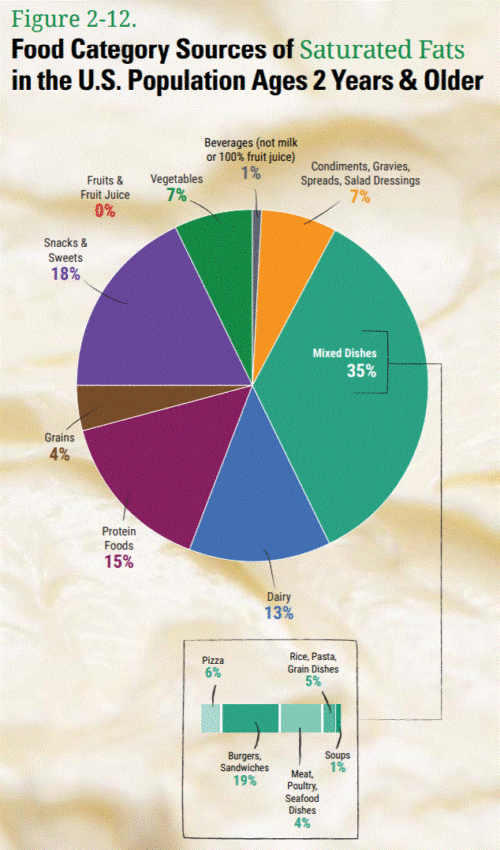
The guidelines use two layers of euphemisms.
- Saturated fat is a euphemism for meat and dairy foods; these have higher proportions of saturated fatty acids.
- “Mixed dishes” and “protein foods” are also euphemisms for meat and dairy foods.
But saying so is politically impossible.
Do comment on the WHO guidelines. It may help clarify the recommendations.