

This is from 6:30-9:30 p.m. at The Greene Space, WNYC NPR Studios, 44 Charlton Street. For information and reservations, click here.

Is arsenic in rice something you should be worried about?
I never know what to say about food contaminants consumed in tiny amounts, in this case, micrograms (millionths of grams) per serving.
The FDA devotes a web page to arsenic in rice. Here, the agency releases the results of its testing, which found amounts of arsenic mostly below 6 micrograms per serving.
Higher levels—11 micrograms per serving—were found in three samples from Texas, Louisiana and California. The highest was 30 micrograms per serving of hot ready-to-eat rice bran cereal.
Is this good, bad, or indifferent? And how would we know?
The FDA says such levels are too low to cause concern about short-term health problems.
But Consumers Union thinks the real issue is the long-term effects.
Today’s widely-reported message on arsenic levels in rice misses the point. The issue is not the short-term risks of rice consumption. The concern is the long-term effects from exposure to arsenic in rice. As Consumer Reports has said in the past, consumers should not ignore the potential risks from consuming rice and rice products over a long period of time…Consumers are not well-served if they do not have the full story. The concerns about long-term effects are significant and warrant the FDA’s decision to investigate further.
The FDA says it plans further investigations. In the meantime, it says you should:
This is always good advice.
But Consumers Union is more specific. It suggests you worry a little and observe these limits:
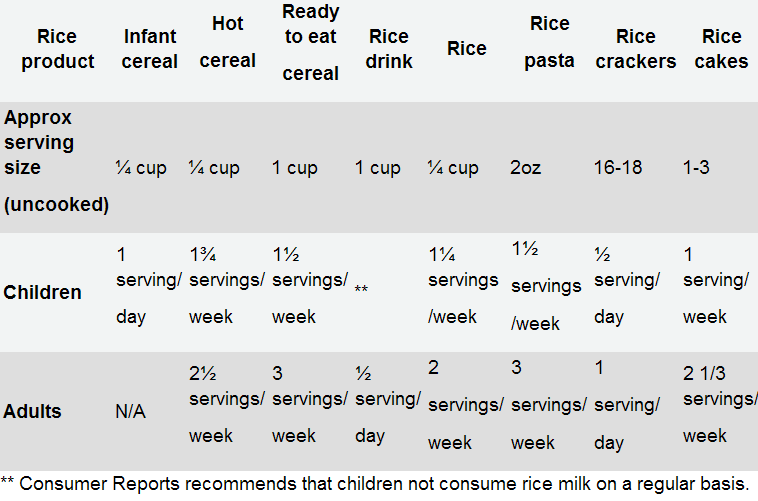
At the moment, this is the best information available. FDA: get to work!
FDA references:
This is from 6:30-9:30 p.m. at The Greene Space, WNYC NPR Studios, 44 Charlton Street. For information and reservations, click here.