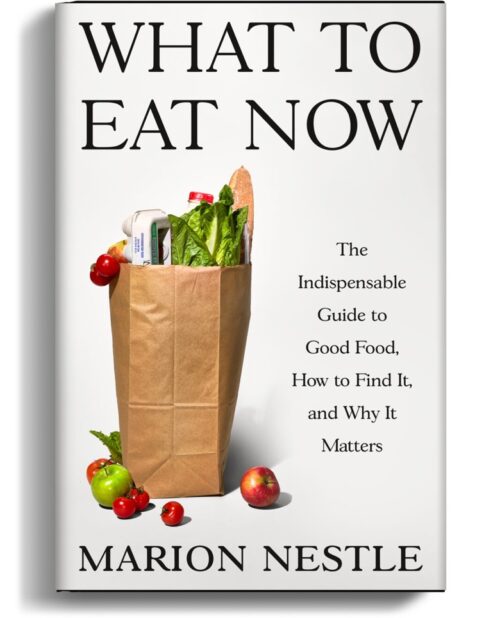
More information is here. Autumn Leaves Books is on the Commons.

Today’s New York Times has another front-page (and on the inside, full-page) story on the food industry’s financial relationships with academic scientists.
The article describes how Monsanto funded scientists to lobby for GMOs in Washington (I will say more about this in a subsequent post).
But, as is clear from this report, the organic industry is doing much the same.
The Times based the story on e-mails it collected through open records law requests (the equivalent of Freedom of Information Act requests for federal documents).
And surprise! I turn up in Charles Benbrook’s. I learned this from checking Twitter yesterday.

I’m only on the B-list for influencing public opinion? Alas.
It seems that Charles Benbrook, a strong proponent of organics (as am I), was working with (for?) the Organic Valley Cooperative on a public relations campaign to promote his organics-funded study demonstrating that organic milk has a healthier fatty acid profile than conventional milk.
I vaguely remember him contacting me about the study, but I didn’t write anything about it. It appeared to be an industry-funded study with results favoring the sponsor’s interests—much as, in this case, I sympathize with those interests.
A few months later, I did write write about another conflicted organic study:
The study is not independently funded….This study is another example of how the outcome of sponsored research invariably favors the sponsor’s interests. The paper says “the [Sheepdrove] Trust had no influence on the design and management of the research project and the preparation of publications from the project,” but that’s exactly what studies funded by Coca-Cola say. It’s an amazing coincidence how the results of sponsored studies almost invariably favor the sponsor’s interests. And that’s true of results I like just as it is of results that I don’t like.
Benbrook has been criticized recently for not fully disclosing his ties to the organic industry. Even if he had, disclosure is not enough.
The bottom line: Conflicted studies are conflicted, no matter who pays for them.
Documents: Charles Benbrook