The Consumer Goods Forum works with manufacturers and retailers to improve practices that benefit consumers such as food safety and health.
It has just released its latest Health & Wellness Progress report based on a survey it conducted in 2016. The report is based on responses from 102 food, beverage, and retail companies.
The Forum encourages food companies to address health and wellness challenges: healthier products, the health of employees, consumer information, and responsible marketing.
I was particularly interested in seeing the results on product reformulation: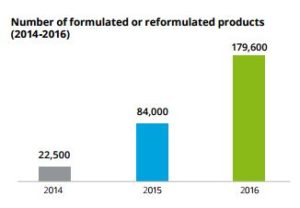
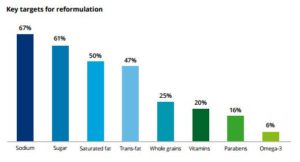
Here’s what’s being reformulated:
Will product reformulation make a difference to health?
Or, as some say, is it just another corporate political strategy, one aimed at diverting policies from moving towards mandatory approaches.
Product reformulation has been praised as a rare example of a “win-win” for the food and beverage industry and public health efforts to reduce obesity and NCDs [noncommunicable diseases], and has been described as a “pragmatic” nutrition policy…However [there are]…numerous reasons to suggest that voluntary reformulation also plays a role in the industry’s strategy to avoid unfavorable regulatory conditions, and this finding warrants significant consideration.