Information about the Aspen Ideas Festival is here. I am scheduled for a session, The American Wellness Paradox, currently scheduled from 11:00-11:50 a.m., at the East Lawn Tent. This will be a discussion with senior HHS policy advisor, Calley Means. Here’s the blurb on it: “Americans are spending more than ever on healthcare, supplements, wellness trends, and “clean eating,” yet rates of chronic disease and metabolic illness continue to climb. As skepticism fuels the rise of movements like MAHA, debates over what Americans should eat have become deeply cultural, political, and economic. Two influential voices with sharply different perspectives on nutrition and food science explore how food systems, farming practices, consumer culture, and the wellness industry collided to create one of the defining public health debates of our time.”
by Marion Nestle
Apr
2
2018
US Food Assistance, 2018 Overview
USDA has just published its latest overview of US food assistance.
Here’s what this is about:
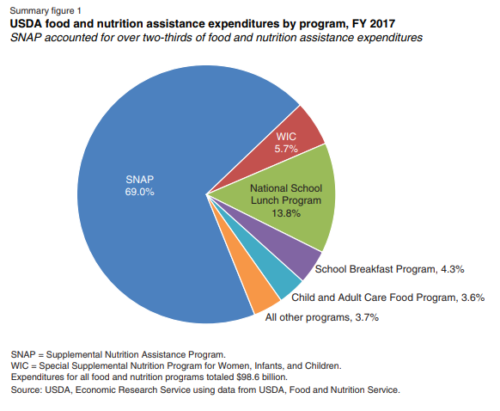
These percentages apply to total USDA spending on 15 domestic food and nutrition assistance programs: $98.6 billion in FY 2017.
The bottom line: expenditures are down and have been declining for the past 4 years. $98.6 billion is 4% less than in 2016 and nearly 10% less than the all-time high of $109.2 billion set in FY 2013.
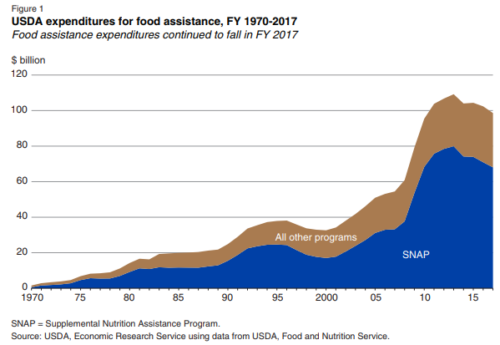
How come?
Note: The prevalence of food insecurity has not changed.
Although USDA attributes the drop to improvements in the economy, the prevalence of food insecurity has not changed.
Therefore, we have to ask: Could tougher eligibility requirements and application procedures have anything to do with this?