
This is 6:00–8:00 p.m. at NYU’s Bobst Library. Registration and further information are here.


The Food and Agriculture Organization of the United Nations has named about 50 Globally Important Agricultural Heritage Systems (GIAHS).
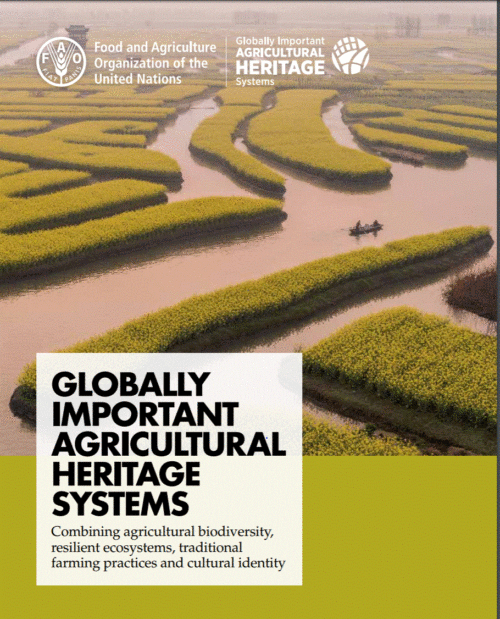
These recognize “the proudest traditions of human ingenuity in harnessing precious resources to provide food and livelihoods and protect unique ecosystems.”
They are:
Outstanding landscapes of aesthetic beauty that combine agricultural biodiversity, resilient ecosystems and a valuable cultural heritage. Located in specific sites around the world, they sustainably provide multiple goods and services, food and livelihood security for millions of small-scale farmers. Through a remarkable process of coevolution of humankind and nature, such sites have emerged over centuries of cultural and biological interactions and synergies, representing the accumulated experiences of rural people….
GIAHS sites are testimony to the inventiveness and ingenuity of people in their management of resources, biodiversity and ecosystem dynamics, and use of landscapes, codified in traditional but evolving knowledge, practices and technologies. These ancestral agricultural systems constitute the foundation for contemporary and future agricultural innovations and technologies. Their cultural, ecological and agricultural diversity is still evident in many parts of the world, maintained as unique systems of agriculture.