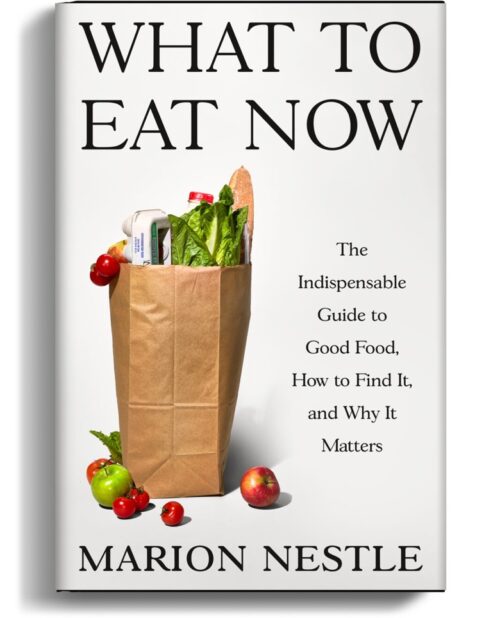
This is 6:00–8:00 p.m. at NYU’s Bobst Library. Registration and further information are here.


I learned about this one from a tweet:
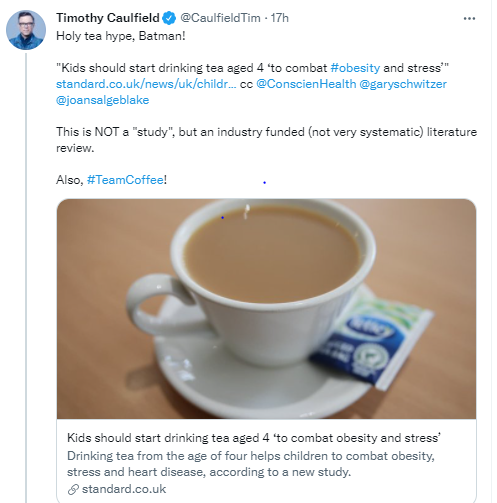
This seemed worth a follow up.
Here’s the article from The Standard:
Drinking tea from the age of four helps children to combat obesity, stress and heart disease, according to a new study.
I checked the study: Tea and Wellness throughout Life
Overall, this review concludes that tea consumption contributes to health and wellness throughout life and that everyone should be encouraged to enjoy three cups daily as part of a healthy lifestyle pattern.
Who paid for this?
Conflicts of interest: The authors received funding provided by the Tea Advisory Panel (www.teaadvisorypanel.com), which is supported by an unrestricted educational grant from the UK TEA & INFUSIONS ASSOCIATION (UKTIA), the trade association for the UK tea industry. UKTIA plays no role in producing the outputs of the panel. Independent panel members include nutritionists, biochemists, dietitians, dentist and doctors.
I don’t really care who was on the panel. This was an industry-paid project with a predictable—if eyebrow-raising—result. Tea is lovely and there is no reason to think it unhealthy, but surely some skepticism is called for here?
Reference: For a summary of research on the “funding effect”—the observations that research sponsored by food companies almost invariably produces results favorable to the sponsor’s interests and that recipients of industry funding typically did not intend to be influenced and do not recognize the influence—see my book, Unsavory Truth: How Food Companies Skew the Science of What We Eat.