
This is 6:00–8:00 p.m. at NYU’s Bobst Library. Registration and further information are here.


Fruit juices were not a problem when I was growing up.
Ancient history: Juice was so expensive—it was freshly squeezed from several oranges—that we couldn’t afford to drink much of it, Juice glasses were 6 ounces.
This was long before cheap concentrated juice appeared in supermarkets, let alone canned and bottled juices and juice drinks.
Because juice is squeezed from several fruits, the sugars add up but the fiber disappears.
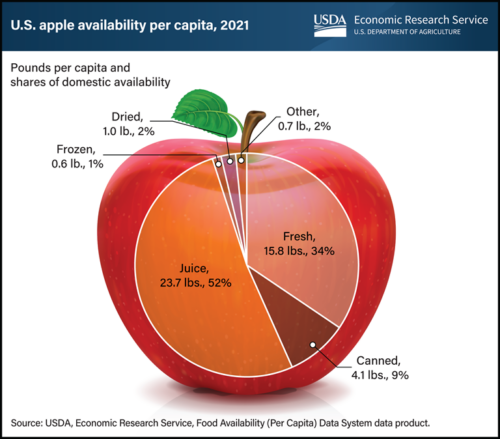
The USDA says more than half of apples available for U.S. consumption are used in juices.
All that juice may not be as healthy as you might think. Two reasons: calories and toxic metals.
in this systematic review and meta-analysis, 1 serving per day of 100% fruit juice was associated with BMI gain among children. Findings in adults found a significant association among studies unadjusted for total energy, suggesting potential mediation by calories…Our findings support guidance to limit consumption of fruit juice to prevent intake of excess calories and weight gain.
TOXIC METALS: Toxic metals and essential elements contents in commercially available fruit juices and other non-alcoholic beverages from the United States. Journal of Food Composition and Analysis, Volume 119, June 2023, 105230.
The results showed that the concentrations of Ni, Mn, B, Cd, Sr, As, and Se exceeded the recommended drinking water standards, whereas the remaining elements were found below the drinking water standards….consumption of metals either below or above the drinking water standards can increase the cumulative metals exposure from combined sources and may lead to adverse health outcomes…The study found seven of the 25 elements measured exceeded drinking water standards, especially in the mixed fruit juices. While toxicity is unlikely, more attention should be paid toward moderate beverage consumption, especially to protect the health of infants and young children.
The fruit juice industry—yes, there is such a thing—is fighting back by funding its own research (thanks to Jim Krieger of Healthy Food America for sending this one).
The study: Health effects of 100% fruit and vegetable juices: evidence from human intervention studies. September 2023. Nutrition Research Reviews. DOI: 10.1017/S095442242300015X.
Purpose: The review aimed to shed light on the potential impact of 100% FVJ on human subject health, comprehensively assessing the role each type of juice may have in specific health outcomes for a particular target population, as reported in dietary interventions.
Findings: Some juices demonstrated their ability to exert potential preventive effects on some outcomes while others on other health outcomes, emphasising how the differential composition in bioactive compounds defines juice effects.
Conclusion: Although 100% FVJ appear to have beneficial effects on some cardiometabolic health outcomes, cognition and exercise performance, or neutral effects on anthropometric parameters and body composition, further efforts are needed to better understand the impact of 100% FVJ on human subject health.
Funding: This work was partially funded by the International Fruit and Vegetable Juice Association (IFU). The funder of the study had no input on the design, implementation, analysis or interpretation of the data. P.M. received a research grant from IFU to conduct this review. The authors have no other conflicts of interest to declare.
Comment: This is the usual result from industry-funded articles. Fruit is better, but juices are fine in small amounts—bring back 6-ounce glasses!
And while we are on the topic, this just in: Are all sugars equal? Role of the food source in physiological responses to sugars with an emphasis on fruit and fruit juice.
Of the currently available data on direct comparisons of whole fruit versus fruit juice, there is no clear evidence for meaningful differences in glycaemic control, inflammation, or blood pressure. There is, however, consistent evidence that whole apples can lower plasma low-density lipoprotein cholesterol concentrations compared with fruit juice.




