The American Heart Association has just published its updated dietary guidelines: The 2026 Dietary Guidance to Improve Cardiovascular Health: A Scientific Statement From the American Heart Association [the press release is here].
These constitute a firm rebuttal to the MAHA (Make America Healthy Again) guidelines issued in January.
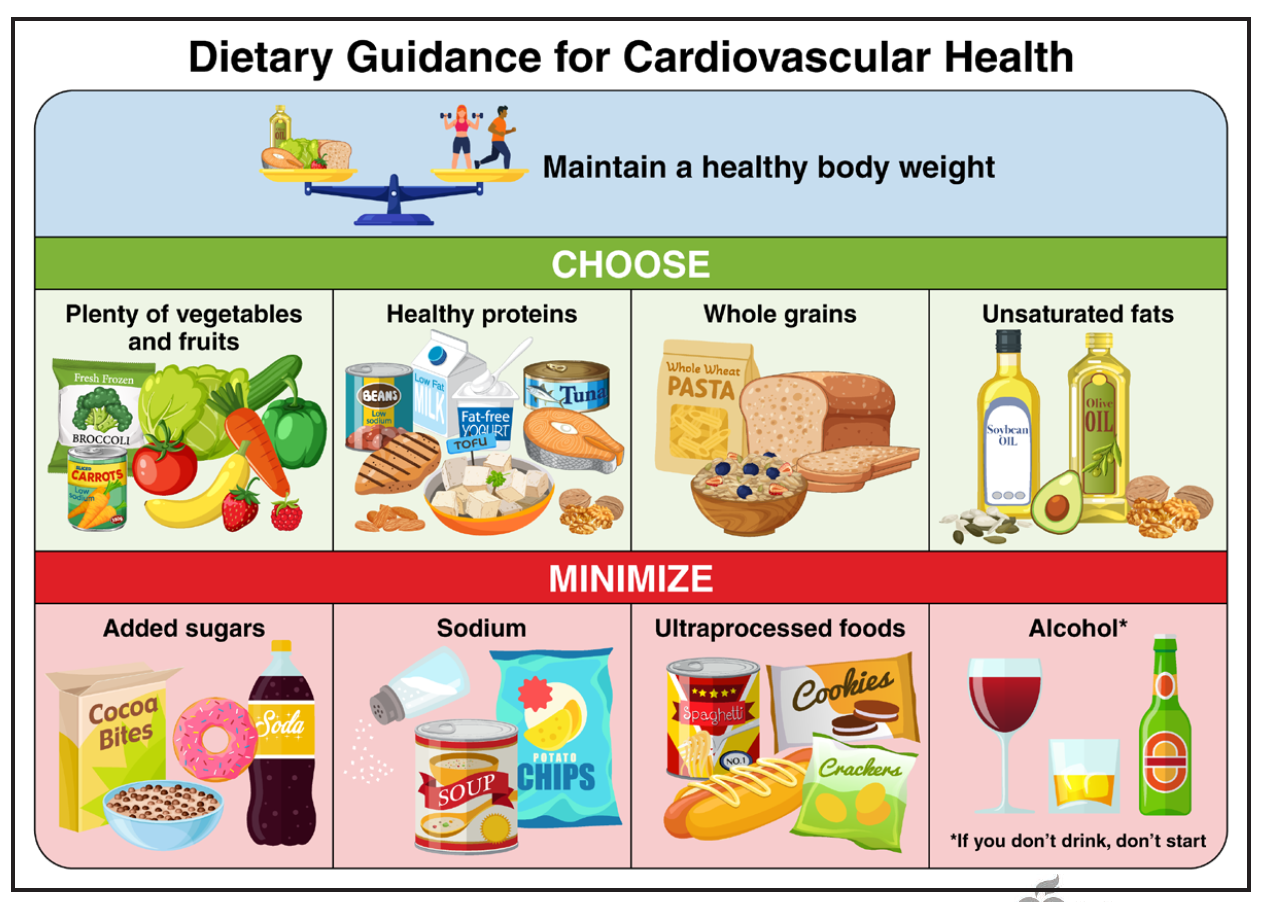
The AHA’s clear and straightforward messages are beautifully illustrated:
The AHA messages particularly differ from the MAHA messages:
- Protein: Plant rather than animal sources
- Meat: Lean cuts, avoid processed, limit portions
- Dairy: Low-fat or fat-free rather than full-fat
- Fats: Unsaturated rather than saturated; nontropical oils rather than animal fats and tropical oils
The Wall Street Journal summarized the differences in its headline: Heart Association clashes with RFK, Jr over red meat, dairy, and beef tallow.
The recommendations, released Tuesday by the association, contrast with dietary guidelines that the Trump administration introduced earlier this year. The differences add to disagreements between the federal government and mainstream medical groups on medicine and nutrition advice, after the Health and Human Services Department under Health Secretary Robert F. Kennedy Jr., for instance, sought to dial back vaccine recommendations and President Trump told pregnant women to minimize Tylenol use.
In response, senior food advisor to RFK, Jr, Calley Means, posted:
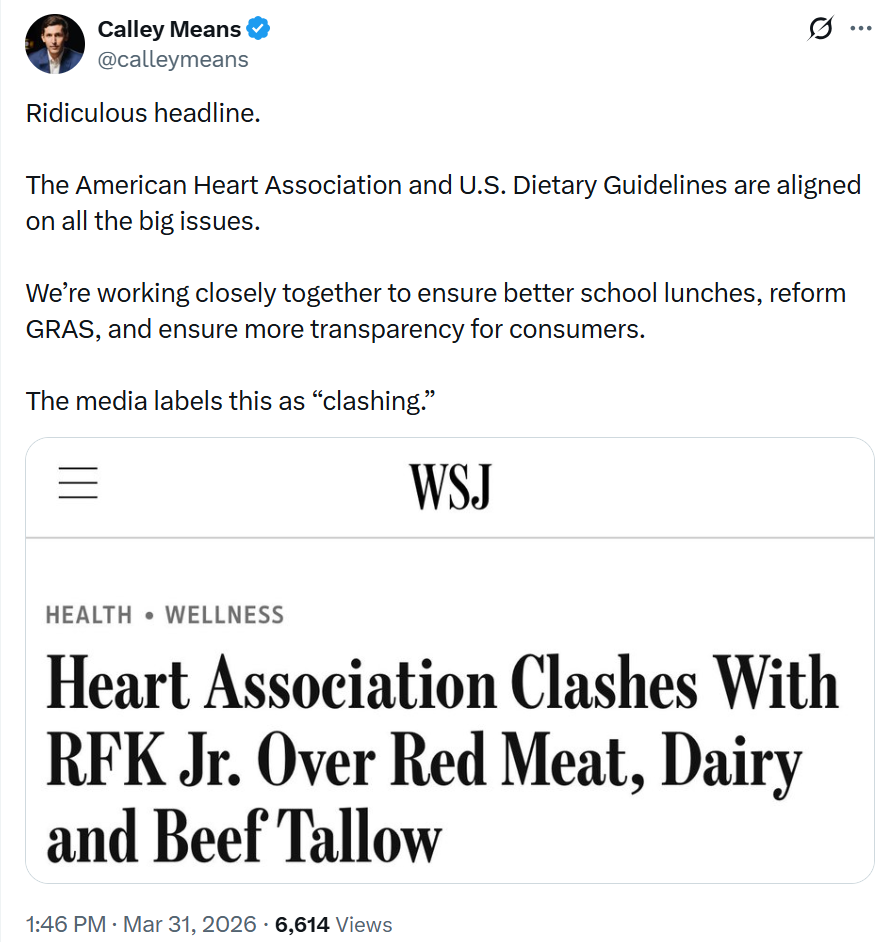
I suppose clashing is a matter of perception, but the differences are real.
Earlier, Calley Means had posted a more gracious response:
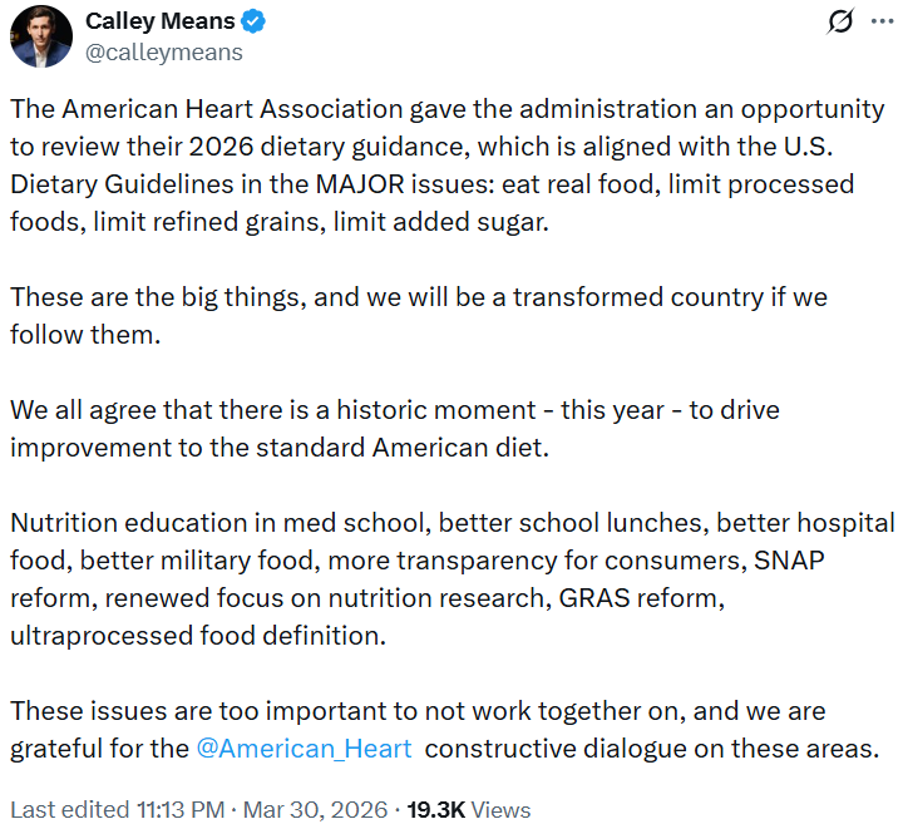
Wow! Applause to the American Heart Association. Let’s hope its graphic replaces the meat-heavy inverted pyramid and ends up in all the textbooks.
One last point: This is dietary advice for heart disease prevention, but it works for everything else too—obesity, other major chronic diseases, overall longevity, and while it’s at it, planetary as well as human health.