Feb
24
2009
No wonder food companies don’t like traffic lights
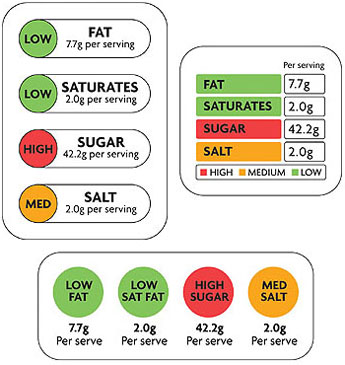
A report just out from the European Union explains why food companies so strongly oppose traffic light systems for labeling food products. Consumers interpret red lights as meaning “don’t eat me.” Here is how the U.K. Food Safety Authority is using traffic lights. Compare this to the check mark system preferred by the food industry.
Leave a comment
Next public appearance
Mar
1
2012
New York: Barnard College
Distinguished Women in Science lecture, 5:30 p.m.
Search
Related posts
Topics for this post
All Topics
5-a-Day
AAFP(American Academy of Family Physicians)
AAP(American Academy of Pediatrics)
Acrylamide
ACSH(American Council on Science and Health)
Activity
ADA(American Dietetic Association)
Addiction
Additives
Advocacy
Agave
Aging
Agriculture
AHA(American Heart Association)
Alcohol
Alice-Waters
Allergies
American-Diabetes-Association
Animals
Antibiotics
Antioxidants
Arsenic
Artificial-sweeteners
ASN(American Society of Nutrition)
Asthma
Açaí
Beef
Bill-Marler
Biofuel
Blogs
Books
Bottled-water
BPA(Bisphenol-A)
Bread
Breakfast
Breast-feeding
Brian-Wansink
Bribery
Burger-King
Caffeine
CAFOs(Concentrated Animal Feeding Operations)
calcium
Calorie-labeling
Calories
Campbell
Canada
Cancer
Candy
Cantaloupe
Carcinogens
Cargill
CCF(Center for Consumer Freedom)
CDC(Centers for Disease Control)
Cereals
Charlie-Rose
Checkoff
Cheerios
Cheese
Chickens
China
Chinese-infant-formula
Chocolate
Cholesterol
Climate change
Cloned-animals
Coca-Cola
Coffee
Colbert
Comments-Monitoring-Policy
Comments-Policy-Monitoring
ConAgra
Conflicts-of-interest
Consolidation
Consumer Reports
Cookie-dough
Cooking
Cooking-measurements
COOL(Country of Origin Labeling)
Corn
CSPI(Center for Science in the Public Interest)
CSR(Corporate Social Responsibility)
Dairy
Del Monte
Denmark
Diabetes
Diet-and-dieting
Diet-and-energy-drinks
Diet-drugs
Dietary-Guidelines
Disney
E.coli
Eat-less-and-move-more
EatingLiberally
EFSA
EFSA(European Food Safety Authority)
Eggs
EPA
Eric-Schlosser
Ethanol
Ethics
Events
Excerpt
FAO
FAQ
Farm-bill
Farm-policy
Farm-workers
farmers markets
farms
Fast food
Fats-and-oils
FDA
feed efficiency
Fiber
films
First Amendment
Fish
Flaxseed
FMI(Food Marketing Institute)
Food
Food-and-Water-Watch
Food-art
Food-assistance
Food-availability
Food-choice
Food-colors
Food-composition
Food-crisis
Food-culture
Food-deserts
Food-guide
Food-Inc
Food-industry
Food-industry-regulation
Food-magazines
Food-marketing
Food-miles
Food-movement
Food-policy
Food-quality
Food-safety
Food-security
Food-stamps
Food-studies
Food-supply
Food-systems
Food-trade
Food-waste
FOP(Front-of-Package)Labels
Fortification
Framingham-Heart-Study
Fruits-and-vegetables
FTC (Federal Trade Commission)
Functional-foods
Futures-markets
GAO
GAO(Government Accountability Office)
Gardens
Gary-Taubes
General-Mills
Gluten
GM(Genetically Modified)
GMA(Grocery Manufacturers Association)
Grassfed
Green-food
HACCP(Hazard Analysis and Critical Control Point)
Hannaford
Health-aura
Health-claims
Health-statistics
Heart-disease
HFCS (High Fructose Corn Syrup)
HHS(Department of Health and Human Services)
Hormones
Hugo drinks
Hydroponics
hyperactivity
IASO
India
Infant-formula
International
Interviews
IOM (Institute of Medicine)
iraq
Irradiation
IWG(Interagency Working Group)
Jamie-Oliver
Japan
Job-Ads
Joy-of-Cooking
Juice-drinks
juices
Junk food
Kellogg
Kelly-Brownell
KFC
Kids' diets
King-Corn
Korea
Kraft
krill
Label-scoring-systems
Labels
Lawsuits
Legislation
Let's Move!
Listeria
Lobbies
Local-food
Lévi-Strauss
Mad-cow-disease
Malnutrition
Manure
maps
Margarines
Marketing to kids
Mark Hegsted
Mars
McDonald's
meal frequency
Meat
Meat safety
Meat substitutes
media
Melamine
Mercury
Michael-Pollan
Michael-Taylor
military
Milk
Monsanto
Movies
MSG
MyPlate
Nanotechnology
Natural
neighborhoods
Nestlé
New-York-City
New-Zealand
Niman
Nutrient-availability
Nutrition-education
Nutrition-standards
Nutritionism
Obama
Obesity
Obesity-in-kids
Obesity-policy
Omega-3-fats
Organic-fish
Organic-standards
Organics
orthorexia
Oysters
Pakistan
Partnerships
Patents
Paula Deen
Peanut-butter
Peanuts
PepsiCo
personal responsibility
Pesticides
Peter Jennings
Pet food
Phil Lempert
Photos
Pistachios
pizza
Pork
Portion sizes
Potatoes
pregnancy
Pric
Price-fixing
Price-of-food
Probiotics
Processing
Protein
Public-health
Pyramid
Quotes from What to Eat
Radioactivity
Raw-foods
Raw-milk
rBGH
recipes
Red-Bull
Research
Restaurants
Revolving-door
Right-to-food
Rosa DeLauro
RWJ Foundation
S.510
Salmonella
Salt
San-Francisco-Chronicle
scho
School-food
Seeds
shrek
Single-food-agency
Slow Food
Smart Choices
Snack foods
Socioeconomic-factors
Soft drinks
soy
Spinach
Splenda
Sprouts
Starvation
Stevia
sticky
Sugar
Supermarkets
Supplements
Supreme court
Surveys
sushi
Sweeteners
Swine flu
Taste
Taxes
Techno-foods
Television
Thomas Friedan
Tim Lang
Tobacco
Tomatoes
Toxins
Trans-fat
Tufts
Twitter
Tyson-foods
United Nations
Urban-farming
USDA
Vegetables
Vegetarian-and-vegan
Vending-machines
Videos
Vitamin-water
Vitamins
Wall-Street
Walmart
Water
WHO(World Health Organization)
Whole Foods
Whole grains
WIC
World hunger
Yearly Kos
Yogurt


Comments
Seems like the consumers have the right idea: pick foods without the red flags.
[...] ignorance (cf. Sarah Palin), though business in general seems to prefer uninformed customers. (See this post by Marion Nestle.) Here’s the story in the LA Times, and here are a couple of snippets: The [...]
What about the folks that have some level of red/green colorblindness? Personally, there are times when I can’t tell the difference, usually depending on the shade of red/green and also the size of the dots. If the labels always had the word ‘low’ or ‘high’ that would be fine (but then why have the colors….?)
Anyway, I try to buy “food” not “food products”, so this really doesn’t affect our household much.