Breastfeeding in the news
The Berkeley Media Studies Group has just released a “Framing Brief” with “how-to” advice for breastfeeding advocates. The Brief argues that babies’ health is not a sufficient reason to get moms to breastfeed.
Instead, advocates need to help create environments that support breastfeeding.
This and a previous report on breastfeeding issues, “Talking about Breastfeeding,” were commissioned by the California WIC Association with support from The California Endowment.
That these reports come none too soon is evident from a recent commentary that the International Code of Marketing of Breastmilk Substitutes (“the Code”) has become ineffectual.
The Code is an international agreement about what infant formula companies can and cannot ethically do to promote their products, based on substantial research that infant formula marketing undermines breastfeeding.
According to the study in the Archives of Diseases of Children, the Code has become
mired by a series of alleged violations and boycotts, which are counter productive to the code’s goal….[These include an] unrelenting series of disputes, predominantly relating to alleged violations of the code, which have provoked high profile acrimonious exchanges, boycotts and legal proceedings…[leading] to an atmosphere of mistrust that has now become embedded between key agencies.
The author focuses on disputes between the non-governmental group Baby Milk Action and infant formula manufacturer Nestlé (no relation). He recommends that an “ombudsman” or some other independent body be given authority “to arbitrate and ensure that actions taken by respective parties are in keeping with the spirit of the code.”
This is not a bad idea—if the body is truly independent. Take a look at the Baby Milk Action website and judge for yourself whether you think the group makes a compelling case for Code violations. Some of them seem pretty obvious to me.
As I recount in Food Politics, infant formula companies have a long pre-Code history of putting sales before infant health. Almost everyone I know thinks the situation has improved post-Code, but not nearly enough.
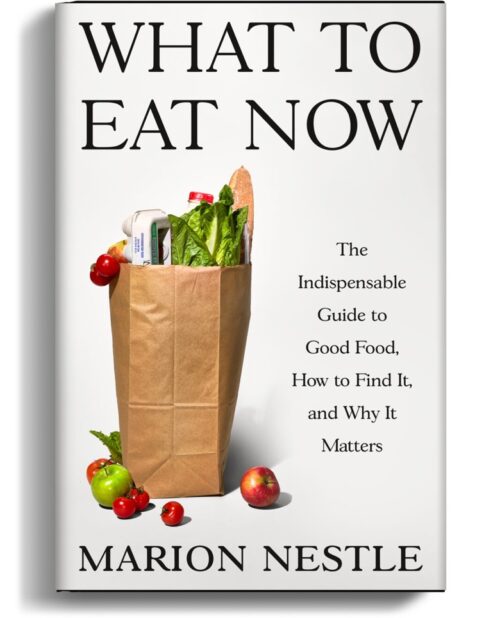
As I explain in What to Eat, formula companies have a business-model problem: there are only so many infants born each year and they only use formula for a limited time.
The companies only have two choices for growth: recruit more babies onto formula or extend the period of formula feeding. The first strategy was well documented pre-Code and continues to be documented. The second is illustrated by the now withdrawn product, chocolate toddler formula Enfagrow (see previous posts).
Breastfeeding advocates: read the new reports and get busy!
Update, July 31: Patty Rundall of Baby Milk Action has written a rebuttal to the commentary. Other ideas? You can forward them to her at prundall@babymilkaction.org.

Comments
[...] This post was mentioned on Twitter by fadsandfancies.com and Cold Mud, Jonathan Chiu. Jonathan Chiu said: Breastfeeding in the news: The Berkeley Media Studies Group has just released a “Framing Brief” with “how-to” advi… http://bit.ly/cFZqa9 [...]
i remember there was also an issue before on how they advertise breastfeeding making it look “so easy” but the reality it’s not…well, i do not see anything wrong with that. how do you encourage moms to breastfeed if you do not show them the good side of it? admittedly here in our country, breastfeeding is very much supported and in the end of every formula milk commercial, they still have a reminder how important breastfeeding is. aside from its health benefits, with the poor economy nowadays, breastfeeding is the way to go. formula milk could get very painful to the pocket…
@melissa- the problem with sending the message that breastfeeding is easy is that when a new mom has a problem (and a lot of us do!), she will assume that it is her fault, or that she just can’t do it, and give up.
Now, in some cases, this may be justified. But I suspect that in the vast majority of the cases, it is not, and the problem can be solved. But many women give up because they think there should be no problems. That is just not realistic in our current society.
I think we should be honest: breastfeeding is better, but formula is not horrible. Breastfeeding is easier in some ways (I always have food on hand for my baby, for instance) but there are some things that are hard, particularly early on. Many, many woman think that the effort to get through the early days is well compensated for by the pay off later- I can honestly say that breastfeeding my daughters has been one of my favorite things about motherhood.
And then we need to work on the cultural environment. We shouldn’t make women go hide in a back room (or a bathroom!) to nurse their baby- unless the baby needs the quiet. Our society should get over our hang ups about this.
Breastfeeding is easy in the same way that riding a bike is easy. Someone has to help you figure it out, you practise and fumble, and then you get the hang of it. Some bikes are easier to ride than others, some riders are better than others, some riders need training wheels longer than other. Your next baby is like getting used to a new bike — the same, but with differences.
But, it isn’t easy to breastfeed in our society. There’s the rub. Lack of traditional knowledge transfer from grandmothers/mothers/ aunts/sisters/friends, lack of familiarity, lack of effective health professional support, short maternity leaves, a society obsessed with sexualizing breasts that makes it hard for most mothers to breastfeed around others, the increasing involvement of fathers in infant care and their desire to feed the baby — just a short list of the barriers to making something — that should be relatively easy — actually be easy.
I heard a Pediatrician say this once: “If feeding babies was an Olympic Sport, breastfeeding would win the gold medal. Feeding breastmilk from a bottle or cup would get the silver, and supplementing breastmilk/breastfeeding with a little formula would get the bronze. Formula feeding would make it to the competition, but not the podium.”
The suggestion that Baby Milk Action’s efforts to hold baby food companies to account is counter productive is simply bizarre.
We are in ongoing communication with the companies, including Nestlé. We have taken part in public meetings with Nestlé on the issue and asked it to set out its terms and conditions for an independent, expert tribunal to investigate claim and counter claim, which it has repeatedly refused to do. Our current campaign asking members of the public to email the company over its latest global marketing strategy where it claims its formula ‘protects’ babies and is ‘The new “Gold Standard” in infant nutrition’, would not have been necessary if Nestlé had respected the International Code of Marketing of Breastmilk Substitutes, which clearly prohibits such practices, and responded when we contacted it directly about this practice over a year ago. Nestlé continues to defend the practice. See:
http://info.babymilkaction.org/cem/cemjul10
Our public campaigns – backed by pressure from the boycott in the case of Nestlé – have forced changes in policies and practices to the benefit of infant health. But violations continue.
Article 11.3 of the International Code states companies should abide by the Code independently of other measures and this was reiterated in the 2010 Resolution.
We agree that there need to be better safeguards at national and international level when companies do not meet their responsibilities under the Code. Baby Milk Action and our partners have been working successfully over decades for effective implementation of the International Code and subsequent, relevant Resolutions of the World Health Assembly, which have been introduced in legislation in over 60 countries. Where these are being monitored and enforced, they are having a significant impact. For example, median breastfeeding duration has increased in Brazil from less than 3 months in the 1970s to over 10 months today.
At the international level, we currently have systems such as the UN Global Compact and the OECD Guidelines for Multinational Enterprises. We have tried to use these and found them to be worse than useless as they are voluntary, the bodies responsible for them refuse to investigate reports of violations and they provide public relations cover to companies.
Baby Milk Action has already made recommendations for improvements in the international regulatory framework. As a member of the UN System Standing Committee on Nutrition Task Force on Food Security, we developed proposals for strengthening the international framework, which are included in the publication, Global Obligations for the Right to Food. For further information, see:
http://info.babymilkaction.org/news/policyblog210510
Our work has undoubtedly helped to save the lives of many people who would otherwise have died as babies. That is because we do not accept companies dismissing reports of violations and continuing to put their own profits before the lives of babies. We find ways to hold them to account.
Perhaps this may be a little off topic but I am hoping it may help others in my situation.
Unfortunately due to my own health issues and the medications I am currently taking I am unable to breastfeed. As much as I would love to breastfeed my son it is simply not possible. So, is there any infant formula on the market that I can feel confident about feeding my son?
Thanks!
@Katie: the big secret about commercial infant formulas is that they are all alike, nutritionally. They all have to meet FDA nutritional standards and they are tightly regulated to make sure they do. I devote a chapter to infant formulas in my book, What to Eat. The only real choice is between organic and not. I’d save the worrying for other things. Enjoy your baby!