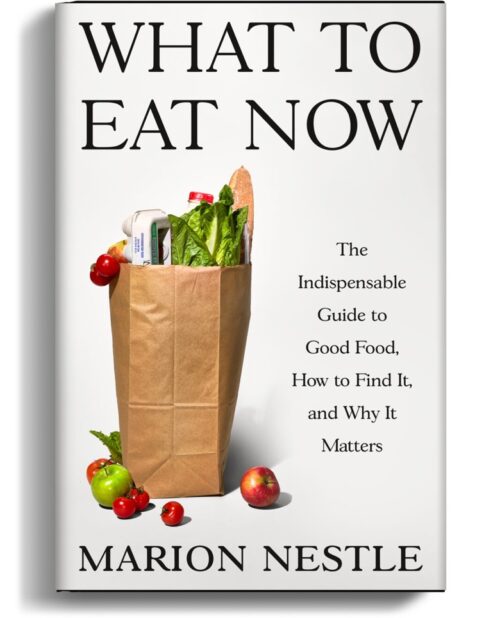
This will be at the bookstore, 6:00 to 8:00 p.m., a conversation with Lane Selman, founder of Portland’s Culinary Breeding Network, followed by audience Q&A and a book signing. Information and RSVP here.

So many people have sent me the link to the Corn Refiners’ Association website extolling the virtues of high fructose corn syrup (HFCS) that I thought you had best not miss it. OK, so lots of people think HFCS is the new trans-fat. It isn’t, but is insulting your intelligence an effective way to deal with that concern? It’s hard to know what on the website is most offensive: the videos of dumb people being condescended to by friends who think they know better (and what’s up with the race and gender combinations?), the slogans (“HFCS has no artificial ingredients and is the same as table sugar”), the quiz questions (“which of the following sweeteners is considered a natural food ingredient: HFCS, honey, sugar, or all of the above”), or the take home message: “As registered dietitians recommend, keep enjoying the foods you love, just do it in moderation.”
Let’s agree that HFCS has an enormous public relations problem and is widely misunderstood. Biochemically, it is about the same as table sugar (both have about the same amount of fructose and calories), but it is in everything and Americans eat a lot of it—nearly 60 pounds per capita in 2006, just a bit less than pounds of table sugar. HFCS is not a poison, but eating less of any kind of sugar is a good idea these days and anything that promotes eating more is not.
According to SourceWatch, this website is part of a $20 to $30 million campaign to make you stop thinking there is something evil about HFCS. Are you convinced? If the essence of public relations is to get attention – and there is no such thing as bad publicity – they got it with this website.
And thanks to my colleague Andy Bellatti who points out that another website run by the Corn Refiners provides a disclaimer: “Materials on this site are provided for informational purposes only, do not constitute legal advice and are not guaranteed to be complete, correct or up-to-date.” Oh. Maybe that explains it.
This will be at the bookstore, 6:00 to 8:00 p.m., a conversation with Lane Selman, founder of Portland’s Culinary Breeding Network, followed by audience Q&A and a book signing. Information and RSVP here.