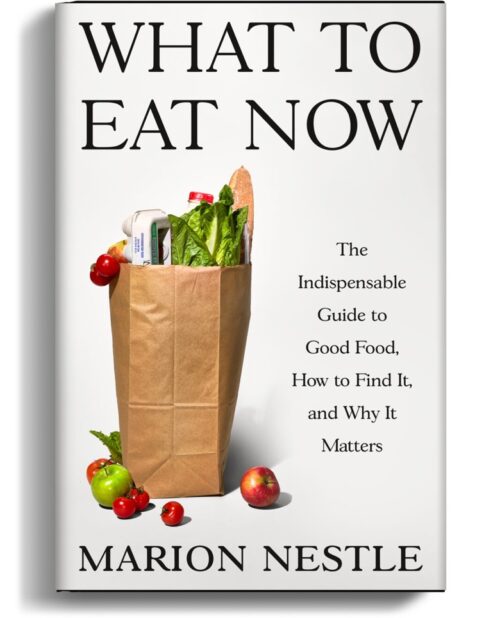

This is from 6:30-9:30 p.m. at The Greene Space, WNYC NPR Studios, 44 Charlton Street. For information and reservations, click here.

After my George McGovern lecture at FAO (see the most recent previous post), the U.S. ambassador to the U.N. in Rome, Ertharin Cousin, thanked me for speaking and then told the audience that the opinions expressed in my talk were mine alone and did not represent those of the U.S. government.
The main point of my talk was that hunger, obesity, and food safety are social rather than personal problems and require social rather than personal solutions. If such problems are individual, they can be solved with technical interventions such as functional foods, commercial weaning foods, irradiation, and genetically modified foods. But if we view them as social problems, we need to find solutions that involve sustainability, social justice, and democracy.
For example, we know how to end hunger:
These are social interventions. Technical solutions do not enter into them except in emergencies.
I praised the Obamas for leadership in promoting sustainable food production, and ended my talk with this image. I left it up while I was answering questions but the ambassador asked to have it turned off.
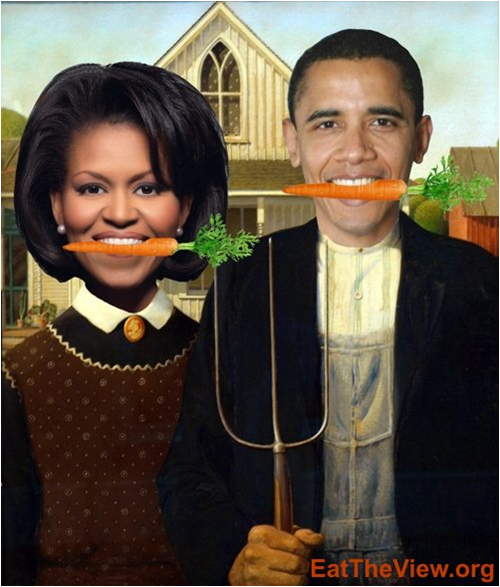 Under ordinary circumstances, I would pass her actions off as standard practice and not take them personally. But I am hearing more and more tales of pushback against such ideas.
According to an account in the Los Angeles Times, another university – this time Cal Poly in San Luis Obispo – has reneged on a Michael Pollan invitation under pressure from agricultural interests.
The L.A. Times quotes David Wood, chairman of Harris Ranch Beef Co., who has promised $150,000 toward a new meat processing plant on campus:
While I understand the need to expose students to alternative views, I find it unacceptable that the university would provide Michael Pollan an unchallenged forum to promote his stand against conventional agricultural practices.
Apparently, this university caved under pressure just as Washington State did in a similar incident earlier this year (see my post on that incident). And I hear rumors about invitations that never got offered. Freedom of speech must hold at agricultural universities unless the opinions offend donors.
Expect to see more of this as the food movement gets stronger and more effective.
This is from 6:30-9:30 p.m. at The Greene Space, WNYC NPR Studios, 44 Charlton Street. For information and reservations, click here.