New York City’s Human Resources Administration (HRA), the agency that administers the Supplemental Nutrition Assistance Program (SNAP) and other food assistance and food emergency programs, just launched the second year of its “Cut the Junk” initiative.
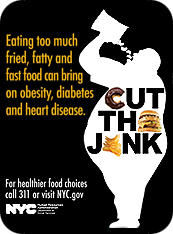
The campaign features:
- A booklet. This explains healthy eating and gives cost comparisons. It will be distributed at 35 farmers’ markets with SNAP programs
- Tricycle-based billboard visits to low-income neighborhoods
- A weekly texting service with tips and recipes (join by texting ‘NOJUNK’ to short code 877877)
- A You Tube video
The Commissioner of HRA, Robert Doar, says:
good nutrition can both save lives and taxpayer dollars…Cut the Junk presents a common-sense approach to eating healthier with less expensive alternatives than take out and fast food. Each tip in the booklet can help stretch a family’s food budget or food stamp benefits further. We are very proud to come directly to people’s neighborhoods to start talking about healthy food as an affordable reality for New Yorkers.
HRA did the campaign with Cornell Cooperative Extension.
I think the video works well. The booklet? Not so much.
I wish both said more about sodas. “Grab an apple instead of a soda” doesn’t quite do it.
The video connects viewers with city food assistance resources, and that’s a plus.
Will this campaign encourage low-income residents to choose healthier diets? I hope an evaluation is in progress.
What to say about the booklet? Take a look and tell me what you think, please.