Information about the Aspen Ideas Festival is here. I am scheduled for a session, The American Wellness Paradox, currently scheduled from 11:00-11:50 a.m., at the East Lawn Tent. This will be a discussion with senior HHS policy advisor, Calley Means. Here’s the blurb on it: “Americans are spending more than ever on healthcare, supplements, wellness trends, and “clean eating,” yet rates of chronic disease and metabolic illness continue to climb. As skepticism fuels the rise of movements like MAHA, debates over what Americans should eat have become deeply cultural, political, and economic. Two influential voices with sharply different perspectives on nutrition and food science explore how food systems, farming practices, consumer culture, and the wellness industry collided to create one of the defining public health debates of our time.”
Reports about sustainable and local farming: one after another
Sustainable Food Trust has a report on a conference on the True Cost of American Food.
Health is the obvious cost, but others include:
- the cost of nitrate and pesticide pollution of ground and river water from agro-chemicals, which in some areas of the US are so high that the water industry is struggling to provide drinking water within legal limits,
- air pollution from CAFOs shown to be increasing respiratory infections and other diseases in people living nearby,
- the loss of biodiversity, including the decline of farmland birds and pollinating insects,
- soil degradation and erosion from continuous monoculture crop production,
- the human health costs to employees working in stressful conditions in food processing plants.
The American Farmland Trust and Growing Food Connections have published GROWING LOCAL: A Community Guide to Planning for Agriculture and Food Systems.
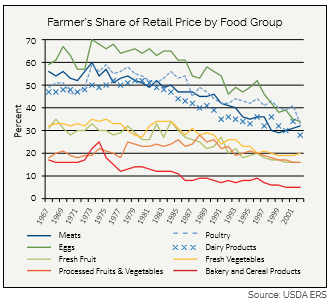
This is an enormously useful how-to guide to developing local food systems with lots of facts and figures . Here is an example:
The Federal Reserve Bank of St Louis , of all things, has issued “Harvesting Opportunity: The Power of Regional Food System Investments to Transform Communities.”
Harvesting Opportunity…highlights models for collaboration between policymakers, practitioners and the financial community, and discusses research, policy and resource gaps that, if addressed, might contribute to the success of regional food systems strategies.
New Food Economy has an analysis by Katy Kieffer on who really owns America’s farmland
While urban commercial real estate has skyrocketed in places like New York, San Francisco, and Washington, D.C., powerful investors have also sought to turn a profit by investing in the most valuable rural real estate: farmland. It’s a trend that’s driving up costs up for the people who grow our food, and—slowly—it’s started to change the economics of American agriculture.