Information about the Aspen Ideas Festival is here. I am scheduled for a session, The American Wellness Paradox, currently scheduled from 11:00-11:50 a.m., at the East Lawn Tent. This will be a discussion with senior HHS policy advisor, Calley Means. Here’s the blurb on it: “Americans are spending more than ever on healthcare, supplements, wellness trends, and “clean eating,” yet rates of chronic disease and metabolic illness continue to climb. As skepticism fuels the rise of movements like MAHA, debates over what Americans should eat have become deeply cultural, political, and economic. Two influential voices with sharply different perspectives on nutrition and food science explore how food systems, farming practices, consumer culture, and the wellness industry collided to create one of the defining public health debates of our time.”
Diet and cancer risk: the latest research evidence
The World Cancer Research Fund and the American Institute for Cancer Research have published their third compendium of information about diet and cancer risk.
By this time, their research base is so enormous that it takes them 12,000 pages to cover it. The summary alone is more than 100 pages.
Consequently, they have created an online toolkit with a matrix for dealing with the information.
The matrix provides an interactive summary of dietary correlates . Here is a clip from the section on factors that decrease cancer risk, convincingly or probably.
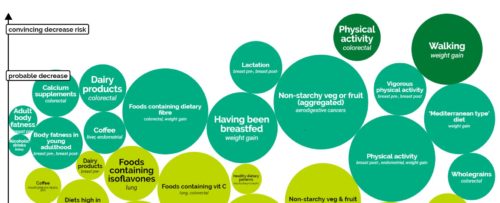
And here is a clip from the section on dietary correlates of increased cancer risk.

On the website, you can click on the bubbles to be directed to pages discussing the evidence for each of these factors.
The bottom line? Eat your veggies. Don’t gain excess weight. Avoid excess alcohol and processed meats. Be active.
Very handy, this.
The site also provides further information about these particular factors:
- Wholegrains, vegetables and fruit – PDF (2.7MB, 140 pages) | Toolkit.zip (7.4mb)
- Meat, fish and dairy products – PDF (2.5MB, 80 pages) | Toolkit.zip (4.4mb)
- Preservation and processing of foods – PDF (1.3mb, 53 pages) | Toolkit.zip (2.6mb)
- Non-alcoholic drinks – PDF (1.7mb, 64 pages) | Toolkit.zip (2.8mb)
- Alcoholic drinks – PDF (2.6mb, 85 pages) | Toolkit.zip (5.5mb)
- Other dietary exposures – PDF (1.9mb, 74 pages) | Toolkit.zip (3.4mb)
- Physical activity – PDF (1.6mb, 64 pages) | Toolkit.zip (3.8mb)
- Body fatness and weight gain – PDF (2.8mb, 142 pages) | Toolkit.zip (7.7mb)
- Height and birthweight – PDF (1.5mb, 70 pages) | Toolkit.zip (4mb)
- Lactation – PDF (1mb, 33 pages) | Toolkit.zip (1.6mb)