I am indebted to FoodNavigator-Asia.com for this intriguing bit of food news: “Health is wealth: Younger Chinese consumers make up 60% of bird’s nest purchases on JD.com.”
According to data collected by JD….consumption of bird’s nest was growing fast among this group of highly educated younger generation. The data also found that the average annual growth rate of bird’s nest sales on JD.com grew at more than 50% over the past five years…. “the younger generation in China, especially those born after 1990s are paying more attention to health as they are busy and might not eat well or rest enough.”
While edible bird’s nest is a nourishing food long prized in Chinese culture for promoting good health and skin benefits, it used to be exclusively reserved for the Chinese royal family due to its rarity and high price. However…it was now much “easier and convenient for everyday consumers to buy high-quality bird’s nest at a good price online.”
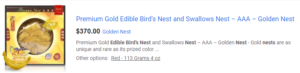
Edible bird’s nests are widely available for purchase in the U.S., imported, and not cheap.
See, for example:
 Venture capitalists: I see an opportunity here.