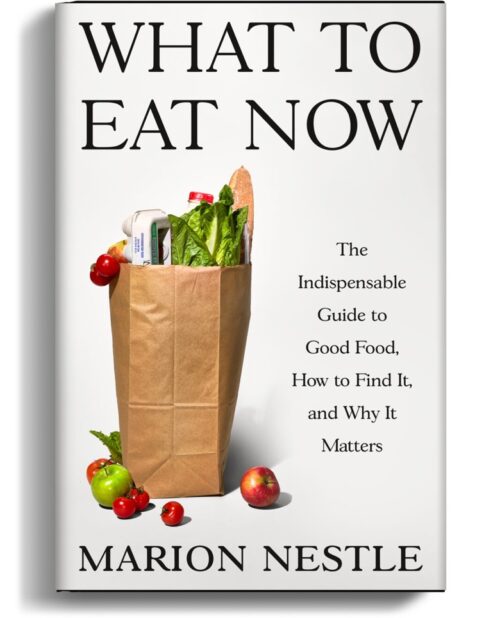

This is from 6:30-9:30 p.m. at The Greene Space, WNYC NPR Studios, 44 Charlton Street. For information and reservations, click here.

My colleague Lisa Sasson, who is a member of the Academy of Nutrition and Dietetics (formerly the American Dietetic Association), sent me a copy of its September 11 newsletter. This, she pointed out, contains this advertisement for Canadian maple syrup.
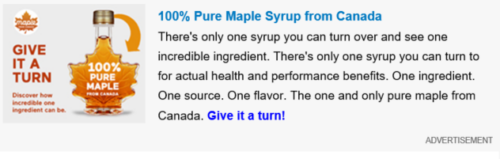
Maple syrup, delicious as it is, is basically sugar(s) in liquid form.
But “health and performance benefits”? They have to be kidding. I clicked on Give it a turn!
The first thing up: “Pure Maple Syrup is packed with nutritional benefits.”
Oh come on. We’re talking sugars here.
But the hype continues:
I went to the USDA’s food composition database to see what it says about maple syrup. Its figures are pretty close to what’s given in this ad, but so what? Manganese and riboflavin are hardly nutrients of concern in American diets—many foods have plenty—and all the other nutrients listed are in too small amounts to bother to count.
But it continues:
Maple Syrup for Fitness
- Pure maple syrup can be a natural endurance booster for athletes because it is made primarily of carbohydrates. Since carbohydrates are the primary fuel for the body, it can help give athletes the energy they need. Use in homemade sports drinks and energy snacks for a readily available supply of energy that helps maintain your stamina.
- Pure Maple syrup contains manganese, which may help support healthy muscles.
Translation: Eat sugar!
Manganese is present in a wide variety of foods, including whole grains, clams, oysters, mussels, nuts, soybeans and other legumes, rice, leafy vegetables, coffee, tea, and many spices, such as black pepper [1,2,5,10,11]. Drinking water also contains small amounts of manganese at concentrations of 1 to 100 mcg/L [5]. The top sources of manganese in the diets of U.S. adults are grain products, tea, and vegetables [4].
Maple syrup is delicious and I love it, but it is not a health food and should not be advertised to dietitians as such. The ad is misleading and makes the Academy look like it’s not on top of efforts to mislead its members.
This is from 6:30-9:30 p.m. at The Greene Space, WNYC NPR Studios, 44 Charlton Street. For information and reservations, click here.