Agriculture and climate change interact in two ways: (a) agriculture contributes to climate change, and (b) climate change affects agriculture.
In May, USDA published its plan to address (a): “Climate-Smart Agriculture and Forestry Strategy: 90-Day Progress Report.”
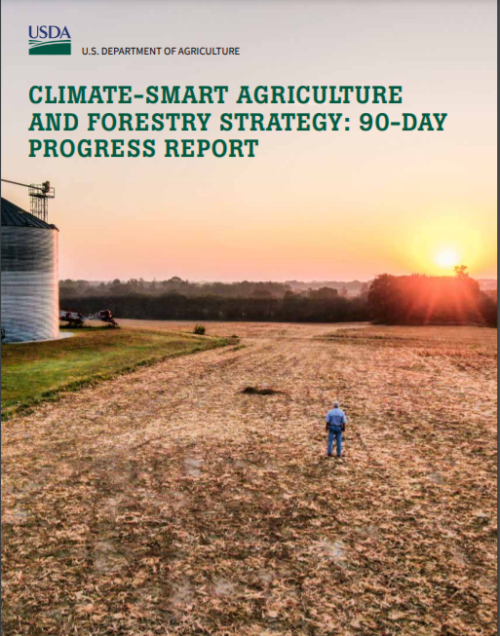
Secretary Vilsack explains:
We will look across climate science and research, forest health, outreach and education, existing programs, and new and emerging markets to advance climate-smart agriculture and forestry..Equity and justice will play a guiding role in our work…We will also prioritize actions that provide tangible, near-term benefts for low-income communities and communities of color. I am confdent that in partnership with our country’s agriculture and forestry stakeholders, we can develop a strategy that is a win-win for our producers in building climate resilience, mitigating emissions, and conserving our natural resources.
Now the USDA has just issued its plan to address (b), formitigating the effects of climate change on agriculture.
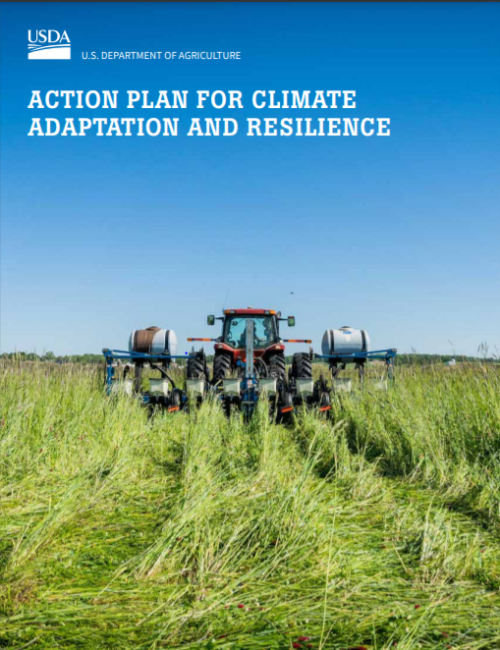
USDA Secretary Vilsack explains:
As the “People’s Department,” USDA is preparing to help communities across the United States, both rural and urban, plan for and build resilience to the impacts of climate change.
People’s Department? If only.
USDA’s strategy to help farmers deal with climate change will involve:
- Investing in soil and forest health
- Improving communication and accessibility on climate-smart strategies
- Making climate data more broadly available
- Increasing research
- Leveraging the USDA Climate Hubs, USDA’s regional networks for helping farmers adapt to climate change
These reports are densely written and require much reading between the lines to figure out what USDA is really going to do and whether its actions have any hope of succeeding.
Let’s hope they do.