Chinese scientists have published Global Prevalence of Overweight and Obesity in Children and Adolescents: A Systematic Review and Meta-Analysis.
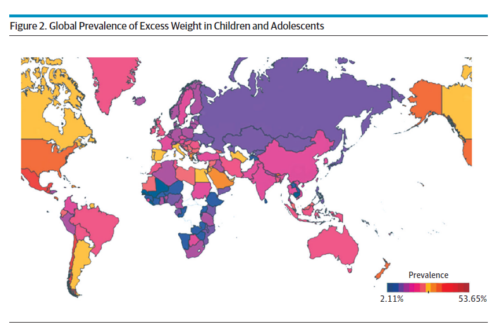
This exceptionally well written paper lists obesity prevalence for nearly 200 countries.
From this chart, regional variations are evident.
The prevalence of pediatric obesity in the US is 18.6%, while that in Japan, another high-income country, is 3.9%. Differences in dietary habits may play a role in this disparity. European countries and the US often embrace a diet preference of processed food, which are typically abundant in unhealthy fats, added sugars, and refined carbohydrates. In contrast, diets rich in whole grains and vegetables, which are generally regarded as healthier options, have historically been prioritized in Southeast Asian countries.
The paper describes factors associated with childhood obesity:
- age
- sex
- school type
- maternal obesity
- having breakfast
- number of meals per day
- hours of playing on the computer per day
- maternal smoking in pregnancy
- birthweight
- regular exercise
- sleep duration
Some are fixed and can’t be changed. But most can. This list suggests a range of policy options, all of them worth consideration.
Obesity prevalence is increasing among children. We need to act now.