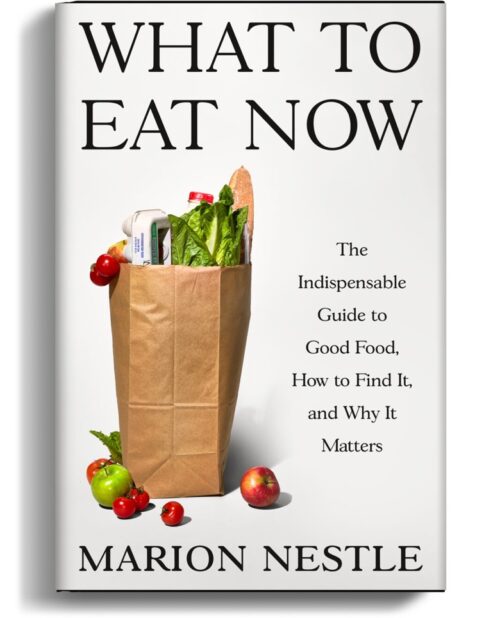

This will be at the bookstore, 6:00 to 8:00 p.m., a conversation with Lane Selman, founder of Portland’s Culinary Breeding Network, followed by audience Q&A and a book signing. Information and RSVP here.

NutraIngredients-Europe, a newsletter I subscribe to, published this gem: Salmon nose cartilage for younger skin? Supplementing with salmon nose cartilage could significantly reduce signs of skin aging in the middle aged…. Read more
What’s great about the newsletters in this series is that they provide references. I went right to this one.
The study: Clinical Trial of Salmon Nasal Cartilage-Derived Proteoglycans on Human Facial Antiaging: A Randomized, Double-Blind, Placebo-Controlled Study. J Cosmetic Dermatology, 2025;24(7):e70218. https://doi.org/10.1111/jocd.70218
Background: “Proteoglycans (PGs) derived from salmon nasal cartilage are believed to have antiaging effects on the skin.”
Methods: This was a two-month double-blind, placebo-controlled trial comparing 20 mg PG to a placebo.
Results: “Subjects receiving PG supplementation showed significant improvements in skin elasticity and hydration…with reductions in skin roughness and wrinkles…and a significant decrease in melanin content and brown spots.”
Conclusion: “Our findings suggest that daily oral intake of 20 mg PG effectively improves skin health by enhancing elasticity, hydration, and reducing signs of aging such as wrinkles and pigmentation.”
Funding: “This study was supported by the Shanghai Huiwen Biotech Corp. Ltd., Shanghai, China.” As NutraIngredients-Europe helpfully explains, “Founded in 2001 as a spin out of the Chinese Academy of Sciences, Shanghai Huiwen Biotech Co. produces its salmon nose cartilage powder using a water-based enzymatic extraction process.”
Comment: My big question: How do you harvest salmon nose cartilege? I’m trying to imagine how they do this. Oh well.
Dietary supplements never fail to fascinate me. There is so little evidence for their benefits, and what evidence there is almost invariably is paid for by whoever profits from them. Never mind. If you are worried about wrinkles, you can give this a try. It is unlikely to be harmful–the supplement should soon be broken down by enzymes. Whether they really do anything or not, supplements make takers feel better. Worth it? You decide.
This will be at the bookstore, 6:00 to 8:00 p.m., a conversation with Lane Selman, founder of Portland’s Culinary Breeding Network, followed by audience Q&A and a book signing. Information and RSVP here.