Nov 9 2009

Are vegetarian diets OK?

I can’t believe the number of times I have been asked that question but it has just come up again in the context of recent complaints about the health and environmental hazards of eating meat.  So here, once again, is my nutrition academic’s take on the nutritional implications of vegetarian diets.

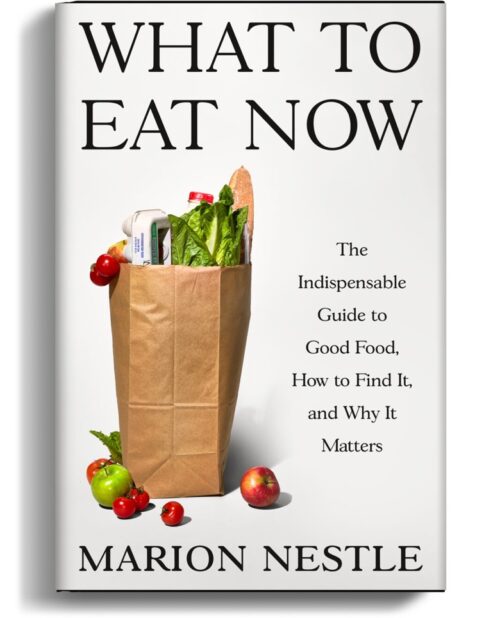
Full disclosure: I eat meat.  Humans are omnivores and I am one nutritionist who fully subscribes to basic, if banal, principles of healthful diets: variety, balance, and moderation. As I explain in my book, What to Eat, if you eat a variety of foods within and among groups – meat, dairy, fruit, vegetables, and grains – you don’t have to worry about nutritional details.  As long as calories are adequate and the foods are relatively unprocessed, the different kinds of foods complement each other’s nutrient contents and provide everything that is needed in reasonable amounts and proportions.

With that said, it is not necessary to eat meat.  Meat is not an essential nutrient.  I can think of plenty of advantages to eating no meat, eating less meat, or eating meat produced in ways that are far better for the health of animals, people, and the planet.

Why anyone would question the benefits of eating vegetarian diets, or diets that are largely vegetarian is beyond me.   People who eat vegetarian diets are usually healthier – sometimes a lot healthier – than people who eat meat.

But before getting into all this, there is the pesky problem of definition.  What, exactly, is a vegetarian?  As it happens, people who call themselves vegetarians eat many kinds of diets.  The least restrictive vegetarians do not eat beef but occasionally eat pork or lamb.  Next come the groups that eat no red meats, or restrict poultry, dairy, fish, or eggs.  The most restrictive are vegans who eat no foods of animal origin at all.

Nutritional implications depend on the degree of restriction.  The least restrictive diets, those that exclude meat but include fish, milk, or eggs, raise no nutritional issues whatsoever.  People who eat such diets are likely to have a lower risk of heart disease and certain cancers than the average meat-eating American, and a risk of osteoporosis no higher.

Only the most restrictive vegetarian diets raise nutritional concerns.  Vegans, who eat no foods of animal origin, need to do three things:

  • Find an alternative source for vitamin B12 (supplements or fortified foods).
  • Eat enough calories to maintain a good weight.
  • Eat a variety of grains and beans to get enough protein.

Vitamin B12 is found only in foods of animal origin – meat, dairy, eggs, or fish.  With this one exception, fruits, vegetables, and grains provide plenty of the other vitamins and minerals.  Vegans who obtain enough calories from varied plant food sources should be taking care of those nutrients as well as protein.

On the protein question: Foods from animals are higher in protein than those from plants.  Their proteins are of somewhat better quality, meaning that they more closely resemble human proteins.  If calories are adequate, protein is rarely a problem.   Protein is hardly lacking among Americans.  The protein requirement is about half a gram for each pound of body weight, which works out to 55 grams for a 120-pound woman and 65 grams or so for a 180-pound man. On surveys, women report eating a daily average of 70 grams of protein, and men 100 grams, and these amounts are likely to be underestimates.  Even vegans get more than enough protein from grains, beans, and vegetables as long as they get enough calories.

In relatively unprocessed foods, protein is closely linked to calories.  Diets with enough calories usually contain enough protein unless the diet is unusually restrictive or includes a lot of junk food.  Think about it: entire civilizations – in ancient Egypt, China, and Mexico, for example – were based on wheat, rice, beans, or corn as sources of protein.   We used to think that vegetarians had to be careful to combine plant foods (beans and corn, for example) to get enough protein but we know now that variety and calories take care of it.

Developing countries are another matter.  In places where food is scarce, children thrive better when they are fed a little meat (or dairy, fish, or eggs) along with whatever else they are eating, but a richer plant-based diet also works well.

That brings us to children.  Is it OK to feed vegetarian diets to kids?  This too depends on what is meant by “vegetarian.”  If the diet restricts just beef or red meat, it poses no problems.  Dairy foods, fish, and eggs are adequate substitutes.  And keeping sodas and junk foods to a minimum is always a good idea.

Vegan diets are another matter and I can think of plenty of reasons why they are controversial for children.  Supplements can take care of kids’ needs for vitamin B12 and other nutrients, but calories can be a serious problem.  Children sometimes have a hard time when they have to get all their food energy from vegetables, grains, or beans.  I advise vegan parents to pay close attention to calories, to make liberal use of olive oil and nut butters, to make sure plenty of beans, grains, and potatoes are available, and to monitor their children’s weight in comparison to lines on standard growth charts.

Except for the most restrictive diets, I wouldn’t worry at all about vegetarian diets for adults or for kids.  They have plenty of what’s good for health and a lot less of what is not so good.  The health advantages can be impressive.    So eat your veggies!

Comments

  • Kat
  • November 9, 2009
  • 10:05 am

Thank you for this post. I’m a vegan and have been following your blog for a while. Most recently, I was pleasantly surprised to see your name make an appearance in Jonathan Safran Foer’s latest book Eating Animals. I’m glad that he used you as a source–you are a voice I turn to frequently; thank you for continuing to make the political implications of food apparent.

  • Anthro
  • November 9, 2009
  • 10:07 am

As a mostly lacto-ovo vegetarian since the 70′s (I eat a little meat now and then–grass fed bison or fish), I am always amazed at the lack of knowledge about vegetarianism. People ask questions as though I’ve just announced that I’m only going to eat tree bark from now on.

  • Regina
  • November 9, 2009
  • 10:08 am

I have disliked meat since the beginning of time. I did not eat it as a child; I do not eat it as an adult. I do eat fish on occasion, but I prefer vegetables and grains and pasta. I love cheese. I don’t drink milk (didn’t drink it as a child, either). I eat eggs occasionally.

Guess what? I’m healthy and though people have always questioned whether I get enough protein or iron, it seems I do. I don’t eat processed or fast food. I eat real food. And that seems to be the key.

Social comments and analytics for this post…

This post was mentioned on Twitter by nyusteinhardt: Are vegetarian diets OK? http://ff.im/-bc1lj...

  • David
  • November 9, 2009
  • 11:22 am

I am always amazed at some of the reactions I receive when someone I’ve known for years finally realizes I am a vegetarian. “You’re vegetarian? But you’re such a foodie!” They seem to find it hard to believe a diet without meat can be just as interesting and exciting (or more so in my opinion) than a diet with meat.

  • Erin
  • November 9, 2009
  • 11:30 am

On the topic of vegan diets and children, extended breastfeeding (well into toddlerhood) can be a good way to include ‘animal’ proteins without compromising ethics. This is the choice my family has taken, though I recognize it may be best for everyone.

Thanks for this post, clarifying that there are no health disadvantage to a vegetarian diet. Quite the opposite: Coronary heart disease is clearly lower for vegetarians, total LDL cholesterol is lower in vegetarians, vegetarians are usually thinner than non-vegetarians and the risk of diabetes and hypertension is probably lower for vegetarians across studies.

Vegans and vegetarians choose this lifestyle for many reasons, and the personal health advantage isn’t necessarily the main incentive to abstain from animal products.

In fact, I don’t know if the health effects of these diets are a good enough reason for those who enjoy the taste of meat to give it up altogether, and I don’t think that there’s good evidence to suggest that eating quality meat in moderation is harmful.

On the other hand, there’s plenty of support for the recommendation to lower the (very high) consumption of red and processed meat in the average American diet and replace it with more plant-based foods, especially fruits and veggies.

  • Beth
  • November 9, 2009
  • 11:43 am

Is B12 the only challenge for a vegan? The more I read about anti-nutrients (e.g., phytates, lectins, alkaloids) in fruits, veggies, and grains, the more I wonder.

  • NJ
  • November 9, 2009
  • 12:08 pm

My 50-something husband and I follow a vegan diet at home (when we go out we will eat dairy because it is too hard to go out otherwise). We are the only people in our circle of friends who do not take medications – almost all are on cholesterol and blood pressure meds and two friends have already had heart attacks. We also hear often how we look so young when we see someone we haven’t seen for a while. I don’t know if it is because we don’t eat meat or dairy or if it is because we have been members of a year-round CSA and we both love to cook all sorts of cuisines. I really don’t know anyone else who eats a lot of vegetables.

[...] you need to know. But if you’re interested in some of the details, Marion Nestle’s post Are vegetarian diets OK? is well worth spending time on. Far too sensible. AKPC_IDS += "9140,";SHARETHIS.addEntry({ title: [...]

  • Dan
  • November 9, 2009
  • 12:43 pm

Not a vegetarian, but was at one point in my life and still eat far more that way than with meat. The one thing that irks me is the claim to be a vegetarian but then be selective about what meats one eats – look, you either are or aren’t a vegetarian. If you eat meat, be it beef, or fish, or anything else that is animal muscle tissue, you’re not a vegetarian. Period. You are an omnivore or flexivore to use the newer parlance, but pretending that fish isn’t meat or chicken isn’t meat is nonsense. Why the semantic pedantry? Because it’s misleading to people who aren’t vegetarians who are thinking about it, perhaps, or questioning it – saying, “oh, don’t worry, you can be a vegetarian and still eat fish… chicken…lamb… pork…” misses the ethical and many of the health issues involved.

Thank you so much for the great blog posts. It was great to see spelled out the pros and cons of vegan and vegetarian in such a comprehensive way.

Thanks again for the great blog.

Misty Faucheux
http://www.EarthFare.com

Great post. I too am an omnivore/flexitarian and will always be. But, recently I cut back on my consumption of animal products (beef, pork, poultry, fish, milk, eggs, cheese) as an experiment. I lost a few pounds rather quickly and my energy level increased dramatically. I am a convert — not only do I feel better physically but I feel less guilty about the carbon footprint from my own and my family’s meat consumption (they are still eating meat regularly but are enjoying a few meat free days a week and lots of red beans and rice). Americans, on average, tend to eat a lot more animal protein/dairy than is good for their health or the planet’s health. Your guidelines are a very helpful reminder — 55-65 grams of protein — that’s not a lot if you are eating animal products. For vegetarians and vegans, it’s worth getting out your calculator to make sure you are eating a balanced diet with ample protein. So many vegetarians/vegans I know get their calories from cookies, chips, bread and pasta not soy, beans and nuts. Thanks.

  • Kinzie
  • November 9, 2009
  • 1:22 pm

Thank you for everything you say and everything you do! You have continuously given me the strength to stand up for the way I eat and the way I plan on raising my children. I posted this morning that sometimes I feel were in 1950 and 14 years away from a Vegan Civil Rights Movement. When did it become socially acceptable to poison our children with cheeseburgers, french fries and soda and at the same time, be looked upon as a freak when spinach and potatoes are the main course?

[...] from my favorite food/nutrion writer: Food Politics » Are vegetarian diets OK?. She’s imminently practical and reasonable. Take home message (but read the whole thing) is [...]

[...] you need to know. But if you’re interested in some of the details, Marion Nestle’s post Are vegetarian diets OK? is well worth spending time on. Far too [...]

  • loraxkat
  • November 9, 2009
  • 5:13 pm

Thank you for your post, Marion. I often hear/read that vitamin B12 can only be obtained from animal protein. However, I am vegan and obtain plenty of B12 from drinking Silk soy milk. Silk’s website says: “All of our ingredients and flavorings are made without animal products, by-products or derivatives.”

So, how can this be? From a little bit of research, I suspect this B12 is probably derived from cyanobacteria. So is your statement– “Vitamin B12 is found only in foods of animal origin – meat, dairy, eggs, or fish.”– accurate? Your thoughts/clarification would be greatly appreciated! Thanks

  • Auralee
  • November 9, 2009
  • 5:17 pm

Dan, you will be amused by the following anecdote: a good friend of ours, in the full blooming flush of new love, was bragging about his new girlfriend, who was “a vegetarian. Well, she only eats chicken and fish.” Since we never let this friend get away with anything, either then or now, we said, “oh, that’s a new one. She’s a chicko-fisho vegetarian!”

Feel free to use: cheers!

Thank you for this post. It is so important to educate people about the benefits of wholesome foods, especially in this culture so dominated by marketing of unhealthy, processed food. The more the message gets out there, the more people will come to understand and be comfortable with it, so your patience with answering this recurring questions is very valuable, indeed!

Marion Nestle
  • Marion
  • November 9, 2009
  • 7:10 pm

@Loraxkat: you are quite right. The ultimate sources of vitamin B12 are bacteria and certain forms of blue-green algae. These are consumed or acquired by animals or fish and their vitamins are incorporated into the animals’ meat or milk. The vitamin can also be synthesized. Since neither synthetic nor bacterially derived vitamin B12 come from animal sources, they can be added to vegetarian soy milk. Watch out though; some companies are dropping organic production and calling their soy milk “natural.”

  • evecho
  • November 9, 2009
  • 8:47 pm

Y’know, east Asians eat lots of tofu, which is made from fermented soy beans. Soy beans are used in huge variety of ways – from oils to sauce to condiments and as meat substitute – because it is produced in many forms and is an excellent source of protein. A common staple drink known as soy bean milk is made from boiled then strained soy beans, with a little added sugar (white/brown/palm/coconut/honey). Delicious, with none of those additives you find in commercially packed soy milk.

  • Ally Wright
  • November 9, 2009
  • 11:18 pm

Excellent writeup. As a nutritional science graduate student, I am often looked at as an alien when people find out that I am a strict-vegetarian. Some even say, “but aren’t you studying nutrition?”. Guess I should know better!

Anyway, it is great to read your impartial work on the subject. I also enjoy reading the work of vegetarian nutritional scientists; unfortunately, their biased views often take away from their work.

  • D. Soleil
  • November 9, 2009
  • 11:21 pm

I appreciate your blog. Thank you for your continued work. However, I must take issue with some of your information related to veganism. For example, you said, “Children sometimes have a hard time when they have to get all their food energy from vegetables, grains, or beans.”

Could you please cite the studies showing an abundance of malnourished vegan children in the United States?

I don’t think they exist. In July 2009, the ADA Journal published its most recent statement on vegetarian/vegan diets and makes no mention of this very serious statement against raising children as vegans. I think it stokes fear among parents without any scientific backing.

The ADA journal states, “Well-planned vegetarian diets are appropriate for individuals during all stages of the life cycle, including pregnancy, lactation, infancy, childhood, and adolescence, and for athletes.”

Why start fires where none exist?

Vegetarian and vegan diets are certainly not responsible for 2/3 of America being overweight or obese. They also are not responsible for heart attacks and strokes being the #1 and #2 causes of mortality in the United States.

Shouldn’t we ring alarm bells over the amount of meat and processed foods in America’s diet rather than trodding the same over-worn path about B12 or protein-intake that have proven themselves to be non-issues? Can you cite studies of the abundance of vitamin B12 deficiency in vegans and health consequences that are common among vegans?

I admire all your work on ringing the alarms against processed foods. The vegan alarm bells you are ringing about children and adults are simply not based in the scientific literature.

  • renee
  • November 10, 2009
  • 12:42 am

I was under the impression that seaweed contained vit b12. Is that incorrect? That would be a vegetarian source.

  • L.C.
  • November 10, 2009
  • 1:06 am

This is a great entry that I wish more nutritionists would take to heart! I still hear some basically recommending things like the “four food groups” nonsense. The science is clear and the benefits of vegetarianism clear as well.

One thing I would like to read more about, though, is the “grams of protein” requirements and the difference from that and “grams of substances that contain protein.” I think too many people misread grams of protein as grams of meat or beans or the like. It would be a great thing if more cookbooks, diet guides and nutrition plans spoke about this important distinction.

  • Jessica Roberts
  • November 10, 2009
  • 5:57 am

Thank you Marion, for this post! I am a vegan (unless, of course, a homemade chocolate chip cookie is shoved in my face, well then…) and when people ask incredulously, “But, WHY?!?!” it’s so hard to get them to understand. Many people have more than one simple reason for choosing not to eat meat/animal products. My reasons stem from reading your books, Michael Pollan’s books, and going to school to be a dietitian…and, most of my reasons are political. But if I tell anyone that the reason I became a vegan is political (insert emphasis), they look at me with a blank stare like I’m some kind of cynical anti-American. What to do…? Sigh…..

[...] Nestle comes onside in support of a vegetarian diet. As all of us pseudo-veggies knew all along, it’s perfectly safe and probably healthier than [...]

Dr. Nestle, thank you once again for your moderate and evenhanded approach to this subject. As a vegan who strives to educate others about problems with our current food supply, it’s great to have you as an impartial reference. Since you’re not “on our team”, as it were, you clearly have no “agenda” in touting the benefits of vegetarian diets, so no one can doubt the validity or sincerity of your statements.

Regarding your stance on raising vegan children – I am not a parent. But personally, I believe that all parents should pay close attention to what their children are eating! Just because an omni diet might happen to provide enough nutrients or calories doesn’t mean that diet is an optimal one.

As far as getting enough calories on a vegan diet, I’ve never found that to be a problem; in fact I’m still carrying around a few (ok 15 or 20) extra pounds after being vegan for 3.5 years. After all, it’s not as if we vegans eat nothing but raw vegetables all day long!

And finally, THANK YOU for making the distinction about adding meat into the diet of people in suffering third world countries. People LOVE to pull out this argument, as if it just absolutely proves that not eating meat is unhealthy and eating meat is the magic bullet that restores all, when in reality all it proves is that *starving* is unhealthy, and that adding adequate protein and calories to the diet restores heath.

  • Becky
  • November 10, 2009
  • 10:12 am

Interesting post! I just wanted to chime in about B12 sources, because I was under the impression that nutritional yeast and certain seaweeds were good non-animal B12 sources.

Excellent post–thank you very much! While not a vegetarian, I have been trying to reduce my family’s consumption of meat lately and move towards a more plant-based diet.

I’ve enjoyed reading your blog for a few months now. I am planning to come hear you speak tomorrow night in Conway–I was so thrilled to see you were coming to my little hometown!

Leave a comment