Jun
17
2011
Baseball fans: a food plate just for you!
In case you missed it, here’s another contribution to food guides, this one from the Smack! sports section of the Chicago Tribune (June 5):
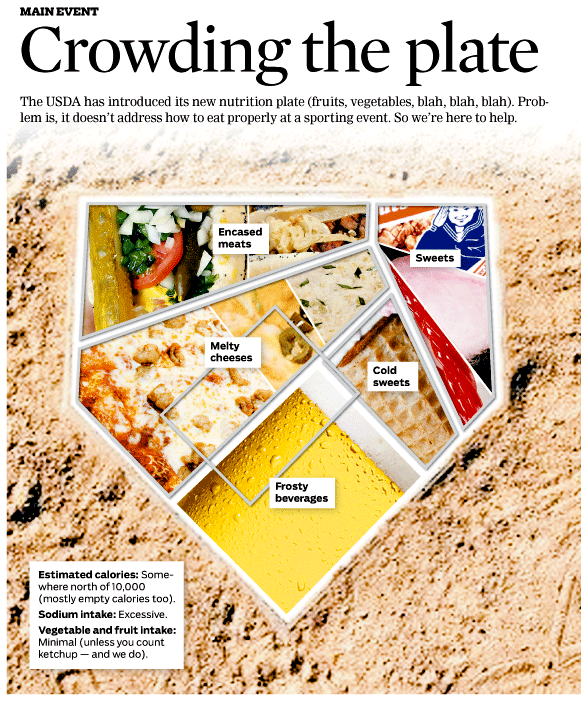
No comment needed.
Enjoy the weekend!
[Thanks to Yankees fans Sandy and John for sending]
Leave a comment
Next public appearance
May
29
2013
New York: 92nd St Y, Tribeca
This is a conversation about 101 Classic Cookbooks, 501 Classic Recipes (Rizzoli Books, 2013), with Clark Wolf, Marvin Taylor (curator NYU Fales Library), Rose Levy Beranbaum (author, The Cake Bible), and Madhur Jaffrey (actor and author). 7:30 p.m. 92ndY Tribeca, 200 Hudson St, Price $15, RSVP: here

Search
Related posts
Topics for this post
All Topics
5-a-Day
AAFP(American Academy of Family Physicians)
AAP(American Academy of Pediatrics)
Acrylamide
ACSH(American Council on Science and Health)
Activity
ADA(American Dietetic Association)
Addiction
Additives
Advocacy
Agave
Aging
Agriculture
AHA(American Heart Association)
Alcohol
Alice-Waters
Allergies
Amercan Beverage Association
American-Diabetes-Association
Animals
Antibiotics
Antioxidants
Arsenic
Artificial-sweeteners
ASN(American Society of Nutrition)
Asthma
Açaí
Beef
Bees
Bill-Marler
Biofuel
Blogs
Books
Bottled-water
BPA
BPA(Bisphenol-A)
Bread
Breakfast
Breast-feeding
Brian-Wansink
Bribery
Burger-King
Caffeine
CAFOs(Concentrated Animal Feeding Operations)
calcium
Calorie-labeling
Calories
Campbell
Canada
Cancer
Candy
Cantaloupe
Carcinogens
Cargill
CCF(Center for Consumer Freedom)
CDC(Centers for Disease Control)
Cereals
Charlie-Rose
Checkoff
Cheerios
Cheese
Chicken
Chickens
China
Chinese-infant-formula
Chocolate
Cholesterol
Climate change
Cloned-animals
Coca-Cola
Coffee
Colbert
Comments
Comments-Monitoring-Policy
Comments-Policy-Monitoring
ConAgra
Conflicts-of-interest
Consolidation
Consumer Reports
Cookie-dough
Cooking
Cooking-measurements
COOL(Country of Origin Labeling)
Corn
CSPI
CSPI(Center for Science in the Public Interest)
CSR(Corporate Social Responsibility)
Dairy
Del Monte
Denmark
Dental-disease
Diabetes
Diet-and-dieting
Diet-and-energy-drinks
Diet-drugs
Dietary-Guidelines
Diets
Disney
E.coli
Eat-less-and-move-more
Eating Liberally
EFSA
EFSA(European Food Safety Authority)
Eggs
Energy drinks
EPA
Eric-Schlosser
Ethanol
Ethics
Events
Excerpt
FAO
FAQ
Farm-bill
Farm-policy
Farm-workers
farmers markets
Farms
Fast food
Fats-and-oils
FDA
feed efficiency
Fiber
films
First Amendment
Fish
Flaxseed
FMI(Food Marketing Institute)
Food
Food-access
Food-and-Water-Watch
Food-art
Food-assistance
Food-availability
Food-choice
Food-colors
Food-composition
Food-crisis
Food-culture
Food-deserts
Food-guide
Food-history
Food-Inc
Food-industry
Food-industry-regulation
Food-magazines
Food-marketing
Food-miles
Food-movement
Food-policy
Food-quality
Food-safety
Food-security
Food-stamps
Food-studies
Food-supply
Food-systems
Food-trade
Food-waste
Food aid
FOP(Front-of-Package)Labels
Fortification
Framingham-Heart-Study
Fruits-and-vegetables
FTC (Federal Trade Commission)
Functional-foods
Futures-markets
GAO
GAO(Government Accountability Office)
Gardens
Gary-Taubes
General-Mills
Gluten
GM(Genetically Modified)
GMA(Grocery Manufacturers Association)
Grassfed
Green-food
HACCP(Hazard Analysis and Critical Control Point)
Hannaford
Health-aura
Health-claims
Health-statistics
Heart-disease
HFCS (High Fructose Corn Syrup)
HHS(Department of Health and Human Services)
Hormones
Horsemeat
Hugo drinks
Hunger
Hydroponics
hyperactivity
IASO
India
Infant-formula
International
Interviews
IOM (Institute of Medicine)
iraq
Irradiation
IWG(Interagency Working Group)
Jamie-Oliver
Japan
Job-Ads
Joy-of-Cooking
Juice-drinks
juices
Junk food
Kellogg
Kelly-Brownell
KFC
Kids' diets
King-Corn
Korea
Kosher
Kraft
krill
Label-scoring-systems
Labels
Lawsuits
Legislation
Let's Ask Marion
Let's Move!
Letters-From-Food-Companies
Listeria
Lobbies
Local-food
Lévi-Strauss
Mad-cow-disease
Malnutrition
Manure
maps
Margarines
Marketing to kids
Mark Hegsted
Mars
McDonald's
meal frequency
Meat
Meat safety
Meat substitutes
media
Melamine
Mercury
Michael-Pollan
Michael-Taylor
military
Milk
Monsanto
Movies
MSG
Museum exhibits
MyPlate
Nanotechnology
Natural
neighborhoods
Nestlé
New-York-City
New-Zealand
Niman
Nutrient-availability
Nutrition-education
Nutrition-standards
Nutritionism
Nuts
Obama
Obesity
Obesity-in-kids
Obesity-policy
Occupy
Omega-3-fats
Organic
Organic-fish
Organic-standards
Organics
orthorexia
Oxfam
Oysters
Pakistan
Partnerships
Passover
Patents
Paula Deen
Paul Ryan
Peanut-butter
Peanuts
PepsiCo
Personal-responsibility
Pesticides
Peter Jennings
Pet food
Phil Lempert
Photos
Pink-slime
Pistachios
pizza
Pork
Portion sizes
Potatoes
pregnancy
Pric
Price-fixing
Price-of-food
Probiotics
Processing
Protein
Public-health
Pyramid
Quotes from What to Eat
Radioactivity
Raw-foods
Raw-milk
rBGH
recipes
Red-Bull
Regulation
Research
Restaurants
Revolving-door
Right-to-food
Rosa DeLauro
RWJ Foundation
S.510
Salmonella
Salt
San-Francisco-Chronicle
scho
School-food
Seeds
shrek
Single-food-agency
Slow Food
Smart Choices
Snack foods
Socioeconomic-factors
Soft drinks
soy
Spinach
Splenda
Sponsored-research
Sprouts
Starvation
Stevia
sticky
Sugars
Sugars
Supermarkets
Supplements
Supreme court
Surveys
sushi
Sweeteners
Swine flu
Taste
Taxes
Techno-foods
Television
Thomas Friedan
Tim Lang
Tobacco
Tomatoes
Toxins
Trans-fat
Tufts
Twitter
Tyson-foods
United Nations
Urban-farming
USDA
Vegetables
Vegetarian-and-vegan
Vending-machines
Videos
Vitamin-water
Vitamin D
Vitamins
Wall-Street
Walmart
Washington-Square-News
Water
WHO(World Health Organization)
Whole Foods
Whole grains
Why-Calories-Count
WIC
World hunger
Yearly Kos
Yogurt


Comments
Wow, that is FANTASTIC. I was wondering how to count the ketchup
Don’t forget the relish, tomato, onions and peppers on that Chicago dog… or what about the jalapeños on the nachos?
@ Babe Ruth
Misguided attempt at humor.
Who said anything about baseball?–it’s the food associated with having a good time that’s the problem and it’s the same food that’s is heavily advertised on tv and most everywhere else, ad nauseum.
Unless we keep at it until this insidious industry is held accountable, the obesity epidemic will continue. Individuals will make better choices, but children (and therefore, the next generation) and the the already hooked will continue to be persuaded by the non-stop deluge of ads that associate good times with crap food.
That said, I enjoyed the humor of the post in its context. Just don’t try to extrapolate some kind of anti-government, anti-public health political statement out of it.
I can’t understand why our government thinks Americans need grains on their plates since lots of cultures don’t have them, and don’t seem any the worse for wear. I lived in Micronesia in the Peace Corps in the 60′s, and ate their diet of breadfruit, fish, and coconut. They seemed very healthy, lots of very old people, not much overweight, and the only effect on me was I unintentionally got down to a good weight.
I went back decades later, and they are now importing wheat and rice and other foods. Obesity is rampant, (though one factor is they see fat as attractive.)
People think we have to eat grains, but I’m not sure what bad things are supposed to happen if we don’t.
And the Babe hits another homer!
@Peter Silverman: WHOLE grains are immensely valuable to a varied diet for a wide range of B vitamins, protein, and fiber. Grains have been used as a foodstuff for thousands of years all over the world. The Incas relied on quinoa and amaranth extensively (quinoa being one of the few plant-based complete proteins in the world), and most other indigenous cultures of the Americas were dependent on corn, which could be dried along w/ beans and used to form a complete protein when hunting was lean. Grains have the added benefit of being storable for years, which means they can sustain a population during dry seasons when hunting and agriculture production are meager.
In the vegetarian diet, whole grains are absolutely necessary for protein. In the awful Standard American Diet they provide B vitamins and necessary fiber (which most people in America lack). Whole grains have been found to contain phytochemicals that protect against cancer. They also provide variety and pleasure in a healthy diet.
Unfortunately, many undeveloped areas of the world have resorted to importing refined grains as a cheap food source. There is not much good to be found in refined grains. They may not kill you, but they don’t keep you in optimum health either. Refined grains are basically sources of empty calories, which will cause weight gain if they are relied upon too much in the diet.
With all the positive benefits that WHOLE grains provide, why would you leave them out of a diet?
@Peter Silverman: WHOLE grains are immensely valuable to a varied diet for a wide range of B vitamins, protein, and fiber. Grains have been used as a foodstuff for thousands of years all over the world. The Incas relied on quinoa and amaranth extensively (quinoa being one of the few plant-based complete proteins in the world), and most other indigenous cultures of the Americas were dependent on corn, which could be dried along w/ beans and used to form a complete protein when hunting was lean. Grains have the added benefit of being storable for years, which means they can sustain a population during dry seasons when hunting and agriculture production are meager.
In the vegetarian diet, whole grains are absolutely necessary for protein. In the awful Standard American Diet they provide B vitamins and necessary fiber (which most people in America lack). Whole grains have been found to contain phytochemicals that protect against cancer. They also provide variety and pleasure in a healthy diet.
Unfortunately, many undeveloped areas of the world have resorted to importing refined grains as a cheap food source. There is not much good to be found in refined grains. They may not kill you, but they don’t keep you in optimum health either. Refined grains are basically sources of empty calories, which will cause weight gain if they are relied upon too much in the diet.
With all the positive benefits that WHOLE grains provide, why would you leave them out of a diet?
Forgot to include that whole grains are an important source of trace minerals, which in the Era of Filtered Water, makes them that much more necessary.
@Babe Ruth: I feel sorry for you if your idea of fun is stuffing yourself full of crap that you will pay for later. My idea of fun, however, doesn’t include being annoyed by some drunk 2 rows ahead of me who is obnoxiously stuffing himself w/ nachos and pizza. I’m there to watch baseball, not to attend a junk food smorgesboard.
“With all the positive benefits that WHOLE grains provide, why would you leave them out of a diet?”
1) You’re insulin resistant
2) You’re Diabetic
When I do include whole grains, it’s not for their nutrient value, because what I need can be found in other, less glucose-spiking food stuffs. If I want to regularly indulge in “healthy whole grains” it’s a sure thing I’m going to be dependent on my diabetes medications for life.
@Suzanne_Garrett: My diabetic father consumes whole grains just fine. He cannot indulge in them, but 2-3 servings a day, spaced apart, don’t bother him at all. Millet, quinoa, and amaranth are 3 of the best grains for diabetics. These are the grains with much higher protein and nutritional profiles than most other grains (amaranth has 16 grams of protein per serving). These grains actually help to manage blood sugar. My father has left his diabetes medication in the dust due in large part to a strict vegetarian diet that includes whole grains. Nowhere in my posting did I say to “indulge” in whole grains. I only said to include them in a varied, healthy diet. There is no reason to leave them out.
Hi Roxanne,
Thanks for the response. I am glad your father can regularly include whole grains. I used the word “indulge” because even a couple of tablespoons of quinoa will send my blood glucose skyrocketing to 200 within 70 minutes. I know other diabetics who have a faulty metabolism for digesting carbohydrates including whole grains and starchy vegetables. Any servings of whole grains are an indulgence for me because I am trading taste/enjoyment for elevated bg. What I do include in my diet as something of a consolation is hulled hemp and flax seeds. Did your father immediately change his diet upon diagnosis?
I know that whole grains are good for you, it says so on the Cheerios box. I just wonder, since no culture on the planet eats much of them, if they’re necessary. Even my Inca friends warn me if you don’t process quinoa you get sick.
@Suzanne: For several years he didn’t do anything except give up all sugar, which kept him from having to take insulin. Then he went totally low carb, which was actually really bad for him. His cholesterol and blood pressure skyrocketed and he had to go back to insulin. It was about 2 years ago he started eating very strictly vegetarian, with a 32 oz green smoothie everyday, lots of leafy greens (salads are a staple), and beans. No meat, no diary, whole grains and low-sugar fruits in small amounts. Protein is from beans, large amounts of greens, and fermented soy. In the last 2 years he’s lost almost 40lbs. He no longer suffers from hyper-tension, and his cholesterol is now very low. Within 4 months of starting this regime he was completely off diabetes medication. If his good health continues for another year, his doctor will officially pronounce him non-diabetic. Eating this way has given him his life back.
@Peter Silverman: I beg to differ on the consumption of grains. New world grains have spread across the globe since their “discovery” in the late 15th century. For instance, Tibet, Nepal, and the surrounding regions have completely adopted amaranth into their daily diets, and this has been so for about 300 years. Millet, sorghum, and teff are the staple grains for much of Africa and has been so for a couple thousand years. Much of Central and South America and the Southwestern United States still rely on maize corn. Let’s not forget rice! Nearly 1/3 of the world’s population eats rice daily, often for more than one meal. Then there are the Scotts and Irish, who consume more oats than another population in the world.
I think your assertion that no culture on the planet eats much grain is kinda hogwash.
Oh, and the only processing that is done to quinoa is to remove the outer coating since it contains high amounts of saponins, which are extremely bitter tasting. These don’t make a person sick necessarily, but they can cause mild indigestion in some people.
Almost forgot buckwheat (which is actually a pseudo-cereal like quinoa but treated worldwide like a grain in nutritional terms). Buckwheat is a staple in the Japanese diet just as much as rice. It’s also widely consumed in the Scandinavian countries and in Russia.
Teff is a super-food that needs much more widespread cultivation and marketing. It contains all 8 essential amino acids that humans need (same as quinoa and tofu). It also has very high amounts of lysine (greater than barley and wheat), calcium, fiber, and protein. It’s also a good source for a wide range of trace minerals. Teff can be consumed by those who suffer from celiac disease.
Teff makes the daily bread called injera of Ethiopia and Eritrea, and is grown in those regions as well as in South Africa and Australia.
Also need to point out that for many portions of the world, meat is expensive and considered a luxury item, so grains fill a huge void for protein and minerals.
While I don’t advocate for this as a steady diet, most of us don’t go to a baseball game often enough for this to be a danger to our health. It is people’s day to day diets we should be concerned about, not whether they eat a loaded hot dog at the game or a fried Mars bar at the fair once per year. Can I count the onions I pile on my hot dog?
Roxanne must be a Padres fan. Sheesh…
[...] Wait. That’s the baseball edition (via Food Politics). [...]
