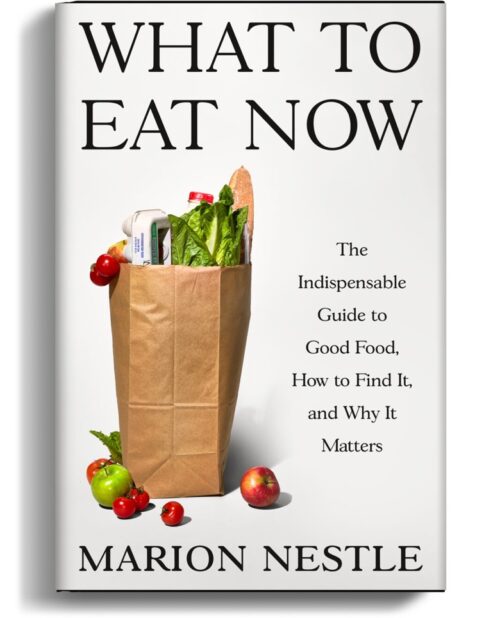
This will be at the bookstore, 6:00 to 8:00 p.m., a conversation with Lane Selman, founder of Portland’s Culinary Breeding Network, followed by audience Q&A and a book signing. Information and RSVP here.

Eric Schlosser has an excellent op-ed in today’s New York Times, “Unsafe at any meal.”
You would think, he points out, that a bill that passed the House nearly a year ago,
with such broad support, on a public health issue of such fundamental importance, would easily reach the floor of the Senate for a vote. But it has been languishing, stuck in some legislative limbo. Food processors reluctant to oppose the bill openly will be delighted if it dies a quiet death.
How come?
because, right now, very few cases of food poisoning are ever actually linked to what the person ate, and companies that sell contaminated products routinely avoid liability. The economic cost is instead imposed on society. …Without tough food safety rules, a perverse economic incentive guides the marketplace. Adulterated food is cheaper to produce than safe food. Since consumers cannot tell the difference between the two, companies that try to do the right thing are forced to compete with companies that couldn’t care less.
As for the concerns of small farmers:
For months, however, the Internet has been rife with wild rumors and accusations: that the bill is really a subterfuge cleverly designed to eliminate small farms and strengthen the grip of industrial agriculture; that it would outlaw organic production; that it would hand over the nation’s food supply to Monsanto. Those arguments may be sincere. But the bill very clearly instructs the Food and Drug Administration to focus its enforcement efforts on plants that pose the greatest risk of causing large-scale outbreaks.
What’s holding up this bill? Nothing but politics of the worst kind. Lives are at stake here and everyone who cares about our food system should be urging the Senate to get moving. Thanks Eric for writing this piece. I hope it helps.
This will be at the bookstore, 6:00 to 8:00 p.m., a conversation with Lane Selman, founder of Portland’s Culinary Breeding Network, followed by audience Q&A and a book signing. Information and RSVP here.