Bryant Simon The Hamlet Fire, A Tragic Story of Cheap Food, Cheap Government, and Cheap Lives. The New Press.
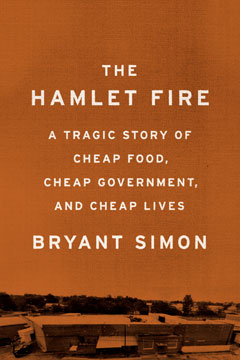
This book, which deserves a much better cover, tells a compelling story. Bryant Simon, a history professor at Temple University, has written an epic book about industrialized broiler production. His starting point is the tragic fire that killed 25 people in a poultry processing plant in 1991, in Hamlet, North Carolina.
It’s inconceivable that this plant, which made cheap chicken fingers for fast food outlets, had locked exit doors—nearly a century after the Triangle Shirtwaist fire (which is still commemorated every March 25 in front of the building, now owned by NYU).
To explain the meaning of the fire, Simon takes on globalization’s effect in promoting industrialized chicken production; the loss of well paying jobs in small rural communities led to surplus labor that made it possible to produce cheap chicken and even cheaper chicken products.
Simon links these events to the increasing prevalence of obesity among overworked and underpaid laborers in rural communities. His stories of workers in chicken processing plants make it clear how they have to deal with the social, racial, and political issues that confront families in rural America.
The costs of cheap food, Simon says eloquently, are borne by the workers and communities that produce it.