A conversation with Charles Platkin at 12:30 p.m. on The Wisdom of 90 Years: Dr. Marion Nestle on Food and Living Your Best Life. Registration is here.


I’m always interested in the USDA’s charts displaying food and agriculture statistics. They help to clarify complicated issues.
Agricultural trade is particularly opaque, but here it is at a glance.
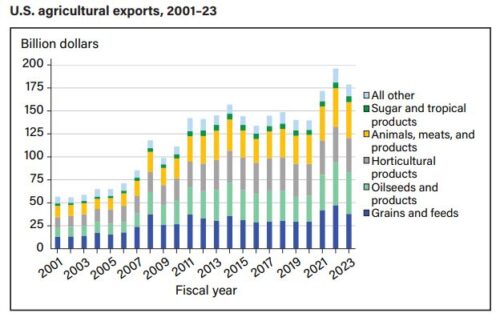
First, what the US exports:
Next, what we import:
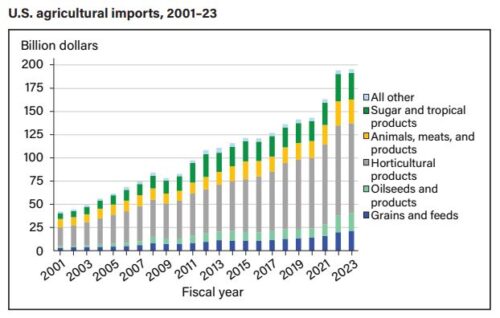
What so bizarre here is that the categories are the same; we export and import the same kinds of products.
The biggest difference is in horticultural products, which the USDA defines as “plants that are used by people for food, for medicinal purposes, and for aesthetic gratification.”
Horticulture includes “specialty crops,” the USDA’s name for the plant foods humans eat (as opposed to feed for animals)—fruits, vegetables , nuts, and seeds. To further confuse the matter, the USDA also lumps medicinal herbs, flowers, and Christmas trees in this category.
Never mind. The bottom line is we import most of our fruits and vegetables. This is because the US agricultural system focuses on feed for animals and fuel for automobiles.
Overall, here’s what all this does to the balance of trade:
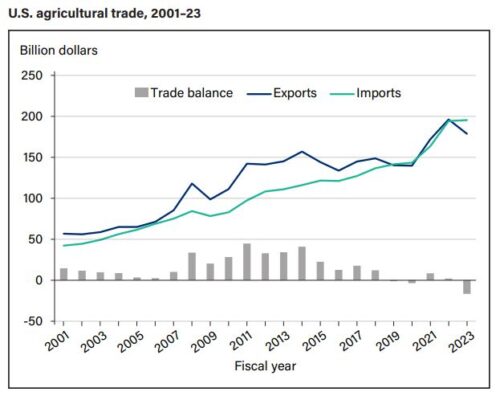
We used to export more food than we imported. Now, we don’t.
Shouldn’t our food system mainly focus on producing food for people?
Obviously, yes.
A conversation with Charles Platkin at 12:30 p.m. on The Wisdom of 90 Years: Dr. Marion Nestle on Food and Living Your Best Life. Registration is here.