A recent opinion piece in the Washington Post explains why the FDA should establish front-of-package nutrition labeling here and now: These countries are doing nutrition labels the right way
Christina Roberto, Alyssa Moran, and Kelly Brownell contrast the “stop signs you’ll see in Mexico, the Nutri-Score system used in France, or the Health Star Ratings in New Zealand” with the current lack of a system like those in the United States.
The only thing standing in the way: the food industry. It favors a label that displays grams or milligrams of key nutrients along with percent Daily Values — much like the Nutrition Facts Labelcurrently on the back or side of packages. ..By using symbols, colors and simple language, front-of-package labels adopted by other countries have educated people about what’s in their food, helped them make healthier choices and even encouraged companies to reduce salt and sugar in their products.
And here’s Fortune on the same topic, especially Nutri-Score.
This makes me think it’s time to review what’s happening in Europe with Nutri-Score. I’ve written about this system previously, most recently here and about Its founder, Serge Hercberg’s, fights with the food industry here.
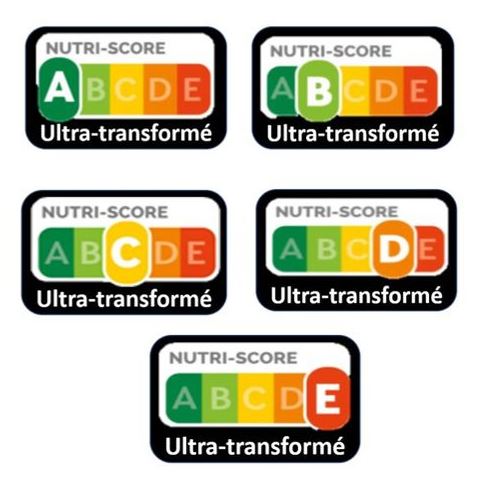
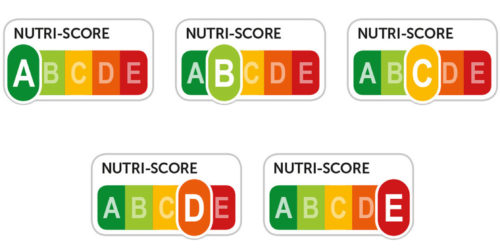
As a reminder, Nutri-Score accounts for nutrients but also sugar, salt, and saturated fat, in a composite grade A (eat) to E (avoid).
The food industry hates it. For example, an article by authors with ties to industry argues that there is no independent evidence to support the value of Nutri-Score. This induced Hercberg et al to rebut those points.
In response to some of these criticisms, the Nutri-Score team is updating its algorithm to respond to concerns about ultra-processing, among other matters. See: Nutri-Score 2023 Update in Nature Food.
And despite the arguments, support for Nutri-Score is growing. Authors not connected to Nutri-Score recommend it over other types of labeling for adoption by 27 EU nations. See: Establishing an EU-wide front-of-pack nutrition label: Review of options and model-based evaluation. Obesity Reviews, 07 February 2024. https://doi.org/10.1111/obr.13719
Nutri-Score is currently used in seven European countries. It is backed by the European Public Health Association and the International Agency for Research on Cancer.
The food industry can complain all it wants, I’m guessing Nutri-Score is here to stay. It may not capture all ultra-processed foods, but it comes close and revising the design like this should help solve that problem.