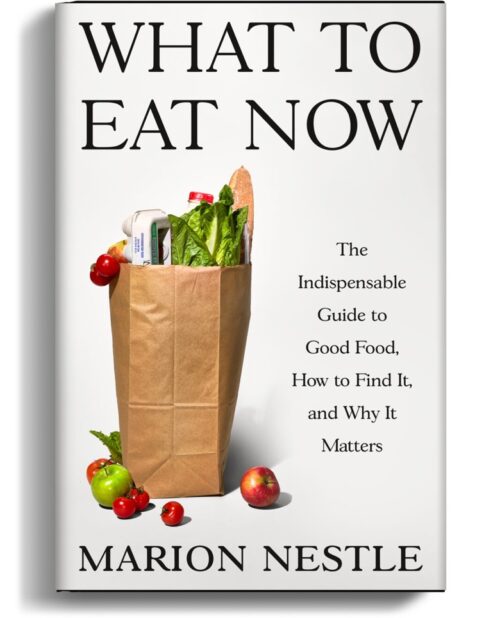

This will be at the bookstore, 6:00 to 8:00 p.m., a conversation with Lane Selman, founder of Portland’s Culinary Breeding Network, followed by audience Q&A and a book signing. Information and RSVP here.

Yesterday’s New York Times’ report (in which I am quoted) reminds me that it’s time I commented on the astonishing dispute about potatoes in school meals.
On October 20, 2009, the Institute of Medicine (IOM) issued a report on nutrition standards for school meals. It recommended that school meals be aligned with the Dietary Guidelines for Americans. To do so, the IOM said USDA should
Adopt standards for menu planning that increase the amounts of fruits, vegetables and whole grains; increase the focus on reducing the amounts of saturated fat and sodium provided; and set a minimum and maximum level of calories.
To do that, the IOM said USDA should establish (1) weekly requirements for dark green and orange vegetables and legumes, and (2) limits—of one cup a week—on starchy vegetables such as white potatoes, corn, lima beans, and peas.
The IOM’s quite sensible rationale? To encourage students to try new vegetables in place of the familiar starchy ones.
In January this year, the USDA proposed new nutrition standards for school meals based on the IOM report. These included the IOM’s recommendation of no more than one cup a week of starchy vegetables.
Please note: the proposal does not call for elimination of starchy vegetables. It calls for a limit of two servings a week (one cup is two servings).
What’s wrong with that? Plenty, according to the potato industry, which stands to sell fewer products to the government and could not care less about spreading the wealth around to other vegetable producersPotato lobbyists went to work (apparently the sweet corn, lima bean, and pea industries do not have the money to pay for high-priced lobbying talent). The Potato Council held a press conference hosted by Senators from potato-growing states.
The result? The U.S. Senate added an amendment to the 2012 agriculture spending bill blocking the USDA from “setting any maximum limits on the serving of vegetables in school meal programs.”
Mind you, I like potatoes. They are thoroughly delicious when cooked well, have supported entire civilizations, and certainly can contribute to healthful diets. Two servings a week seems quite reasonable. So does encouraging consumption of other vegetables as well.
But what’s at stake here goes way beyond the choice of one vegetable over another.
At issue is Senate micromanagement of nutrition standards under pressure from food industry lobbyists.
This is one more—and a particularly egregious—example of undue industry influence on federal dietary guidance policy. It is just plain wrong.
This will be at the bookstore, 6:00 to 8:00 p.m., a conversation with Lane Selman, founder of Portland’s Culinary Breeding Network, followed by audience Q&A and a book signing. Information and RSVP here.