
This is from 6:30-9:30 p.m. at The Greene Space, WNYC NPR Studios, 44 Charlton Street. For information and reservations, click here.

Christopher Schlottmann and Jeff Sebo. Food, Animals, and the Environment: An Ethical Approach. Routledge, 2018.
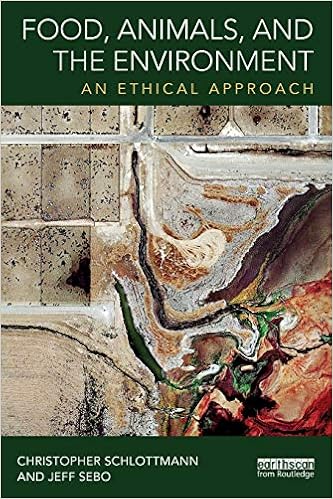
The authors are colleagues at NYU. They asked me for a blurb which, after reading this book, I was honored to do. Here’s what I said:
Schlottman and Sebo have produced an utterly superb analysis of the ethics of eating animals, brilliantly distinguished by crystal-clear thinking, accessible writing, and plenty of insight into values and sources of bias. Every eater will have much to learn from this book.
The book goes from theory to practice and takes on all of the tough ethical issues involved in food production, food consumption, and food activism (legal and illegal).
The authors’ approach is impressive:
We designed this book to provide readers with both the critical thinking tools and basic concepts and information necessary to analyze the many challenges and values concerning food, animals, and the environment. This includes explaining how to make clear and consistent arguments, how to assess the relationship between facts and values, how to assess the relationship between theory and practice, and how to think rigorously and systematically about the empirical impacts of food systems and the ethical questions that these impacts raise.
This is exactly what this book does.
Whether or not you choose to eat animal foods (and I do), the environmental, health, and moral issues raised by animal agriculture deserve serious discussion. They get that discussion here.
This is from 6:30-9:30 p.m. at The Greene Space, WNYC NPR Studios, 44 Charlton Street. For information and reservations, click here.