
This is 6:00–8:00 p.m. at NYU’s Bobst Library. Registration and further information are here.


José Tenorio. School Food Politics in Mexico: The Corporatization of Obesity and Healthy Eating Policies. Routledge, 2023.
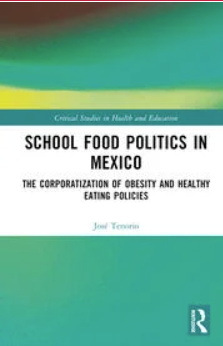
I was asked for a blurb for this one:
From first-hand observations and deep research, José Tenorio makes it clear that school food in Mexico is about much more than feeding hungry kids; it’s about how food corporations have taken advantage of social inequalities to replace native food traditions with less healthful but profitable products. School food politics, indeed!
This book may seem specialized, but it is a useful case study in the politics of school food—not confined to the United States, apparently.
Mexico leads the way in efforts to promote healthier diets. It has excellent dietary guidelines. It also has warning labels on food products (see my post on these), soda taxes, a ban on trans fats, and other measures.
Mexico’s schools do not provide meals for kids in schools. They sell foods at canteens.
The country set nutrition standards for foods sold in schools in 2011, but compliance is not great.
Public health and food advocacy groups support laws to ban unhealthy foods and drinks from schools. Despite formidible industry opposition, this may actually happen.
This book provides evidence for why it should.




