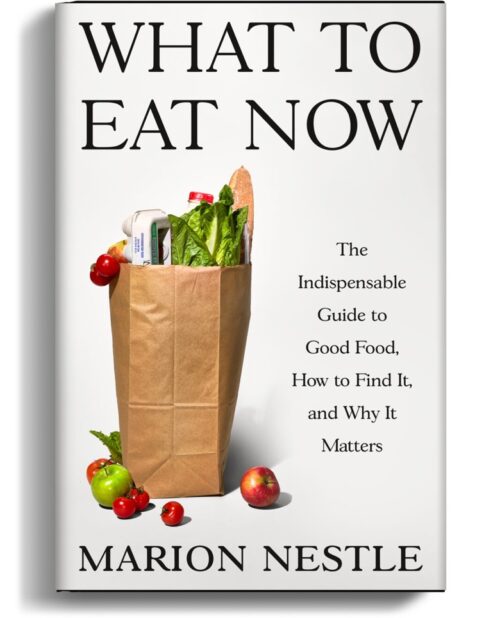
A conversation with Charles Platkin at 12:30 p.m. on The Wisdom of 90 Years: Dr. Marion Nestle on Food and Living Your Best Life. Registration is here.


I learned about this from one of the last posts from Chuck Abbott’s AgInsider (written for FERN, the Food and Environment Reporting Network), which he is stopping and I will greatly miss.
USDA deregulates GM wheat, says it is safe to grow in the U.S.: For the first time, the Agriculture Department approved cultivation of genetically modified wheat in the United States on Tuesday, deregulating a drought- and herbicide-tolerant variety developed by an Argentine company. A U.S. wheat industry official said it would be years before the HB4 wheat from Bioceres Crop Solutions was successfully commercialized in the country because of the need to gain acceptance on the domestic front and by wheat-importing nations.
The USDA says the Bioceres Crop Solutions, wheat with drought tolerance and herbicide resistance is “unlikely to pose an increased plant pest risk compared to other cultivated plants. As a result, they are not subject to regulation under 7 CFR part 340. From a plant pest risk perspective, this modified plant may be safely grown and bred in the United States.”
The company announced to investors, “Bioceres Crop Solutions Corp. (NASDAQ: BIOX) announced today that the United States Department of Agriculture (USDA) has favorably concluded its Regulatory Status Review (RSR) for HB4 wheat technology.
According to Reuters, this wheat variety has already been approved in several other countries.
The announcements all make a big deal of its drought resistance; none of them say anything about its herbicide resistance. AI to the rescue! HB4 wheat tolerates glufosinate, a potent week killer “used for broadcast burndown application before planting or prior to emergence.” It has been reasonably well studied, kills non-target plants easily, seems OK for insects, gets into water supplies, is moderately toxic to fish and slightly toxic to mammals. The EPA considers exposure levels to be “below levels of concern.”
Why am I not reassured.
If you want to know why the Non-GMO Project label is seen on so many supermarket products, uncertainties about herbicide effects are surely one reason.
You don’t want to be a guinea pig in this experiment? Buy Organic or Non-GMO Verified, or foods with both labels.
A conversation with Charles Platkin at 12:30 p.m. on The Wisdom of 90 Years: Dr. Marion Nestle on Food and Living Your Best Life. Registration is here.