Last September, the USDA said it would stop conducting the annual hunger survey, because they were “redundant, costly, politicized, and extraneous.”
As I said at the time,
If you live in an Orwellian universe, you can use not measuring to pretend that food insecurity does not exist and certainly that it is not increasing as a result of your policies.
It took a long time for the anti-hunger community to achieve federal documentation of this enormous social problem. I suppose we will now have to go back to the old days of local anti-hunger reports. See my comments (with Sally Guttmacher) on state hunger reports.
On December 30, the USDA published the last of its formerly annual reports: 2024 Household Food Security report.
The inconvenient finding continues: food insecurity continues to rise.
And this was before the current Trump-era cuts to SNAP and increases in the cost of food and health care.
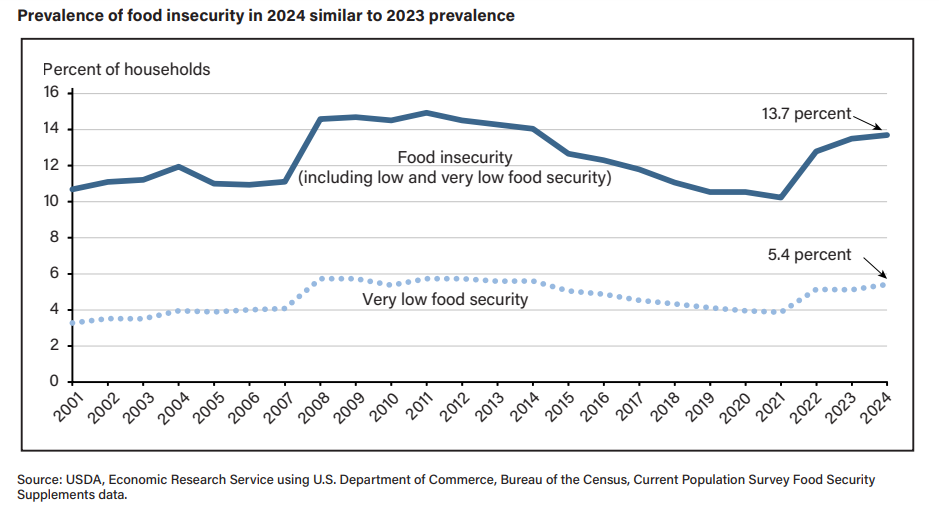
No wonder they don’t want to publish reports like these any more.