
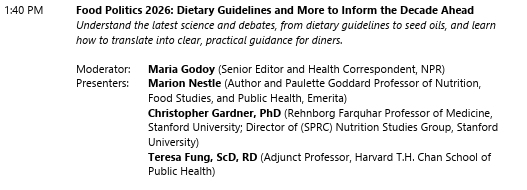
Information and program are here. My session:

The book about pet food and the pet food industry that I wrote with Malden Nesheim – Feed Your Pet Right (Free Press/Simon & Schuster) – comes out tomorrow, May 11. At last!
Why would two human nutritionists interested in food politics write a book about pet food?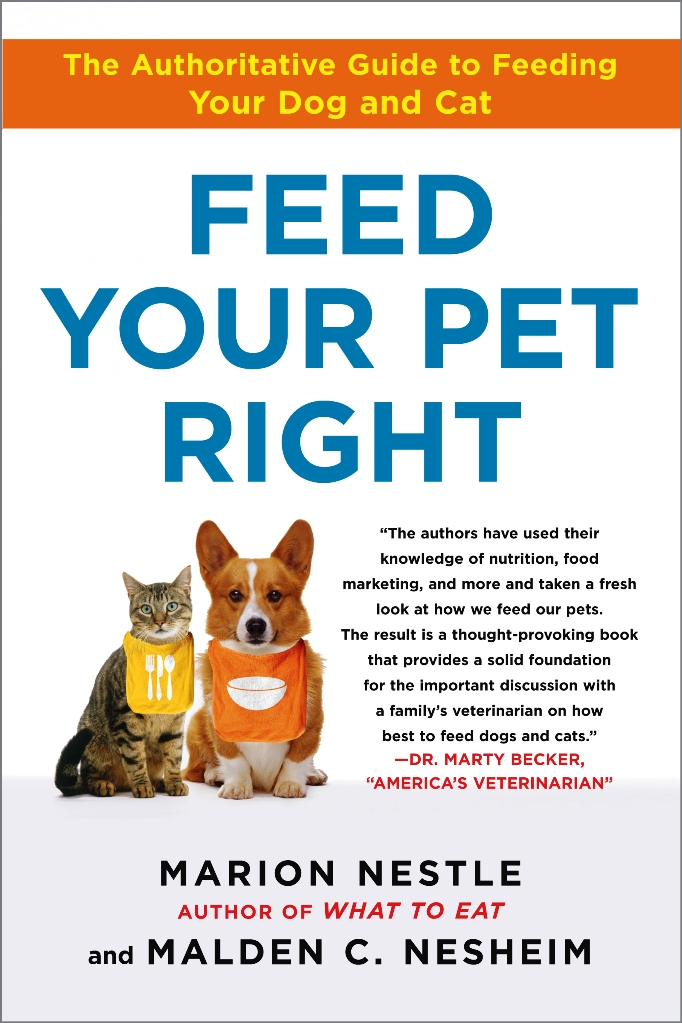
These are all reason enough to be interested in this segment of the food business, whether you do or do not own a cat or dog (which we do not, at the moment).
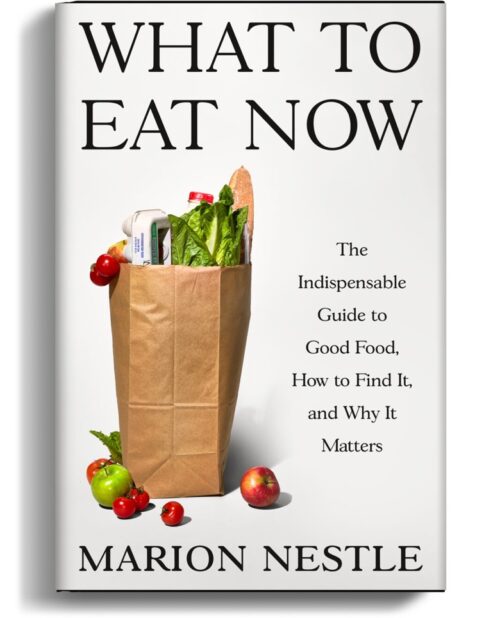
This book came about as an extension of what I wrote about in What to Eat. I could see that pet foods took up a lot of supermarket real estate but I could not understand their labels. But Mal, who taught animal nutrition for many years, knew exactly what they meant. Hence: this book.
We signed on to write it in February 2007, three weeks before the melamine pet food recalls of 2007. I intended my comments on the recalls to be an appendix to this book, but the writing got out of hand and ended up as Pet Food Politics: The Chihuahua in the Coal Mine (University of California Press, 2008).
Feed Your Pet Right is out at last. You can find out about it at Free Press/Simon and Schuster or Amazon or Borders or Barnes & Noble or IndieBound.
You can follow it on Facebook (Feed Your Pet Right), where we will deal with current issues about pet food, answer questions, and respond to comments.
Here’s what it covers:
1. Introduction
The origins of commercial pet foods
2. What pets ate
3. What pets need
4. Inventing commercial pet foods
5. Pet foods as an industry
What’s in those packages?
6. Pet foods: wet and dry
7. The ingredients
8. The rendered ingredients
9. Who sets pet food rules?
Commercial pet foods: the market
10. What’s on those labels?
11. The pet food marketplace: segments
12. Products at a premium
Special products for target markets
13. For young and old
14. For special health problems
15. For weight loss
The pet food extras
16. Snacks, treats, chews, and bottled waters
17. Dietary supplements
18. Do supplements work?
Alternatives to commercial pet feeding
19. Unconventional diets
20. The raw
21. The home cooked
Thinking about pet foods
22. Are commercial pet foods healthy for pets?
23. Do people eat pet food?
24. Do pet food companies influence veterinarians?
25. Is pet food research ethical?
26. Concluding thoughts
Acknowledgments
Appendix 1. The U.S. pet food industry: facts and figures
Appendix 2. Recent history of the pet food industry
Appendix 3. The history of pet food regulation
Appendix 4. Estimating pet food calories
Appendix 5. Food needs of Alaskan sled racing dogs
Appendix 6. Resources
List of Tables and Figures
Notes
Index
Enjoy!
Tomorrow: Where and when we will be speaking about the book.
1. Introduction
The origins of commercial pet foods
2. What pets ate
3. What pets need
4. Inventing commercial pet foods
5. Pet foods as an industry
What’s in those packages?
6. Pet foods: wet and dry
7. The ingredients
8. The rendered ingredients
9. Who sets pet food rules?
Commercial pet foods: the market
10. What’s on those labels?
11. The pet food marketplace: segments
12. Products at a premium
Special products for target markets
13. For young and old
14. For special health problems
15. For weight loss
The pet food extras
16. Snacks, treats, chews, and bottled waters
17. Dietary supplements
18. Do supplements work?
Alternatives to commercial pet feeding
19. Unconventional diets
20. The raw
21. The home cooked
Thinking about pet foods
22. Are commercial pet foods healthy for pets? 23. Do people eat pet food?
24. Do pet food companies influence veterinarians?
25. Is pet food research ethical?
26. Concluding thoughts
Appendix 1. The U.S. pet food industry: facts and figures
Appendix 2. Recent history of the pet food industry
Appendix 3. The history of pet food regulation
Appendix 4. Estimating pet food calories
Appendix 5. Food needs of Alaskan sled racing dogs
Appendix 6. Resources
List of Tables and Figures
Acknowledgments