
This is from 6:30-9:30 p.m. at The Greene Space, WNYC NPR Studios, 44 Charlton Street. For information and reservations, click here.

Yesterday, Beverage Digest announced that the American Beverage Association (ABA) and its Big Soda members—PepsiCo, Coca-Cola, and Dr Pepper/Snapple—were starting a “new vending machine program to help combat obesity.”
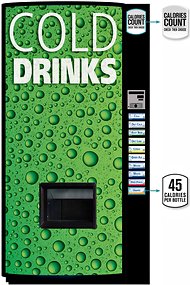
The new “Calories Count Vending Program” starts in 2013 in city buildings in Chicago and San Antonio.
This, Beverage Digest says, “is what can happen when the industry and mayors work together, collaboratively.” It quotes an executive from Dr Pepper Snapple: “this program is yet another example of how the beverage industry is providing meaningful solutions to help reduce obesity.”
Really? If these companies really wanted to help reduce obesity, they might start by eliminating sugary drinks. But never mind. This is about politics, not health.
For one thing, calorie labels are going to have to go on most vending machines anyway, as soon as the FDA gets around to writing the regulations for them.
For another, this move heads off any attempt to introduce (horrors!) taxes on sodas or caps on bottle size in those two cities.
Chicago Mayor Rahm Emanuel is quite clear about that. He says his approach to the health issue “is better because it emphasizes personal responsibility.”
He prefers to have Chicago city workers compete with those from San Antonio for a $5 million grant from the ABA. The ABA has also agreed to pay $1,000 to workers who meet health goals to be determined.
Although this might look like a bribe, Emanuel denies that the program is a payoff:
I believe firmly in personal responsibility,” the mayor said at a City Hall news conference with the pop company executives. “I believe in competition, and I believe in cash rewards for people that actually make progress in managing their health care.”
According to the New York Times, Mayor Emanuel actively sought the ABA grant.
If only personal responsibility worked, alas. So much evidence now shows that it’s not enough to change behavior. It is also necessary to create a food environment more favorable to making healthful choices.
That’s the public health approach taken by New York City Mayor Michael Bloomberg . His approach is to make the food environment more conducive to healthful choices without anyone having to consciously think about them. This approach is more likely to reduce soda consumption, which is why the ABA wants to head off taxes and caps.
Oh well. Education is always a good thing, and here’s what the ABA says the vending machines will look like.
This is from 6:30-9:30 p.m. at The Greene Space, WNYC NPR Studios, 44 Charlton Street. For information and reservations, click here.