by Marion Nestle

Currently browsing posts about: Climate change

Aug 16 2021

Least credible ad of the week: “Beefing Up Sustainability”


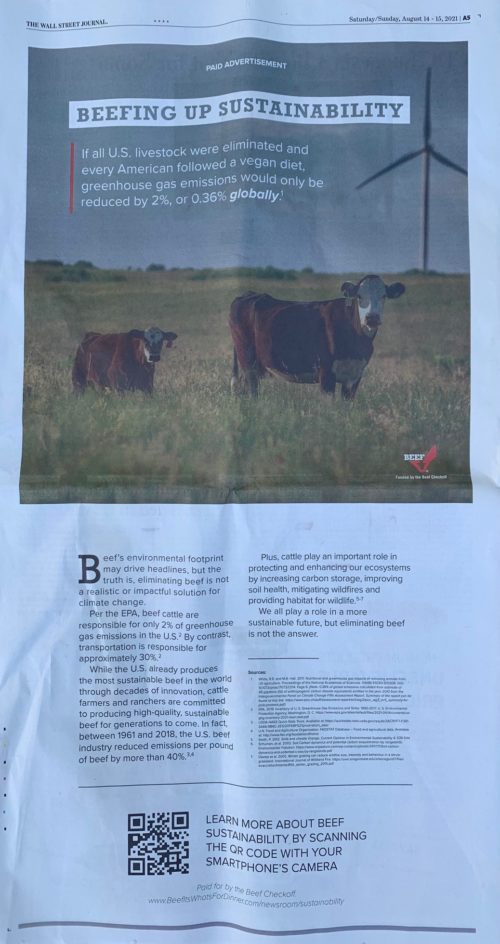
My colleague, Lisa Young, forwarded this ad to me from the weekend’s Wall Street Journal.

In case it’s too small for you to read, the ad makes some eyebrow-raising points:

  • “If all U.S. livestock were eliminated and every American followed a vegan diet, greenhouse gas emissions 0would only be reduced by 2%, or 0.36% globally.”
  • “Plus, cattle play an important role in protecting and enhancing our ecosystems by increasing carbon storage, improving soil health, mitigating wildfires, and providing habitat for wildlife.”
  • “We all play a role in a more sustainable future, but eliminating beef is not the answer.”

This, in case it is not instantaneously obvious, is part of the beef industry’s well documented effort to fight concerns about the well documented role of beef production in climate change.

The ad is paid for by the Beef Checkoff, one of the USDA-sponsored marketing and promotion programs funded by what is essentially a tax—the “checkoff”—on producers.  I recently wrote about how the Beef Checkoff funds research in this industry’s interest.

The ad cites research studies supporting its statements, but these are cherry-picked.

Estimates of the percent of greenhouse gases contributed by lifestock production vary, but the most widely accepted range from 14% to 18%.  Beef accounts for at least 10%.

The Food and Agriculture Organization of the UN, for example, says:

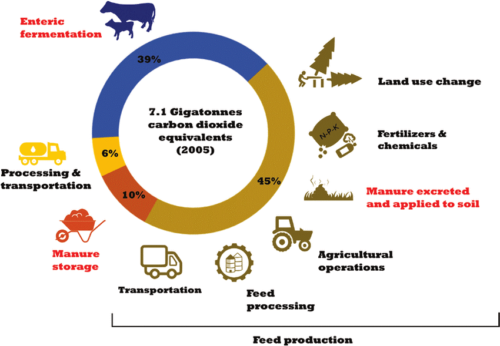
Total emissions from global livestock: 7.1 Gigatonnes of Co2-equiv per year, representing 14.5 percent of all anthropogenic GHG emissions…Cattle (raised for both beef and milk, as well as for inedible outputs like manure and draft power) are the animal species responsible for the most emissions, representing about 65% of the livestock sector’s emissions…feed production and processing (this includes land use change) and enteric fermentation from ruminants are the two main sources of emissions, representing 45 and 39 percent of total emissions, respectively.

The New York Times describes foods that have the largest  impact on climate change.

Meat and dairy, particularly from cows, have an outsize impact, with livestock accounting for around 14.5 percent of the world’s greenhouse gases each year. That’s roughly the same amount as the emissions from all the cars, trucks, airplanes and ships combined in the world today.

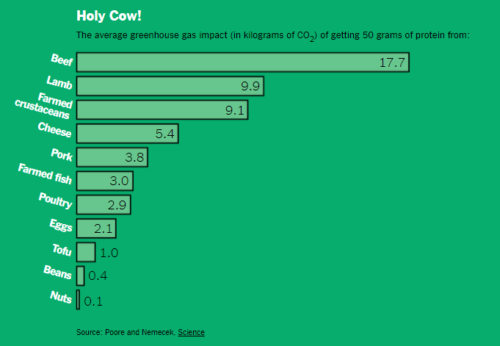
In general, beef and lamb have the biggest climate footprint per gram of protein, while plant-based foods tend to have the smallest impact. Pork and chicken are somewhere in the middle.

A study published in Science calculated the average greenhouse gas emissions associated with different foods.  The New York Times summarizes its results:

Beef production creates emissions of methane as well as carbon dioxide from multiple sources: feed production, cow burps, manure production, etc.

Beef production that involves grazing on grasslands could meet sustainability goals, but beef cattle raised in feedlots cannot.

There are plenty of environmental reasons for eating less beef, and these are on top of health reasons.

The Beef Checkoff ad does not tell the whole story, alas.

Addition

Lisa reminds me that the cost of a full-page color ad in the Wall Street Journal runs around $200,000.

May 25 2021

Biden’s USDA looks like it is doing plenty about climate change

I got a press release from the USDA last week: USDA Releases 90-Day Progress Report on Climate-Smart Agriculture and Forestry

The U.S. Department of Agriculture (USDA) today published the 90-Day Progress Report on Climate-Smart Agriculture and Forestry.

The report represents an important step toward in President Biden’s Executive Order on Tackling the Climate Crisis at Home and Abroad and shift towards a whole-of-department approach to climate solutions. The Order, signed January 27, states that, “America’s farmers, ranchers, and forest landowners have an important role to play in combating the climate crisis and reducing greenhouse gas emissions, by sequestering carbon in soils, grasses, trees, and other vegetation and sourcing sustainable bioproducts and fuels.”

This report is the result of a presidential executive order in January requiring the USDA to say how it plans to promote climate-friendly agriculture.  It pretty much summarizes what the USDA has been doing and intends to do more of in the future.

Actually, the USDA has a lot to say about climate change.  It just wasn’t allowed to, at least publicly, during the previous administration.

For example, the USDA published Building Blocks for Climate Smart Agriculture and Forestry in May 2016.

The agency has web pages devoted to climate-change topics; each of these comes with additional pages on sub-heading topics.

It looks to me as though this agency is taking a lead role on climate change, at least in some ways.

But what about meat?  Politico notes that the Biden administration is keeping hands off that issue.

President Joe Biden is not going to ban red meat. In fact, his administration isn’t doing much to confront the flow of harmful greenhouse gases from the very big business of animal agriculture.

The Agriculture Department’s newly published “climate-smart agriculture and forestry” outline says almost nothing about how Biden aims to curb methane emissions from livestock operations. But environmentalists argue that any effort to shrink the farm industry’s climate footprint is half-baked if it relies on voluntary efforts and doesn’t address America’s system of meat production.

May 3 2021

Industry policy influence of the week: meat and dairy vs. climate change

Thanks to Sinead Boylan in Australia for alerting me to this paper about the influence of the meat and dairy industries on climate change policy.  The authors are Environmental Science colleagues at NYU.

The Study: The climate responsibilities of industrial meat and dairy producers.  Oliver Lazarus & Sonali McDermid & Jennifer Jacquet.  Climatic Change (2021) 165:30.

Method: The authors examined the role of 35 of the world’s largest meat and dairy companies in actions related to preventing climate change. But in particular, it investigated “the transparency of emissions reporting, mitigation commitments, and influence on public opinion and politics of the 10 US meat and dairy companies.”

Its overall conclusion: “all 10 US companies have contributed to efforts to undermine climate-related policies.”

Through a questionnaire, it found (these are direct quotes):

  • All 10 US companies have contributed to research that minimizes the link between animal agriculture and climate change (Q11). Three companies—Tyson, Cargill, and Smithfield—have contributed directly to what Brulle (2014) called “climate change countermovement organizations” or organizations that have minimized the link between agriculture and climate change (Q13).
  • Four companies—Tyson, National Beef, Smithfield, and Hormel—have each made statements linking climate change regulation with potentially harming their profitability, either in an SEC form or in an annual report (Q17…).

Through researching OpenSecrets

  • Nine of the 10 companies have spent at least $600,000 on lobbying activities since 2000, with five of those companies spending over $14 million each…Tyson has spent the most on lobbying—$25 million—over the last two decades.
  • Cargill has spent $21.5 million; Smithfield Foods, $21 million; Dean Foods, $16 million; and Dairy Farmers of America, $14 million….
  • Combined, the companies have spent a total of $109 million on lobbying activities since 2000.
  • The other nine US-based companies [the tenth, Koch Foods, did not report] have spent a combined $26 million on political campaigns since 2000.
  • Dairy Farmers of America has spent the most, at $6.3 million since 2000. California Dairies has spent $5 million; Dean Foods, $4.3 million; Cargill, $4 million; and Tyson, $3.2 million.
  • Since 2000, Tyson has spent more on Republican candidates in every election cycle but one, and a similar pattern was observed for most of the companies examined here.
  • US meat and dairy companies act collectively…Together, six of these [trade] groups—the National Cattlemen’s Beef Association, the National Pork Producers Council, the North American Meat Institute, the National Chicken Council, the International Dairy Foods Association, and the combined expenses of the American Farm Bureau Federation and its state groups—have spent nearly $200 million in lobbying since 2000, lobbying yearly on climate related issues like cap-and-trade, the Clean Air Act, and greenhouse gas regulations and reporting rules.
  • A recent sustainability report published by the US pork industry noted that “pork production contributes just 0.46% of U.S. greenhouse gas emissions to the atmosphere” (Pork Checkoff 2020).
  • In 2019, the National Cattlemen’s Beef Association published a 21-part series, “Tough Questions About Beef Sustainability,” that, among other things, claims US beef production accounted for just 1.9% of total US emissions in 2014 (Beef Research 2019)

Their analysis also suggests: “the level of influence generally corresponded with emissions. Tyson, for example, is the largest emitter of the 10 US companies.  Tyson received the highest total influence score in response to our 20 questions at 15, tied with National Beef Packing Company, the fourth highest emitter.”

Overall: “In the case of the USA, our analysis provides evidence to suggest that the 10 largest meat and dairy companies have worked to frame the conversation, influence climate-related policies, and minimize the link between animal agriculture and climate change.”

Comment: This issue matters because animal agriculture is estimated to contribute 14.5% of greenhouse gas emissions.  This, and industry behavior around this issue, is a reason why sustainability needs to be part of Dietary Guidelines, and “eat less meat” is good dietary advice for people in industrialized economies.

Apr 26 2021

Least credible food industry ad of the week: JBS and climate change

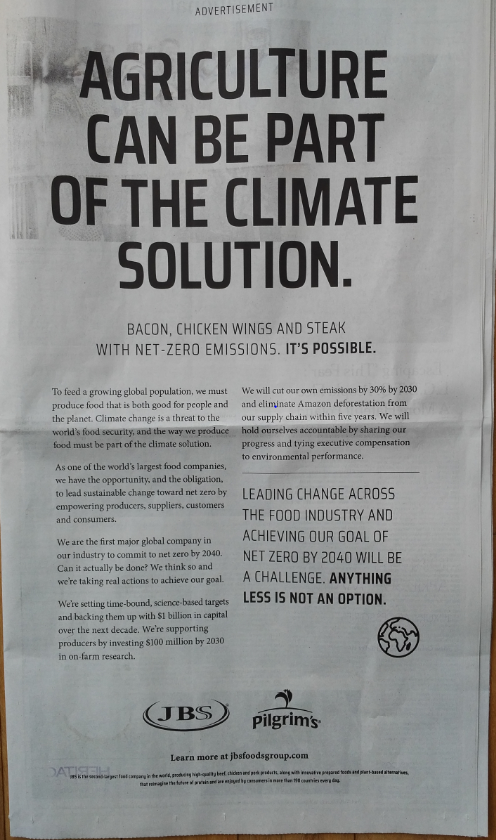
This ad appeared in yesterday’s New York Times.

The ad is signed jointly by JBS and Pilgrim’s, but JBS owns nearly 80% of Pilgrim’s, so this is JBS’s ad.

At the bottom of this ad, you can read about the company in very small print:

JBS is the second-largest food company in the world, producing high-quality beef, chicken and pork products, alokng with innovative prepared foods and plant-based alternatives that reimagine the future of protein….

The company is based in Brazil, where burning of the rainforest to grow soybeans—to feed cattle–produces massive amounts of greenhouse gases.

In this ad, JBS promises to achieve “net-zero emissions” by 2040.

How?  It’s a bit vague on details.

We’re setting time-bound, science-based targets and backing them up with $1 billion in capital over the next decade.  We’re supporting producers by investing $100 million by 2030 in on-farm research.

We will cut our own emissions by 30% by 2030 and eliminate Amazon deforestation from our supply chain within five years.

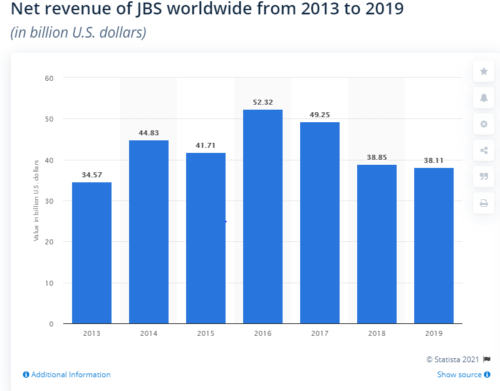
For the record, JBS’ annual revenues are nearly 40 times higher than what it plans to spend on this over the next 10 years.

The company’s revenues have been declining.  Does that explain its sudden interest in preventing climate change?

This looks like classic greenwashing to me.

Before believing that this is not greenwashing, I’d like to see those “time-bound, science-based targets” and to know who is holding JBS accountable for meeting them.

Jul 10 2020

Weekend reading: more reports

CAST [Council for Agricultural Science and Technology: Economic Impacts of COVID-19 on Food and Agricultural Markets:  This is a collection of 16 articles by various experts on the effects of Covid-19 on food, agriculture, and forestry.  The report is here.

IATP (Institute for Agriculture and Trade Policy): Milking the Planet: How Big Dairy is Heating Up the Planet and Hollowing Rural Communities: The report is here.

FAIRR (a global network of investors addressing issues in meat production): An Industry Infected: Animal Agriculture in a post-COVID world.  The report is here.

As the COVID-19 pandemic unfolds globally, we are presented with a real-time case study into the vulnerability of animal agriculture systems to external shocks. It has reminded us of the vulnerability of human health to disease risks stemming from both wild and domestic animals, and has served as a warning of the role modern animal production systems can play in increasing zoonotic disease risk.

The British Meat Processors Association is not happy with this one, it seems.


Oct 11 2019

Weekend reading: World Resources Report

The World Resources Institute has issued its final report on Creating a Sustainable Food Future.

The report addresses the central dilemma of our time: how to feed nearly 10 billion people by 2050 without destroying the planet in the process.

The report takes a deep dive into potential solutions:

  • Reduce demand
  • Increase production
  • Protect national ecosystems
  • Increase fish supply
  • Reduce greenhouse gases produced by agriculture
  • Policy options

This report deals with these issues, none of them simple, in more than 550 pages.  It offers no simple solutions.  Dealing with this dilemma will take a great many actions by a great many people, governments, and industry.  The report sets the agenda.  Now it’s our turn.

Feb 12 2019

Resolution for a Green New Deal to reduce climate change

If we don’t have goals, we will never come close to attaining them.

The fabulous new Rep. Alexandria Ocasio-Cortez (D-N.Y.) and the esteemed Sen. Ed Markey (D-Mass.) have issued a non-binding resolution urging Congress to enact and implement a ten-year plan to control and reverse climate change.

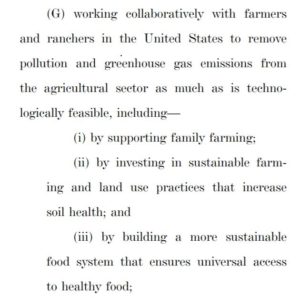
The Green New Deal is a comprehensive plan that demands profound changes in many sectors of society, including agriculture.  With respect to agriculture, it calls for:

Why does this matter?  Here, for example, is a graph of world temperatures over the last century, with 2018 being the fourth hottest ever.
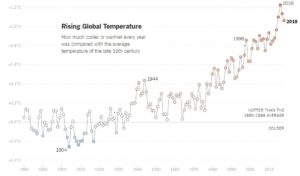
The Resolution may seem like a pipe dream in today’s political climate, but the issues it addresses are urgent.  Its recommendations set an agenda, one deserving of serious advocacy.


Jan 28 2019

New Lancet report: The Global Syndemic: Uniting Actions to Address Obesity, Undernutrition, and Climate Change

The Lancet has been busy.  Last week, it published a blockbuster report on the need for worldwide dietary changes to improve human health and that of the environment.  I posted about this EAT-Forum report on Friday.

Now, The Lancet releases yet another report, this one taking a unified approach to dealing with the three most important nutrition issues facing the world: Malnutrition (undernutrition), obesity, and the effects of our food production and consumption system on the environment and climate change—for which this report coins a new term: The Global Syndemic.

This report breaks new ground in identifying the food industry as one of three main barriers to ending this “Syndemic.”  I’ve added the numbers for emphasis.

  • Powerful opposition by [1] commercial vested interests, [2] lack of political leadership, and [3] insufficient societal demand for change are preventing action on The Global Syndemic, with rising rates of obesity and greenhouse gas emissions, and stagnating rates of undernutrition.
  • New social movement for change and radical rethink of the relationship between policymakers, business, governance and civil society is urgently needed.
  • The Commission calls for a global treaty to limit the political influence of Big Food (a proposed Framework Convention on Food Systems – modelled on global conventions on tobacco and climate change); redirection of US$5 trillion in government subsidies away from harmful products and towards sustainable alternatives; and advocacy from civil society to break decades of policy inertia.

Wow.  This is telling it like it is—at long last.  From the press release:

  • A key recommendation from the Commission is the call to establish a new global treaty on food systems to limit the political influence of Big Food.
  • The food industry’s obstructive power is further enhanced by governance arrangements that legitimise industry participation in public policy development, and the power that big corporations have to punish or reward governments by relocating investment and jobs.
  • Regulatory approaches to product reformulation (eg. salt and sugar reduction), labelling and marketing to children are needed because industry-led, voluntary approaches have not been effective.

Yes!

The documents

The press

▪ The Guardian
The Times (London)
Irish Farmers Journal

Additional press, posted January 30

Newswires (syndicated in international outlets):

UK:

US:

Rest of world: