Information about the Aspen Ideas Festival is here. I am scheduled for a session, The American Wellness Paradox, currently scheduled from 11:00-11:50 a.m., at the East Lawn Tent. This will be a discussion with senior HHS policy advisor, Calley Means. Here’s the blurb on it: “Americans are spending more than ever on healthcare, supplements, wellness trends, and “clean eating,” yet rates of chronic disease and metabolic illness continue to climb. As skepticism fuels the rise of movements like MAHA, debates over what Americans should eat have become deeply cultural, political, and economic. Two influential voices with sharply different perspectives on nutrition and food science explore how food systems, farming practices, consumer culture, and the wellness industry collided to create one of the defining public health debates of our time.”

Food Politics Alaska style: Supermarket prices
I visited the AC supermarket in Utqiagvik, the town formerly known as Barrow.
It could be anywhere USA, with anything you could possibly want, including fresh blueberries from Argentina. How’s that for food miles?
Remember: all of this, no exceptions, comes in by cargo plane.
The produce section was lovely, with remarkably fresh foods at equally remarkable prices.
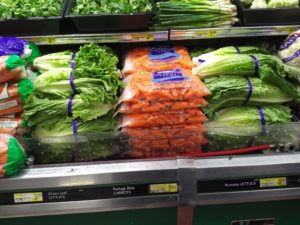
Would you believe the green leaf lettuce is $3.50, the baby carrots $7.29, and the romaine $4.69? New York prices on steroids.
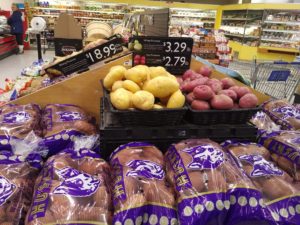
How about white potatoes at $3.29, red ones at $2.79, and baking potatoes at $18.99 for 10 pounds.
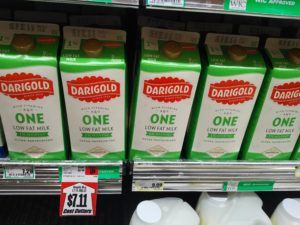
Or the reason I was so concerned about the tossed out school lunch milk cartons: $7.11 on sale.
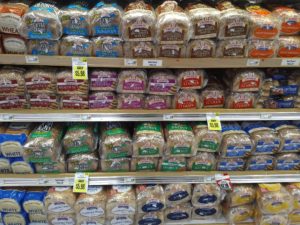
How about bread on sale for $5.98 a loaf?
Just to make me feel at home, here are the sugary drinks down one entire aisle. The 12-packs were on sale for $10.98, which must not be enough to discourage sales.
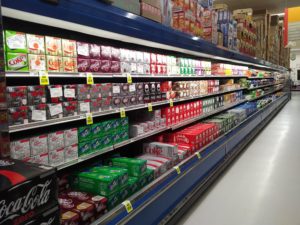
Are soft drinks a problem in Utqiagvik/Barrow?
Yes, they are.
The prevalence of obesity and diabetes is low, but rising steadily, and the Indian Health Service dentists told me that they see plenty of little kids with rotted teeth from drinking sodas and sweet juices in baby bottles.
The nutrition transition is taking place in America too, and for the same reasons that obesity and diabetes are becoming problems in the developing world.