In its continuing effort to crack down on companies making deceptive claims that omega-3 promotes healthy brain and eye development in children, the FTC has just announced deceptive advertising charges against NBTY, a marketer of children’s vitamins.
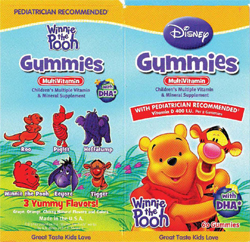 In February, the FTC issued warning letters to 11 companies that make products like this one (“pediatrician recommended,” yet).
The FTC said the companies had better get busy and make sure they are not violating the law by “making baseless claims about how the supplements benefit children’s brain and vision function and development.”
The FTC cautioned the companies to make sure they had:
“scientific evidence to support claims that their products boost, improve, enhance, or support brain and vision function and development in children…[and]claims relating to intelligence, cognitive function, learning ability, focus, mood, memory, attention, concentration, visual acuity, and eye health.”
Now, the FTC has reached a settlement with the companies for $2.1 million in refunds, not only because of the unsupported health claims but also because the products did not contain the advertised amount of omega-3’s (see legal complaint):
the multivitamins featured characters such as the Disney Princesses, Winnie the Pooh, Finding Nemo, and Spider-Man. Product packaging and print ads promoting the vitamins had bold graphics highlighting that the products contained DHA, but in reality, the products allegedly had only a trace amount of DHA.
While the vitamins’ packaging touted the purported health benefits of 100 milligrams of DHA, a daily serving of the Disney and Marvel multivitamins for children ages four years and older contained only one thousandth of that amount (0.1 mg or 100 mcg), according to the FTC’s complaint.
The settlement:
- Bars NBTY, NatureSmart, and Rexall Sundown from misrepresenting the amount of any ingredient contained in any product.
- Bars them from misrepresenting that any ingredient, including DHA, promotes brain or eye health or provides any other health benefit, unless the claim is true and backed by competent and reliable scientific evidence.
- Specifies that any violations could subject the NBTY, NatureSmart, and Rexall Sundown to civil penalties.
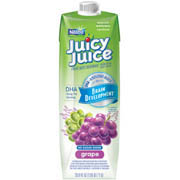
I wonder if the FTC is taking a look at the DHA “brain development” claims for Nestlé’s Juice Juice? Just a thought.
This just in: The
FTC announces a settlement with Dannon Yogurt to stop making unsubstantiated, exaggerated health claims for activia. Dannon may no longer claim that:
- Any yogurt, dairy drink, or probiotic food or drink reduces the likelihood of getting a cold or the flu (unless FDA says it’s OK)
- Activia yogurt will relieve temporary irregularity or help with slow intestinal transit time, unless the ad conveys that three servings of Activia yogurt must be eaten each day.
- Any other yogurt, dairy drink, or probiotic food or drink will relieve temporary irregularity or help with slow intestinal transit time unless the company has two well-designed human clinical studies that substantiate the claim.
- The health benefits, performance, or efficacy of any yogurt, dairy drink, or probiotic food or drink, unless the claims are backed by competent and reliable scientific evidence.
The FTC wants science to back up health claims. What a concept!