I’m on the visionary panel. To register, click here.


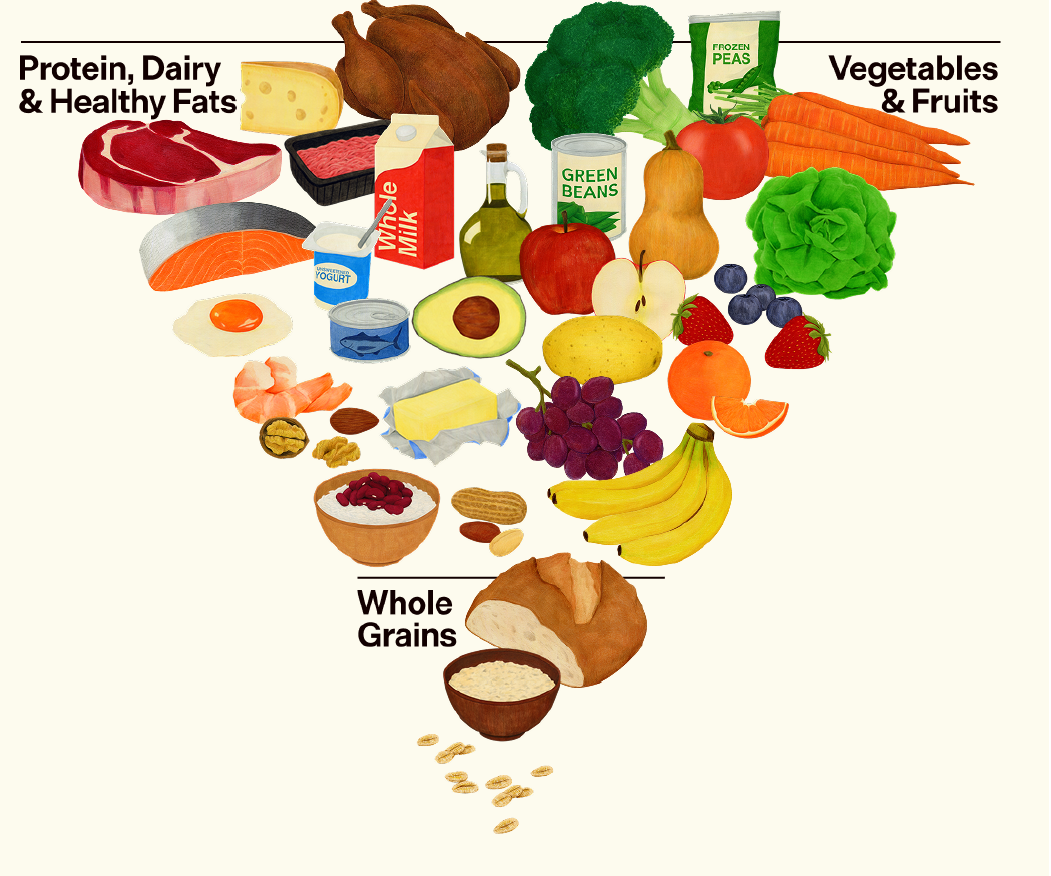
The new Dietary Guidelines [The guidelines are in bold; my summary follows]
These were released along with a fact sheet, scientific report, and interactive website. I’ve summarized the details below in a table comparing these guidelines to the previous version.
Why muddled? The lists of guidelines differ among the various documents. The prioritization of protein is hard to understand; most Americans already eat plenty. Some of the instructions don’t make sense: “Consume meat with no or limited added sugars?” Who does this?
Why contradictory? If you increase the amount of protein, meat, and full-fat dairy in your diet, you will not be able to keep your saturated fat intake below 10% of calories, and will have a harder time maintaining calorie balance (fat has twice the calories of protein or carbohydrate). If you want to increase the amount of fiber in your diet, you need to prioritize vegetables, fruits, and whole grains, not meat and dairy.
Why ideological? The fats recommended as sources of essential fatty acids—olive oil, butter, and beef tallow—have little or no essential linoleic or alpha-linolenic acids. For those, seed oils (not mentioned in these guidelines) are much better sources. The prioritization of animal-based as opposed to plant-based is inconsistent with research on diet and health. USDA Secretary Rollins said these guidelines would no longer reflect leftist ideology. The fact sheet and website make the ideology explicit.
Why retro? Except for the excellent advice to reduce intake of highly processed foods, which were not particularly prevalent back then, these guidelines take us back to the diets of the 1950s when everyone was eating lots of meat and dairy and not worrying much about vegetables, and heart disease was rampant. I’m all for eating whole foods but these guidelines dismiss 75 years of research favoring diets higher in plant foods.
Bottom line: A mixed bag. These guidelines are big wins for the meat, dairy, and alcohol industries (alas). The loser: ultra-processed foods (yes!). The recommendation to reduce highly processed foods (a euphemism for ultra-processed) is the one great strength of these recommendations. Following that advice might help Make America Healthy Again. But the rest must be viewed more as ideology than science, and also must be interpreted in the light of this administration’s destruction of what was once a reasonably effective public health service (CDC, FDA, NIH) and system. Eating more meat and fat is unlikely to help people resist measles and other illnesses preventable by vaccination.
I will have more to say about the specific recommendations in subsequent posts. In the meantime, here’s my quick summary.
| RECOMMENDATION | 2020-2025 | 2025-2030 | CHANGE? |
| Number of pages | 149 | 10 | |
| Calories | Measure by weight status | Eat the right amount | Same |
| Water | Choose | Choose | Same, but stronger |
| Protein | 56 g/2000 kcal [based on 0.8 g/kg]
|
Prioritize at every meal. [ 84 to 112g/2000 kcal, based on 1.2 -1.6 g/kg] | Increase |
| Dairy | 3 cups/day | 3 servings | Same |
| Vegetables | 2.5 cups/day | 3 servings/day | Decrease |
| Fruits | 2 cups/day | 2 servings/day | Decrease |
| Fats | 27 grams/day oils | Healthy | Prioritize animal sources |
| Saturated fat | <10% calories | <10% calories | Same |
| Grains | 6 ounces, >3 whole/day | 2-4 servings/day | Decrease, prioritize whole |
| Processed foods other than meat | Not mentioned | Limit, avoid | Major improvement |
| Added sugars | Eat less | Limit, avoid | Stronger |
| Sodium | <2300 mg/day | <2300 mg/day | Same |
| Alcohol | <2 drink/d for men; 1 for women | Limit, consume less | Weaker |
| Eat more | Vegetables, Fruits, Legumes, Whole grains, Low- Or Non-Fat Dairy, Lean Meats, Poultry, Seafood, Nuts, Unsaturated Vegetable Oils | Animal-source foods, full-fat dairy, vegetables, fruits, healthy fats, butter, beef tallow, whole grains | |
| Eat less | Red and Processed Meats, Sugar-Sweetened Foods and Beverages, Refined Grains, Alcohol | Added sugars, refined grains, chemical additives, fruit and vegetable juices, highly processed foods and beverages, sodium, alcohol | |
| Dietary sustainability | Not mentioned | Not mentioned |
I will be writing about the details in subsequent posts. Stay tuned.
Resources
I’m on the visionary panel. To register, click here.